Tuesday, 25 October 2011

International road marathon comparison - M-Z


This is the second part of my marathon comparison posting covering marathons M-Z that I've run and so it's just for ones I can write about first-hand. Part one is here.

After each description I show my estimate of how many minutes to add on to your perfect time due to the course/conditions for a three hour marathoner to give a comparison. Like this: ADD X MINUTES

Marrakech Marathon, Morocco (January) - Maybe not the most effective organization but it's a great city to visit and weather will tend to be at least comfortable, but possibly hot. The course is mainly outside the old town with the souks and windy little side-streets so has some desert-like views but it's all on flat roads so is very fast if the heat stays low. ADD 2 MINUTES

Napa Valley Marathon, California, USA (March) - Scenic point-to-point run through the Napa wine region with your weight in wine as a prize if you win (they're smart - the winner is unlikely to be big). The course rolls slightly but is quick in general with comfortable, if potentially wet, conditions. ADD 1 MINUTE

New Forest Marathon, England (September) - A scenic run through this forest in the south of England on roads with very small trail sections. Some gentle rolling paths and wind can slow the pace slightly but generally a relaxed and enjoyable smaller race. ADD 3 MINUTES

New York City Marathon, New York, USA (November) - The world's biggest marathon with multiple start areas and routes that stay separate until several miles into the course. This one has to be on every marathoner's to do list despite the fact it's fairly tough due to the bridges acting as nasty hills. If you want to run fast here then you need to qualify to be at the front but the times required are tightening from 2012 due to the popularity of the race (for a senior man it will be 2:45, with times dropping for masters' age groups). It's a fun race with a chance to see plenty of NYC, much of which you might not need to really see, so this is really about the experience and it isn't cheap (I can't think of a more expensive entry fee for a road marathon). Don't expect to be running in those early miles or where the starts merge later on unless you're very near the front. ADD 3 MINUTES (much more if not in the front corrals)

Newport Marathon, Oregon, USA (June) - An ideal race to go for a time plus some scenic views of the sea, a large bridge and along a river in the beautiful Oregon coast. Small enough that everyone can run immediately but fast and flat enough to let people nail the race, especially since the weather tends to be ideal for running. Only remotely difficult bit is a tiny hill in the first few miles, unless you decide to do the oyster challenge and eat as many oysters as you can as you go past the oyster farm on the way out and heading back (current record 80 oyster shooters).  ADD 0.5 MINUTES

Night of Flanders Marathon, Belgium (June) - The marathon isn't the main event here as it's more focused on the 100k which has previously been the 100k World Cup race. But the courses are the same and the 100k just includes more loops through the countryside and small Flemish villages. The novelty here is that it starts in the evening and so some of the marathon is in the dark while most of the 100k is. Flat, slightly windy and with each lap going past weekend revelers in bars (who seem to be oblivious to the race). ADD 2 MINUTES

Oakland Marathon, California, USA (March) - Oakland doesn't have a great reputation and has very high crime rates, even though it's just across the Bay from San Francisco and near much less dangerous places. The marathon starts with a gradual then steeper climb up to Piedmont, which is the rich part of town and takes an effort. Then after 10 miles there's downhill into Oakland proper and flat, speedy roads. The front-runners spread out so if you go significantly under 3h pace then you'll run though much of the dodgy part of Oakland solo. So each time you see a cop blocking a road for the race, you'll be happy. This shouldn't be an issue for most people but I felt unsafe running along (having run through ghettos in Africa and several third world countries). ADD 3 MINUTES

Oslo Marathon, Norway (September) - A course that mainly goes along the bay in one of the richest and most expensive countries in the world. A chance to see Viking ships but if you want to do a Scandinavian marathon then Stockholm is prettier and more fun, not that this is a bad race at all. ADD 1 MINUTE

Paris Marathon, France (April) - Starting along the Champs-Elysees by the Arc de Triomphe so that it's a very wide start allowing the field to spread out on the very gentle downhill. Then you get the chance to see most of Paris' sights, two very French parks and a finish back at the Arc de Triomphe. Fast course, beautiful course and it includes a trip to Paris - highly recommended. ADD 1 MINUTE

Portland Marathon, Oregon, USA (October) - Although Portland is a very green city in every way, this course shows less pretty parts of town and has a big bridge crossing around 16 miles. A relaxed atmosphere and not too large a field, plus a focus on making the race good for beginners and be female-friendly means this is a chilled race. People aren't fighting for position at the start like at many races. It'll probably rain and could be cold and windy so this isn't a super-fast course but is good as a first race or if you want to avoid the over-competitiveness you get at many races (particularly near the front). ADD 3 MINUTES

Prague Marathon, Czech Republic (May) - As my first marathon, this feels particularly special to me and Prague is always a great city to visit, particularly the ancient old town where the race starts and finishes. The course has been improved slightly since I ran it but still involves some running on boring roads away from the center. Fast, although some people may not like the flat cobbles near the start and finish. ADD 1 MINUTE

Quebec City Marathon, Canada (August) - Not many marathons in August but this is a fun one that includes a chance to see a large part of the city along the water then finish at the bottom of the old town. Easy first half including some bike paths then there's a steep climb up to a big bridge halfway through and a prevailing headwind to the finish which can really slow everyone down. ADD 4 MINUTES

Reykjavik Marathon, Iceland (August) - Iceland is an interesting place to visit and the race coincides with their summer festival so the locals do the two things they're famed for - drinking heavily and being promiscuous (the latter is just what I've heard). The course is mainly along the Atlantic coastline and typically is windy, plus even August is generally cold. So even though this course isn't fast, it's the road marathon I've done the most and somehow led to four PBs in a row. But beware that if you run faster than 3h pace you'll be on your own for most of the time. ADD 2 MINUTES

Robin Hood Marathon, England (September) - This race in Robin Hood's locality in Nottingham follows the half marathon route, which is quite hilly, then heads off around man-made rowing lakes where there can be headwinds. A medium-sized marathon where a Brit is almost guaranteed to bump into a runner he or she knows. ADD 2 MINUTES

Rome Marathon, Italy (March) - This is one of the best road marathons out there and even has a quick course. Undoubtedly the most impressive city marathon course given you run past so many world famous sights (unlike, say, London which avoids most tourist areas). Starting and finishing at the Colosseum then including the Vatican, Roman Forum and everything else you'd want to include on a trip there. Some cobbles but they're flattened and shouldn't be an issue for 99% of people. Do this race and fit in a longer trip to Italy if you can. ADD 1 MINUTE

Salt Lake City Marathon, Utah, USA (April) - A net downhill, but starting at almost 5,000ft which takes a tiny toll on sea-level dwellers. The start is around dawn with the views of the mountains surrounding the city just starting to be lit with purples and blues, so that distracts you at first before some rolling hills. The half starts at the same point then splits off a few miles in before joining back up near the end. Some freeway running but generally a decent course for views. ADD 3 MINUTES

San Francisco Marathon, California, USA (July) - Even though its at sea-level with mild weather, this is probably the hardest city marathon course I've seen given the significant hills (ok, trail runners, it's flat in mountain terms). Starting pre-dawn means cold and probably misty conditions but the main draw is the chance to run over the Golden Gate Bridge on an out and back. I loved the course despite the fact it slowed me down a lot. Great excuse to visit a cool city too. ADD 4 MINUTES

Santa Rosa Marathon, California, USA (August) - This small town race in wine country is very fast, despite the short sections of graveled trail. Basically a two-lap course along a river with a small field and so an ideal course to go for a PB if you don't mind potentially running alone. ADD 1 MINUTE

Seattle Marathon, Washington, USA (November) - One of my favorite marathons and a good reason to go to Seattle just after Thanksgiving. Not a fast course but lots of running by the water before coming back inland to the finish, which includes some sharp hills. Another race run concurrently with the half marathon, but the half takes a short-cut so marathoners pop out into the back of the pack half runners, which can be really motivating given the mutual support runners provide to each other. ADD 3 MINUTES

Shakespeare Marathon, England (April) - A marathon in Shakespeare's base of Stratford-Upon-Avon which rolls through country lanes for two laps. Usually very close to the London marathon so it tends to include people unable to get a spot there. An ideal way to run through some gentle English countryside without doing a trail race. ADD 3 MINUTES

Silicon Valley Marathon, California, USA (October) - Out and back from San Jose to Los Gatos along a canal for most of the course. The first half is gradually uphill then the return leg is fairly easy and the parks and greenery is better than you usually see in the area (I used to live there). ADD 2 MINUTES

Stockholm Marathon, Sweden (May/June) - Another of my favorites, this involves two slightly different laps across the islands of Stockholm with the only hard part being the double crossing of the long bridge back to the main city. It's scenic, involves visiting a great (if expensive) city, and usually has really pleasant weather although has been too hot a few times.  ADD 2 MINUTES

Tri Cities Marathon, Washington, USA (October) - A small race through all three of the cities that make up the Tri Cities, along the Colombia River. Completely flat except the four river crossings but these hardly affect your speed, although it can be windy so that's the only risk. Great for a PB attempt, but this may involve running alone given the small field. ADD 0.5 MINUTES

Valencia Marathon, Spain (November) - This race used to be in February and filled a gap in the calendar nicely but has since moved to November. A surprisingly good-looking city with some interesting modern architecture which you see along the route. It's also a well-designed course that is completely flat and easy. ADD 0 MINUTES 

Vilnius Marathon, Lithuania (September) - One of the things I love about running is that way it takes me places I wouldn't ever think of going otherwise. Lithuania is one of those places and it's a beautiful small city with plenty of Gothic architecture, windy little streets and, I found, rain. The course varies from old city streets to bike paths through woods plus it's not got any obvious difficulties. ADD 1 MINUTE

Warsaw Marathon, Poland (September) - As with Vilnius, I probably wouldn't have visited this historic city if it hadn't been for the marathon. It's a larger race but not as interesting since it includes some Eastern Bloc-style views of concrete faceless buildings and boring main roads as well as some of the old town. ADD 2 MINUTES

Zurich Marathon, Switzerland (April) - I usually prefer to run in the mountains when in Switzerland, for obvious reasons, but this marathon is executed with typical Swiss efficiency. Plus it has great views the whole way since most of it is out and back along Lake Zurich with the mountains adding a perfect backdrop. The course does have some gentle rolling sections but is still fast. If you miss out on London, this is a more than adequate alternative. ADD 2 MINUTES

I'll try to update this with additional marathons when I run more of them, but for now that's been fun to remember some fantastic trips in the past few years. Hope you find it interesting and useful.

Sunday, 23 October 2011

International road marathon comparison - A-L


For a long time now I've been meaning to write up something comparing road marathons I've run since I thought it could be useful for people when deciding which ones to choose. It's also a handy way to preserve my memories. There's a lot of great races out there and many in locations that make for a great trip - a perfect way to see some fantastic cities.

Bear in mind the list isn't exhaustive but includes over 50 different marathons across the world, including a good portion of the most well-known ones, so there's some decent variety.

After each description I show my estimate of how many minutes to add on to your perfect time due to the course/conditions for a three hour marathoner to give a comparison. Like this: ADD X MINUTES

Amsterdam Marathon, The Netherlands (October) - Very fast course with typically perfect weather. Helps to be at near the front but not too big a race. Pancake flat and not necessarily very scenic but it does finish in the 1928 Olympic stadium so you can pretend you're finishing an Olympic marathon around the Great Depression, which isn't that far off the truth. Highly recommended, especially as it's a good excuse to visit the legal(ish) version of Sin City. ADD 0 MINUTES

Arizona Rock 'n' Roll Marathon, Arizona, USA (January) - If you want to have no off season then this is a great one to focus on for pure speed with comfortable temperatures and a slightly dull, but flat course around the Phoenix megapolis. They bill all the Rock 'n' Roll series races as a party but it's probably the most corporate running experience you could ever have (pay extra for VIP toilets at the start!) with less music along the course than many big city marathons. But the point of this one is really to have an easy course that's fast and to get away from winter snow. ADD 0 MINUTES

Athens Marathon, Greece (November) - Not particularly pretty but it does cover the original route from Marathon to Athens which is 24 miles, so it includes a loop to reach the adjusted distance of 26.2 miles. Flat first half then gently up before the last quarter is all downhill, finishing in the 2004 Olympic stadium. Kind of has to be done at some point just because of the history, but no need to do it a second time. ADD 2 MINUTES

Barcelona Marathon, Spain (March) - A great city to run around and a fast course too. Beautiful views of the sea and less overcrowding than at some of the larger city races. ADD 0 MINUTES

Beaujolais Nouveau Marathon, France (November) - a large percentage of people run in costumes and the race is similar to other wine country marathons like Medoc in that it's a way to celebrate the new season's wines. Wine, bread and cheese at every aid station, including pre-race so it's not exactly a fast marathon for most people. The highlight was running down steps into a wine cellar, past huge barrels of wine and an aid station, before running out the other end of the cellar and continuing on the course. ADD 5 MINUTES

Belfast Marathon, Northern Ireland (May) - Often windy, rainy and with a few hills to slow people down, yet strangely enjoyable even with sections along a motorway out to the airport. But running through republican Falls Road and loyalist Shankill Road with their sectarian murals is an interesting experience (especially if you're English). ADD 3 MINUTES

Berlin Marathon, Germany (September) - Fastest marathon course I've seen and the multiple world records broken there (the last four men's records were set there...excluding the disallowed Boston 2011 time). It starts on a wide road so the masses get moving faster than at similar-sized marathons. That allows more of the field to have a fast start, although many people still inevitably have to go very slow in the initial miles. Beer at the finish too. ADD 0 MINUTES

Big Sur International Marathon, California, USA (April/May) - Adding the word 'International' shows the aim of having people travel from all over the world and it fills very quickly but has a reasonable-sized field of 4,500 runners. Incredibly scenic along a beautiful stretch of California coastline but this is generally one to enjoy the views rather than go for a time. There's also a Boston 2 Big Sur challenge for people who run both, usually about a week apart. ADD 4 MINUTES

Boston Marathon, Massachusetts, USA (April) - In the US this is the big one everyone wants to get to thanks to the need to qualify, the history and the fact the locals get into it more than for any other marathon I can think of. I love it and it does feel special but it's not the fastest course normally due to cross-winds and those famous Newton Hills. Highlight is definitely the Wellesley girls whose screaming you can hear a mile before you get there at halfway. 2011 had a tailwind for much of the course but the 2:03:02 by Geoffrey Mutai may not have been an official world record due to the net downhill and point-to-point course, but I have no doubt it was the best run ever. This course can be fast, but on average ADD 2 MINUTES

Brussels Marathon, Belgium (October) - Pretty parks along the course and you get to see a good selection of the Brussels scenery including parts of the EU bureaucracy. Warning - your time may be worsened if you sleep through your alarm on race day like I did. ADD 1 MINUTE

Copenhagen Marathon, Denmark (May) - Much of the course is run twice with overlapping loops, but I wasn't very inspired by the course which was fairly average, without too many memorable sights. ADD 1 MINUTE

Dublin Marathon, Ireland (October) - Not a very scenic course, with wind and some small inclines to make it slower. But it gives an excuse to drink Guinness where it comes from and hang out with the Irish. ADD 3 MINUTES

Duchy Marathon, England (March) - One of the oldest marathons in the UK which used to be extremely competitive for a small event, attracting the top British marathoners back when if you ran a three hour marathon you were last. Surprisingly tough course with a beautiful exposed coastal stretch that can be blustery and has to be run past twice. ADD 4 MINUTES

Edinburgh Marathon, Scotland (May) - Net downhill but not a fast course thanks to the majority being along the Scottish coastline, famous for howling winds and rain. Only the first four miles are really in Edinburgh then it heads out along the coast into a prevailing headwind which turns into a tailwind on the return last eight miles, still finishing way out of the city. The out-and-back is lonely in terms of supporters but then has the entire field supporting each other as they run past both ways. ADD 3 MINUTES

Florence Marathon, Italy (November) - The first few miles are downhill so it's easy to go off too fast, then dead flat along the river for most of the rest of the way. One of the best city marathons for scenery as well as being incredibly fast if you don't overdo those first miles. It includes virtually all the main tourist sights in one of Italy's most beautiful (and romantic) cities. ADD 0 MINUTES

Fukuoka Marathon, Japan (December) - If you get a chance, you're male and you're reasonably fast then you have to do this race at some point. Before there was a marathon world championship, this was the effective race where the best male marathoners came to duke it out. There's two qualification times: 2:27 for the A standard and 2:42 for the B standard with each having a separate start. You line up in rows in the exact order of your qualification times and can't drop below a 2:45 marathon pace or you get pulled from the course. It's a unique experience with a lot of crowd and TV support from the marathon-crazy Japanese. So if qualifying for Boston is too easy for you, give this a go. Highly recommended. ADD 0 MINUTES

Louis Persoons Memorial Genk Marathon, Belgium (October) - Not many marathons to choose from in January, especially in Europe, and this one has since moved to October. This is a very small, cosy race with a multi-loop course using bike paths and small sections of easy trail. It's a shame they moved it to the middle of the Autumn marathon season instead of the sparse winter marathon famine. It was a novelty to run this in the snow but that's unlikely any more. ADD 2 MINUTES or 5 MINUTES if under snow

Halstead and Essex Marathon, England (May) - A two-lap course with rolling hills in the Essex countryside. Full of people who didn't get a spot in the London Marathon and plenty who did it too. ADD 3 MINUTES

Hastings Marathon, England (December) - I'll include this even though the race was a one-off in 2008 to commemorate 100 years since the London 1908 Olympics where the marathon distance was defined. It may come back at some point and it'd be great if it does. A rolling course including some beach running near the finish and a generally fun, low-key event. ADD 3 MINUTES

Helsinki Marathon, Finland (August) - I did this to complete the set of Scandinavian capital city marathons and it rained. Surprisingly interesting course with some waterfront running and random city streets. But it finishes in the 1940 Olympic stadium, which is a plus. ADD 2 MINUTES

Honolulu Marathon, Hawaii, USA (December) - The definition of a destination marathon but some gentle climbs and guaranteed humidity and heat mean you'll be slowed. You probably won't mind since it just means more time to enjoy running in Hawaii. And you'll be doing it with a lot of other people since this is one of the largest marathons in the US, plus the out-and-back course lets runners cheer each other on (and lets you see a lot of costumes). ADD 8 MINUTES

Lake Tahoe Marathon - Emerald Bay Marathon, California/Nevada, USA (September) - Day one of the triple marathon around Lake Tahoe, and each is one of the most spectacular road marathons out there. Not the fastest course thanks to the big climbs and 6,000ft altitude plus most people will be doing the marathons over the next two days too. Fit this in if you get a chance since it's a perfect excuse to go to Tahoe and do so outside of the main tourist seasons, yet often with great weather. ADD 4 MINUTES

Lake Tahoe Marathon - Cal-Neva Marathon, Nevada/California, USA (September) - Day two of the triple or a stand alone race and the fastest of the three days with smaller climbs and a net downhill from the highest point of the three days (7,000ft) back to the lake level. Easy to hammer those downhill miles too fast and ruin the legs, but if you're doing all three days it's easier to be sensible. ADD 2 MINUTES

Lake Tahoe Marathon - Main Marathon, California, USA (September) - This is the biggest race of the three days and the one that has a lot of single day runners. It's also probably the hardest with some nasty climbs up to Emerald Bay and the best road views in Tahoe (where the first days starts). After the crest of the hill its downhill then flat for the last six miles then a barbecue on the sandy beach. ADD 5 MINUTES

London Marathon, England (April) - In the UK this is THE marathon and most people don't even realize there are other ones out there. Most people run for a charity with a huge number doing so in costume and there's a lottery for non-charity entries, although foreigners can just buy an over-priced package to get in. If you want to run a fast time (and you definitely can on this course), then you'll need to qualify with a 'Good For Age' or Championship time to get near the front or you'll be stuck walking with the masses, being deafened by the crowds, especially near the end. ADD 0 MINUTES 

London Marathon - 1908 Olympic Route, England (July) - This course from Windsor Castle to BBC Headquarters may never be used again, but was recreated (without road closures) for a centennial commemoration of 1908 in 2008 by the 100 Marathon Club. Not a great route, including some dodgy areas of town but it has the same appeal as doing the Athens marathon and maps of the course can be found online if you want to try it solo. ADD 3 MINUTES or more if you allow for traffic and map navigation

Luton Marathon, England (November) - A three-lap course with joys such as scary council estates where you may get mugged mid-race, nasty headwinds that somehow follow you around the loop and the chance of cancellation due to icy roads. But it does have a good challenge for a small race, in that there's a three-man relay to race against. ADD 5 MINUTES

Luxembourg Night Marathon, Luxembourg (May) - An interesting twist in this race is that it starts soon before sunset, heading through the bridges and old buildings of the city. As it then gets dark part-way through the race, the final mile has candles lining the route and then finishing in an indoor stadium with techno music and disco lighting. Not a fast course due to the continuous rolling hills but pretty and unique. ADD 4 MINUTES


M-Z marathons to follow next.

Friday, 21 October 2011

Coaching website now up and running

Clearly this mountain symbolizes achievement, but even if it doesn't, it's very pretty.


I've finally gotten around to creating a site with info about the coaching services I offer. So if you're interested in moving up to a greater distance, whether it be marathons or ultras, or just want to improve then let me help you achieve your goals.

I started off as a 3:40 marathoner back in 2005 but have had a steady progression to take over an hour off that time and to run the fastest 100-mile trail time in the US ever, so the only limits on what you can achieve are what you place on yourself.

Improvement comes from intelligent training and the runners at the front of the pack are generally the ones who train in the smartest way. It's not just down to genetics, although that obviously helps. I firmly believe that most people are a long way from their running potential.

Click here to find out more.

One extra piece of news that I'll squeeze in here is that I've just joined the Elite Advisory Committee for the Ultra Race of Champions. So I'm really excited to help Gill and Francesca make this into an even more special event after a great first year last month. Press release is here.

Sunday, 2 October 2011

Dirty Second Half, Bend


This morning there was a great race in Bend which I ran a couple of years ago too, the Dirty Second Half. It follows on from the Dirty Half in June and has a slightly more difficult course, basically involving dirt and single track with a 750ft climb to half way then back down, plus lots of rolling trails along the way. As a bonus, Krissy Moehl was in town for a Patagonia shoot and ran the race so it was good to catch up with her and to make some new friends. I also wore a florescent North Face vest after the RD warned that hunting season has just started so try not to get shot. I was about the only one who opted to glow in the dark, but I certainly wasn't shot, despite hearing a lot of loud bangs.

I do plan to take things easy to get some decent recovery in, but I think my issue has just been too many long races (50 milers and longer) at too high an intensity and with too little a gap between them. I was sensible enough to not also run the inaugural Bend marathon the day before, but I was tempted. Mind you, seeing a guy finish the half there with bandages, blood and dirt all over him was a little worrying (he'd fallen hard somewhere and smashed his face!).

More short races is a good thing and they really don't leave you as wrecked, even with a significant level of effort. That feeling of (relative) speed is also a bonus as I've not had too much fast running recently and it's just plain fun to zoom along single-track and not have to save something in the tank for later.

The course starts outside Bend at the Seventh Mountain Resort and almost immediately has a short, steep downhill and uphill which gives a good idea of whether the legs feel good. Seven days off running meant my legs had recovered a bit and today was mainly fun running. I couldn't wait until the highest point so that the cruising could begin and the single-track on the way back was perfect for pure enjoyment. I ran much of it completely alone after the lead two guys flew off at an incredible pace.

Finishing was a relief, particularly that I'd felt ok most of the way. But the first two guys were so far ahead they weren't even around the finish any more (1:15 and 1:18 on a course that probably adds almost 10 minutes to your road half marathon time). 1:26 for third was a good result and makes me feel like I'll at least get through the race in Chile in two weeks. A good day out on the trails for everyone.

A few photos from the Footzone running store blog which show the types of trail in the race:


Tuesday, 27 September 2011

UROC Review

Wrecked. Photo courtesy of irunfar's Twitter.


Love this video showing some of the fog. Plenty more videos on the UROC website.

The mist lifts temporarily and second and third places are just ahead along the undulating road. As a dickhead in a Jeep tries to purposefully run us off the road, I turn to let them know what I think. As I do, I see that fifth is also visible now. Maybe two minutes separates four of the five 'podium' places and there's barely a 10k left to run on the road in the inaugural Ultra Race of Champions 100k near Charlottesville, VA. So all that can be done is to speed up and try to change the order.

There were plenty of twists and turns along the whole distance and I think everyone there was suitably impressed with the organization and format of the race. Enough fast guys showed up to really push the pace and the two spot prizes for the first to the highest point (5.5 miles in) and to the 33 mile aid station seemed to make a few start quicker than they should have.

It was also a great social event with established ultra legends making cameos (Scott McCoubrey and Dr David Horton) as well as a good selection of the established fast guys in the US (Geoff Roes, Dave Mackey, Mike Wardian, Dave James, etc) and newer blood showing their stuff (Matt Flaherty and Jon Allen running particularly well). There was even one of the select 10 finishers ever of the Barkley Marathon (Jonathan Basham), probably the hardest race out there - if you don't believe me, then this may change your mind.

Others can tell the story from their perspectives, but here's the only perspective I had out there - mine. irunfar has summarized it well and provided excellent coverage, as did the race website. In particular I have to point out the live and near live video coverage with commentary which was a first for a trail ultra and looked amazing.

The race:

The weather had been humid with torrential rain the previous day, but we started off with overcast and cool conditions. The controversial separate elite start at 7am (15 minutes before the rest of the field) included a 200m loop to go past the crowds then off down the trails. I love it when a race starts downhill since it tends to wake my legs up faster and I cruised along talking to Matt Flaherty who won the North Face 50 miler the previous weekend in Madison, WI.

The course was hard to assess in advance, as shown below in profile with almost 13,000ft of ascent, given the frequent switches between easy trail, technical/rocky/slippery sections and roads. The very few flatter sections should also allow for a real increase in pace, but we really didn't know what to expect.

The first 'King of the Mountain' prize of $200 at 5.5 miles maybe incentivized a couple of guys to go off hard but it just seemed that the pace was very fast immediately. Too fast for a 100k as tough as this, and this proved to be the case for a few guys. I settled into a walk soon into the first climb since it was taking too much effort that early on to run and I'd rather save my energy to fight later in the race. This put me in about 15th at the first checkpoint, but I wasn't far behind and wasn't concerned.

Different runners clearly had different strengths and the continual changes in the running surface and gradient meant a lot of back and forth between runners. In particular there was an early 1,500ft downhill, mainly on road that saw some leaders hammering downhill. I knew that it would hurt a few people later on and tried to restrain myself to merely my 10k pace (it was hard to not go faster, especially seeing others zooming along).

Dave Mackey and Scott Gall were pushing things up front at an impressive speed, but I got myself up to the cusp of the top 10 running with Michael Owen along a flatter section before heading down an easy trail to Sherando Lake aid station (17.6 miles) where we saw the leaders up to a mile ahead of us on the out and back.

Michael Owen and myself must have run around 10 miles together in total but on leaving the lake for the biggest climb of the day he dropped off as the mist covered us, and soon after had to DNF, unfortunately. I was impressed by his sensible pacing and he seemed to be running within himself to save up the effort for later in the day, so was surprised to see him slow.

That climb up to Bald Mountain had some technical sections of sharp, small rocks which could easily turn an ankle. But it was only 1,700ft vertically so was over soon and I caught Eric Grossman (recent Miwok 100k winner) just after the high point.

I'd not felt great all day but was keeping things at a gentle pace to see if things would click eventually. They did around 18 miles but only for a short period before I felt that all-too-familiar fatigue from too much racing this year. However, like the other times (Comrades, Western States and more) it just meant a general lethargy instead of a complete crash. And the way to deal with it is to merely reduce the pace a bit rather than having to stop or slow to a crawl. Others hit really big walls, but I was wading through the fog as if it was as substantial as treacle. Just running but without the higher gears being available.

Luckily the next road section was fairly easy so I could cruise through the fog even when the media crew decided to drive next to me for a mile and film. Had to put in a little more effort for that, although when I saw the footage it did look very slow...especially when immediately followed by shots of Mike Wardian running that same section.

I felt basically the same all the way out to the turnaround at 37.2 miles but at least I was moving up the field. On the relatively fast trail section lasting 4.1 miles each way I was running with Jon Allen and we saw some carnage as Dave Mackey walked towards us on his way to dropping. I don't think he went too fast, just turned up feeling bad but wanted to be part of the show and he certainly led the charge.

Coming back toward us we got to see the leaders and the gaps, although the fog was dense and nullified the views along the ridge. At that point Mike Wardian had three miles on me in first and looked very comfortable. Geoff Roes was next around 1.5 miles ahead, then Matt Flaherty with 1.25 miles advantage. Scott Gall had fallen down to fourth and was 0.75 miles ahead, so I knew he was slowing, but I was surprised to see 'Mr Barkley', JB, in fifth with a half mile lead over Jon and myself, who were now in sixth and seventh. Clearly the stubbornness and fitness required for 59 hours of hell on that course makes for a tough competitor in any ultra.

I passed Jon as we turned to head back and caught Scott Gall walking soon after, who dropped. It was still too early to race but I tried to reel in the positions without pushing too much, too soon. It didn't help that I kept being told that JB and Matt looked tired and were 'just ahead' yet I couldn't even see them, partly due to the fog.

On the way back to Bald Mountain I passed JB as he vomited and moved to fourth. With at least 14 miles left anything could happen, but I thought to myself that it looked like Mike's only way to lose would be to get lost. Maybe I jinxed him since he took a turn back down the mountain along the route we came up instead of the continuing route on a right turn. According to our Garmin comparisons at the finish line, he ran a total of 67 miles while I did 63.9, which did include a short mistake of my own of maybe 0.2 miles. So he added a 'Wardian handicap' and somehow dropped into third when he popped back on to the right route. A real shame, but Mike's a fighter and would give everything to get back to the front. He's not a DNF kind of guy, and when you can seemingly run at your peak every weekend, that's especially impressive.

In the final section of single track, Jon caught me up because it was still too early to go all out when I felt as flat as I did. This is where we did a little detour to a waterfall, but then we had a climb back to the remaining road section of 8.5 miles. As we appeared, literally out of the mist, at the penultimate aid station at the start of the road, I saw Mike heading out of it and was surprised. I did a final refill of my TNF waterpack, intending to start the race proper and run right through the final aid station.

Would 8.5 miles be too much for a final push? I couldn't tell, but it was now or never and there was no danger of a DNF this late on. The fog temporarily dispersed and I could see Mike and Matt ahead just as the Jeep I mentioned earlier tried to hit us. Four guys fighting for positions on the road with Geoff supposedly twenty minutes ahead. Generally I'd love this situation, especially with a few miles that were merely gently rolling at first, but I wasn't expecting any gifts. Mike's a 2:17 marathoner and Matt recently did a 2:22. With the lack of road running I've done since Comrades I think a 2:45 would be a struggle right now so catching them would involve running myself into the ground, plus maybe some luck.

The fog rolled over us again and meant I couldn't even judge whether my work was paying off or not. A couple of 6:30 miles felt like a lot faster and I was reminded of Comrades in 2010. There I'd chased Mike down at the end, but it involved running 6s to the end and was probably my best run ever. Both situations had the lung-busting, all-out sensation but this time I could tell it'd take Mike to have a very bad day for things to swing my way. Plus I didn't really want to beat him if it's only because of a wrong turn, not that that made me hold back.

The final aid station was at the end of the flatter road and headed steeply downhill for 700ft vertically in just over a mile. The visibility was better and now Matt was just ahead, but Mike must have powered through the pea soup to move well into second and was out of sight. Ok, so just a 2:22 marathoner to catch over 4.3 miles of steep down then a longer, steep up.

A good push for the descent got me past Matt but I felt like three more miles was too much. I tried to get round a corner on the uphill before having to walk but couldn't gap Matt enough to get out of sight and he went just past me before he walked. So, it was going to be like this. Both of us run ragged into the ground and with nothing left to push up the final hill. My walking was faster than his, but he didn't need to walk as much as me and by the top he'd gone out of sight. Much of the hill had Dave James and Jason Bryant (both had dropped earlier due to injuries) giving me updates on Jon behind and Matt in front. I was getting more concerned with Jon, but kept a lead of at least a couple of minutes over him.

I'll be honest that this was the situation I'd most wanted to avoid - having to hammer out the final uphill. Too many races this year and too many draining finishes (like spending hours 'sprinting' to the finish of Western States to try to break into the top 10) had left less desire to drive myself to my limits at the close of a race. I don't mean I didn't want to try, just that when there's several hours of red-lining it takes a huge mental effort which can't be done too often or you feel frazzled. And I felt frazzled.

Men's top five. L-R: Jon Allen, Matt Flaherty, me, Mike Wardian and Geoff Roes. Courtesy irunfar's Twitter.


Full results here but the men's top five was Geoff Roes (8:58), then Mike Wardian (9:20), Matt Flaherty (9:22), me (9:23) and Jon Allen (9:26). Was great to see Geoff have a good result, although it looks like he had to suffer through a tough day too and wouldn't have wanted to win the race in the way he did after Mike's error. I didn't catch much of the women's race but the leaders were close each time I saw them.

Summary video of the whole race here:


In hindsight, I do love the course and the dynamic of the varying terrain. But on the day I just wanted it to end and didn't need it to be a couple of miles long. Gill and Francesca put on a great event and I definitely want to return (hopefully fresher) next year. I can see this getting really big over time. A lot has been said about the prize money and how it may have motivated people, but in reality it was too small this year to have much effect (a total purse of $10,000 over five men and five women). I think what really attracted people to the run was the chance to have a tough race against great competitors and to have a genuine championship feel in a trail race, more on a par with professional sports than ultrarunning. I don't think many were disappointed at all.

Next up should be a big, long rest. However, I've got the chance to run in Chile three weeks after UROC so the rest will have to wait. This race pummeled my legs and mind, but that's kind of why we do the sport in the first place.

Tuesday, 20 September 2011

Running bucket lists


Although I'm obviously focused on the next race coming up (UROC 100k, in this case), I get a bit restless when I haven't got plenty of interesting challenges coming up. I learned after my first Marathon des Sables that it's good to have stuff to look forward to after a large challenge that occupies your mind and training for a long period of time. Otherwise, you (or I, at least) get back post-race and feel on a bit of a downer after such a great high.

Anyway, the reason for this post is I was just offered a spot in the largest ultra in South America (so they say - I haven't checked and am not very familiar with the choices down there), the North Face Ultramaraton de los Andes in Chile. Generally it's a good day when someone sends me an email to offer me a spot in a race, but this one sounds particularly cool for several reasons.

Firstly, Hal Koerner and Sean Meissner both ran it last year and seem to have very high opinions of it. Secondly, it's a very hard course what what I can see. But it's the third fact that has a slightly absurd appeal to me - that it's in a country and continent I've not been to and, importantly, not raced in.

There's something about racing on all seven continents that appeals to me, and to many others, although for the sake of a bucket list I don't feel the need to just waste tens of thousands of dollars on a trip to the Antarctic to do a race that may not even happen (sometimes the weather's too bad and the races end up being laps of the ship they travel on). However, if someone else paid for it...

Europe and North America are places where I've run plenty of marathons and ultras and covered many of the countries on both continents. In Africa I've raced one marathon and several ultras. Asia has been just one marathon (Fukuoka, Japan) and two adventure races (2x Kinabalu Challenge in Malaysian Borneo).

For years I've had Australasia and South America on my running to do list and I've never even traveled to anywhere in South America. I should probably point out that I'm almost as addicted to traveling as to racing so when I get to combine both it's especially fun. And I've made a point of doing so.

So it got me thinking about bucket lists and other arbitrary lists. I know plenty of runners (more likely than your average person to be a type A personality) who obsess about seeming pointless targets and lists and I have some of my own too. Here are a few examples from others I can think of then I'll list my own targets.

1. Running a marathon in every US State (surely after half of the States it just becomes list-focused rather than picking events that are genuinely interesting).

2. Running a marathon in every UK county (ditto).

3. Running a marathon on every continent (I'm happy to leave off Antarctica, but otherwise a good excuse to see the world).

4. Most sub 3:15 marathons in the world.

I think you get the point. There's an element of wanting to 'collect' these achievements and it can add fun and an additional challenge to the races.

My own lists are as follows and may seem unusual but add fun to my races but I'm not referring to targets like 'win this' or 'qualify for that', just additional stuff that helps me to select my races.

1. Sub 2:45 marathon on the six continents excluding Antarctica (currently only NA, Europe and Asia done) - odd time to choose but it's the London marathon Championship start qualification time. Look, it made sense when I started doing it, ok?

2. Run 100 sub 2:45 marathons (related to the last one). Currently I'm on 16, plus one 50k at that pace. I think that's rough half a year of Mike Wardian's schedule, except his target could be 2:30 :)

3. Hit every marathon minute under the Boston qualifying time (currently 3:10:59 but changing to five minutes quicker from 2013). I've hit every minute down to 2:35 so far, plus 2:33 and 2:32 and justify this as training myself to run at a variety of paces very evenly, plus it's generally more fun in a training marathon to have a specific target instead of just jogging off at sub-race pace. However, a pet peeve for me is any course where the final 0.2 miles is out (surprisingly many) as this had led to some ridiculous sprints to hit a time when I thought I was spot on for pacing. Not missed one yet, though.

4. Race in as many countries as possible (currently about 29 but I haven't added a new country since 2009).

5. Run the classic global ultras, which I define for this as the most prominent and historic ultras of each type in my subjective opinion: Marathon des Sables (multi-day, desert), Transalpine Race (multiday, mountains), Western States 100 (100 miler), Comrades (road), London to Brighton (road), Two Oceans (road), Spartathlon (road, extra long) and UTMB (100 miler new boy). Maybe Badwater is part of that list, but if so, I'm happy to tick it off having crewed there. And the only other two left for me are the Spartathlon and UTMB. However, I have a to-do list of countless other races, like anyone else, but these are the big daddies to me.

My lists aren't any 'better' than anyone else's but the thought of running in South America next month just got me thinking about them. Some of those targets are more from when I mainly did road marathons, but I still love those and still aim to keep doing them.

What unusual (weird?) targets do you have? If I like the sound of them I'll probably adopt them for myself too.

Saturday, 17 September 2011

Professionalism - Ultra Race Of Champions 100k Pre-Race


So the Ultra Race of Champions ("UROC") 100k is almost here, and with it the biggest push towards professionalism in our sport in North America. Prize money has always been non-existent or small in ultra-running (outside South Africa - I'll mention this more below), except in a few 'pedestrian' races from 18th and 19th century Britain which were popular for gambling crowds. And maybe a couple of other long multi-day events (I believe the Melbourne-Sydney races in Australia often put up a lot of cash). In particular, there's a good history of ultrarunning, which covers the early gambling start, in Professor Tim Noakes' 'Lore of Running'.

We do already have the North Face Endurance Challenge series with a $10,000 first prize in the final and these races are great, particularly the final. Last year's final was almost certainly the most competitive 50 miler ever and this year's will probably be even more so. So I should give credit here to this series, but it doesn't push the elite profile of the race much and it's only the money that makes it any different. UROC is much more focused on raising the profile of the runners, selling the race on the back of who will be there and purposefully opting for a more professional set-up for the runners, with some costs covered to some runners ('appearance fees') just for showing up. This is a move towards the more normal set-up for track and road races.

I know plenty of people have speculated, particularly in blogs, about whether it's good or bad for the sport to have more prize money and to make it possible to make a living from ultrarunning. Even about how possible it is to get enough interest in a sport where a dramatic move can still take hours to play out, often in remote locations.

Well, technology has certainly moved on dramatically in recent years to maybe make it possible for this to be a spectator sport. I never would have thought that following a race through one line updates on Twitter for hours could ever be interesting, yet this seems to have taken off in the past couple of years. With webcams along courses and instant updates online, maybe the time has come. Ultras have undoubtedly grown in prominence and popularity recently and stars like Kilian Journet even get their own adverts in Times Square, plus his well-known Kilian's Quest series of online shows.

Without the money from gambling that the pedestrians benefited from, it'll be interesting to see whether UROC successfully achieves its aim 'to create the Championship Event for the sport of Ultra Distance Running' (quote from the UROC website, and here's the list of elite entrants). Money is only part of the equation given that there's no doubt that UTMB attracts the world's best mountain ultrarunners with no prize purse, just like Western States which has nearly the same profile from a North American perspective.

But given the huge effort involved in training and high cost of attending races far from home, it seems only fair that the runners who provide the entertainment and help to sell sponsor's products don't do it all on their own dime. It's true that many do have sponsorship deals, but these generally just cover the main costs and very few people come away from a race cash-neutral, never mind having earned even as much as if they'd worked at McDonald's for the few days they were away from home.

Personally I hope UROC is a big success and that our sport grows and grows. It's a great way to push your boundaries and find out about yourself, while shorter distances rarely have those epiphanic moments. The more people who run ultras, the better for society. Ok, it means more lotteries in classic races but it also means more races to choose from. Choice in this sense is a good thing and there'll always be races around for 'purist' runners who want to avoid the crowds and fanfare. I wouldn't want to be without these for a second, but the opportunity to race against the best and to have everyone really focusing on that race is something that excites me both as a runner and as a fan of the sport.

One last word has to cover the South African ultras which are on a scale of their own and dwarf any other races out there. Having run the two prominent ultras over there, once at Two Oceans 56k (my blog) and five times at Comrades 89k (my 2009 blog2010 blog and 2011 blog), I can say that the significant prize money at both of these only enhances the races. Helicopters provide live TV coverage, as do lead vehicles (admittedly easier for road races).

Comrades is on national TV for the full 12 hours of the race, plus before and after. Yet the celebrities it makes of the runners and the extremely high quality organization only add to the experience for the thousands that participate and millions who watch. To put it in context, the winners of this race earn at least US$80,000 including sponsorship bonuses, plus more money for being the first to particularly points on the course, being local or a course record. If a local won in a course record, I estimate they'd win over US$140,000 at current exchange rates!

I expect I might prickle a few people's sensibilities with this posting and will have many negatives pointed out to me, but I'd certainly like to hear all the (non-troll) points of view.

Also, irunfar has put up coverage of the men's elite race and will probably do the same for the women.

Wednesday, 14 September 2011

TNF UTMB 2011 - Spectating/Crewing for Hal Koerner


I finally got back home yesterday after a long trip to Europe, mainly to see the most famous mountain ultra in the world - the Ultra Trail du Mont Blanc. 103 miles (before any course changes) and over 30,000ft of ascent/descent makes for one of the hardest races around...and also one of the most competitive.

I wanted to check it out in advance of racing it myself since this type of event demands respect. You don't just turn up to this and expect to finish at all, never mind finish well, without doing hard work in the mountains first. And part of that for me was to do my homework and see the whole course and what the runners put themselves through.

Plenty of people have written up their reports which include a lot more detail that I could, since I was only able to get into a handful of checkpoints with the group of TNF employees helping Hal out (official TNF blog posting from Nichol, another of the crew members, is here and Hal's own account is here). A few good blogs include Geoff Roes, Joe Grant, Scott Jurek and Nick Clark even though none of these guys finished, despite being in excellent shape (definitely another reminder the race isn't easy). irunfar also covered it in detail (with Bryon running and unfortunately DNFing too) with plenty of links to all the relevant info.

The race started five hours late at 11:30pm due to a delay by the organizers to miss a storm but it was still raining heavily for the first night. The start was more similar to a city marathon start with everyone packed in tightly and crowds so deep that the best view was on the big TV screens set up near-by. I know people talk about the electric atmosphere but I was a little underwhelmed and it seemed more annoying than as something that added to the experience. But I only say that because the start is fairly narrow so most people are limited to a shuffle through the streets of Chamonix. The heavy rain probably took a bit away from the fun too.

From that point on I was surprised how much the field spread out and even at 21k in at the first checkpoint the lead pack was small (Kilian and Seb Chaigneau were in it). Obviously the steepness of the climbs and ascents meant that the leader's fast pace was too much for some who'd normally be fine sticking with leaders early on. I suspect that some of the elites also ruined their own races by pushing too hard early on to stay in touch with the locals. More so than at most ultras, but I have no idea who did go too fast through the cold night given how many people did have to drop.

By the morning we were at almost halfway in Courmayeur in Italy and the lead pack of four (which stayed the lead pack all through, although Miguel Heras dropped near the end to reduce it to three) came through, then Mike Wolfe close behind. The other top Americans and Brits were further back and many stopped at that point. But Lizzie Hawker was storming through near the fastest men and well ahead of the rest of the women.

Hal came through close to Lizzie but wasn't running very fluently and needed some time to change and freshen up before he got going. Unfortunately his competitive race was basically over at this point and the rest of the time would just be a slog-fest to finish. There was only so much the crew could do and each checkpoint we saw him at from there it was just about trying to warm him up and make him comfortable since his legs had just had enough.

I really thought Hal would drop at some point, especially after seeing him come into La Fouly in Switzerland at almost two thirds of the distance completed. He'd been moving slowly and had to walk most of the section up to there, then could only really walk on any type of terrain after that. But it was inspiring to see him grind out a finish when it clearly wasn't his day. That seems to be what the race is mainly about for almost everyone, but for someone aiming to be at the front, it takes a huge mental shift to just aim to finish, no matter how long it takes (and it took almost 39 hours, compared to Kilian's winning time of 20:36).

The course was changed mid-race to avoid ice/mud-slide or something like that. It wasn't very clear and I'd have to say that the communication of the organizers to runners was generally not up to the standard of an event of this size. You'd have thought they'd have learned from last year, but it seems there's still more improvements they need to make. In general, though it seemed to be well organized to at least the standard of Western States, if not to the same ridiculously high standard as other European mountain races but they have the advantage of being shorter. However, if you want to see the same type of scenery without having to be super-humanly fit then the Mt Blanc marathon at the end of June is a great option and really blew me away when I did it a few years ago.

It was a terrifying, yet inspiring event with great athletes pushing themselves to their limits. The scenery isn't too bad either. I'd then hoped to do the whole UTMB route over three days at a gentler pace but had to turn around on day one due to my legs feeling too sore after Waldo 100k the weekend before. Instead I beasted myself up some of the steepest climbs in and around Chamonix to cover about 65 miles in those three days instead but still with 25,000ft of climb. Just another little reminder to myself about how hard the terrain there is.

Now some pretty photos of mainly France around Mt Blanc:

Chamonix

A guy near the top 10 approaching La Fouly, Switzerland

Overlooking Chamonix


Chamonix and Mt Blanc

Mt Blanc


Halfway up the Aiguille du Midi

Lac Blanc

Aiguille du Midi

Tower at Aiguille du Midi

Bridge at Aiguille du Midi

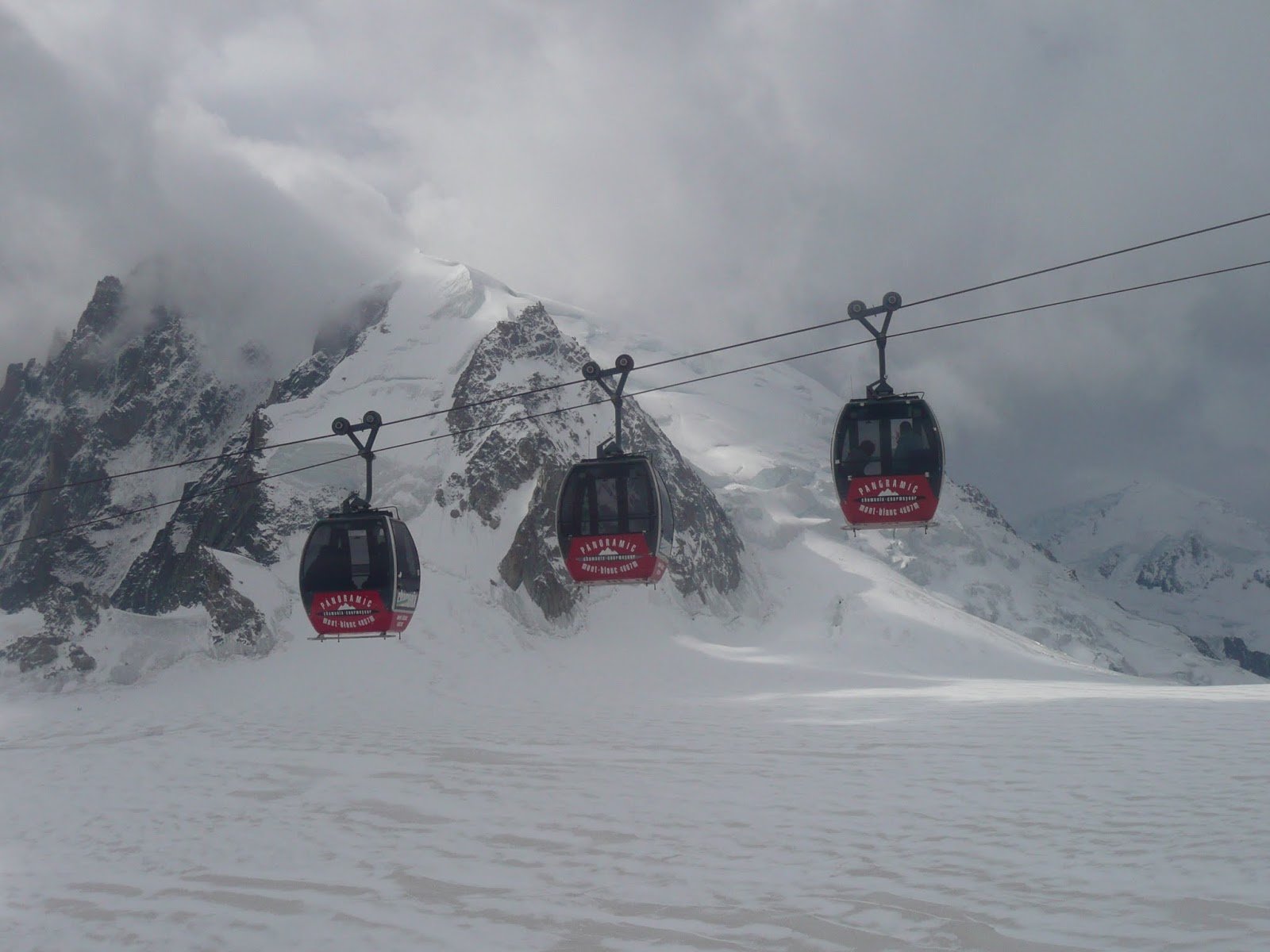
Crossing from France to Italy on a cable car

1L beer mugs always look great in photos - feels like the hobbits having a pint

Amy in the middle of a roundabout in Courmayeur, Italy. Odd.

Sunday, 21 August 2011

Waldo 100k


Being back in Oregon means all the races I meant to fit in last time I was here are now back on my to-do list. That meant I was able to squeeze in Waldo 100k through the Cascades in Central Oregon and see some of the lakes from the Cascade Lakes Relay from high up. Supposedly 11,000ft of climbing in 100k, but several people claim it's more like 13,000ft and, given Miwok 100k is around 10,000ft, this one feels way steeper. Mind you, still a lot less than the UTMB races in a week - the CCC 100k there is over 20,000ft of ascent.

A lack of air-con at home has meant that getting to sleep at a reasonable hour is very difficult right now so I wasn't able to pre-adjust myself for the 5am start but drove down to Willamette Ski Pass the night before to sleep in the car then wake up in a complete daze about five hours too early for my body.

Being the first race of the 2011/12 Montrail Ultracup (which finishes with Western States), it meant runners were attracted by being part of the cup, by the decent prize money to the top finishers overall and by the lure of qualification spots for WS100 for the top two men and women (dropping down to third if any of the top two had already qualified). Given Dave Mackey was the clear favorite (CR holder at Bandera and Miwok 100ks as well as winning both of those this year) and had a WS100 entry already, plus I already had my WS100 place too, that meant it would be very likely that top three in the men would be enough to get that coveted spot. Ditto for the women since Aliza Lapierre was running as the favorite and already had her spot too.

Many of the guys I'd met at Mt Hood 50 and the run around Mt Hood shortly afterwards were there, plus a whole host of other Oregonian and Californian ultrarunners whose names many would recognize. Yassine Diboun in particular was gunning for a WS100 qualifier and looked like he had a great chance to get it...I knew I'd be looking out for him along the whole way and hoping to stay ahead.

The course went up the ski run from the lodge, climbing steeply enough to make me walk before the top of the approx 1,200ft climb. It was pitch black and my headlamp was dying so I had to focus very hard through the trees (no moonlight to help out) to not fall and to spot the lights ahead of me so I wouldn't miss a turn on the single-track.

By the first aid station at 7.4 miles, Dave had zoomed off but the next six or so guys were all together and we could finally turn off the lights. Time to make the ascent from under 5,000ft (lowest point on the course) to around 7,200ft on top of Mt Fuji. Hopefully I'll see its namesake next year in Japan for TNF Ultra-Trail Mt Fuji but this one was mainly runnable and in the last few steps we were given a sudden and spectacular view out over Waldo Lake and a large chunk of the Cascades.

Waldo, photo courtesy of Craig Thornley.

Fuji view from a random Flickr account online.

Unfortunately we then headed straight back the way we came so the view was only for a few seconds. I'd have loved to stay longer but the heat was on and I was only in about fifth with Dave already about 10 minutes ahead, judging by the out-and-back to the summit. I at least wanted a chance of winning.

Lots of fast downhill followed and I moved past Yassine into fourth, trying to conserve energy and reduce pounding on the thighs given I was only about 15 miles into the race. Nick put some distance on me but I felt I was going fast enough and looked at the splits I'd written on my arm for the CR and saw I ran that section below CR pace, albeit still five minutes too slow overall.

Annoyingly, I still haven't felt fresh and good in a race since about March, just before I ran way too many races and overtrained. I'd hoped to be back to normal by now but the legs still had that heavy feeling and, relatively, a distinct lack of pace compared to five months ago. I've accepted that I need to do a hell of a lot more proper hill training to improve running in races like Waldo, but Bend is the perfect place to do that. I've already started, with runs around Mt Hood and up to the top of Mt Bachelor a week ago (can hardly call it a run, but 'crawl' would be fairer). It's funny that I went an entire winter with no snow in Cali but now it's summer in Oregon I'm getting in a couple of snow runs every week by going up high.

The day heated up on the way through to the third climb up to the Twins and I kept discipline to run where possible, even if just for 50 yards, and power-walk any harder gradients. I could see how Dave was going so fast since the course was almost all runnable, but not yet for me. I went over the top of the first Twin and reached the 32 mile aid station on the way down, still in fourth and having run solo for quite a while.

I eventually caught up to third after the bottom of the descent and managed to overtake since he had stomach problems and later dropped. Then the climb up started again, but it was fairly easy at first and a slow jog was possible. It did gradually get steeper, but I jogged maybe half the time and on every section that I could.

By about 40 miles the power-hike/jog combo put me in sight of Nick Triolo in second, who was having a great race in his first 100k. I met Nick at Mt Hood 50, where he was third, then again running round that mountain where he carried one of my water bottles after my big fall left too much blood on my right hand to carry anything with it. We pushed up and up, maybe jogging half the time as we hit the snow. It's very rare for this course to have snow as it's in late August, but luckily the last few weeks of melting after a monster winter had meant we never had more than about 200 yards of snow and trail-finding was very easy with the pink surveyor's markers.

At 42 miles I felt slightly fresher after not having run much in the last few miles so I started running more than Nick and soon left him behind near the top of the climb. Just two more downhills left and one evil bitch of an ascent in-between.

I kept stuffing food and gels into me whenever possible but I was knackered and had lost my uphill legs, or whatever I had of them in the first place. Luckily I still felt fine on downhills and was cruising those through the single-track (almost the entire race is single-track and, if not tired, really enjoyable running).

The final climb started and was gentle at first so I hit the 49.9 mile aid station looking hot and bothered and really not looking forward to the steepest and greatest climb of the day up to Maiden Peak at over 7,800ft. However, I'd been told by Jeff Browning (who at that exact point was en route to a solid fifth at Leadville Trail 100 - nice work, mate!) that the gradient changes a lot so there are plenty of short runnable bits. Maybe for him, but after a third of the climb I was stuck in a power-walk. Well, not even that - more of a determined tip-toeing gradually uphill. I was working so hard, even at a very slow pace that I couldn't take on any food - I literally didn't have enough breath or saliva to swallow and didn't want to stop to eat. That's a new sensation, but reflects that I'd hammered through the day on legs that hadn't had any taper whatsoever (not smart, but I need the hill training and miles to get ready for UROC 100k and TNFEC Championship Final).

When I finally got to the top, the view was just amazing, but I was paranoid about losing my position and was sure that at least one of the guys behind me wouldn't have been so slow on that climb. I did stop for a few seconds to take it in, but then headed straight back downhill and didn't see anyone on the out-and-back final section to the peak so knew I had at least six minutes on third.

Maiden Peak summit view, courtesy of a random Flickr account.


Down, down, down and very steeply at first. Now I could feel it a bit in the legs but knowing it was only 7.5 miles to go from the next and final aid station, I didn't mind. I ate, drank and was generally incoherent while the aid station volunteers were very helpful. Now I just wanted it over and it felt more like closing out a 100-miler than a 100k.

Theoretically it was great running to the end, with three miles of gentle rolling trails then a gentle downhill for the final 750ft descent. Normally this would have been the type of trail to make me smile like a lunatic, especially with the few sections along the edges of the turquoise mountain lakes. But I was running with the fear of being caught by third, who I assumed would be able to chase me down after such a slow section previously.

Eventually I saw Lake Odell and the Ski Lodge and ran in for second in 9:42:51, exactly 36 minutes behind Dave. He crushed the CR by over four minutes and was on a massage table looking much better than when I last saw him post-race at WS100 where it looked like he was on a drip. He'd led from start to finish and run a very solid race, but I still posted the sixth fastest time in the race's history and only Dave has run the final section faster (so I probably wasn't in danger of being caught, in hindsight). A tough day which didn't go to plan and felt pretty awful 90% of the time, but it should make future races feel better and this was one I'm glad I got the chance to do.

It's a fantastic race course and was a chance to catch up with many of the non-Ashland-based Oregonian speedsters who either ran, paced or just showed up to chill out with a beer. Nick held on for third in 10:08 so has his spot at WS100 booked, which is great for him, but unfortunate for Yassine who really had his heart set on it (he ended up fifth after a hard day with a very respectable 10:28). Aliza won but just missed the women's CR by 10 minutes and finished in sixth overall in 10:33. Full results here.

Going to the Bend Brewfest afterwards was also a slight endurance feat, but in a town with so many breweries, this is something I couldn't miss.

Next up is a trip to the Alps to crew for a TNF athlete at UTMB, probably Hal from how things seem to be headed. I fly in two days and once I feel less exhausted I'll have enough adrenaline to get really pumped up about this instead. But I'm very glad I didn't enter it this year since I'm clearly not ready for it yet. One year of training should be enough so I can at least get through it ok without completely breaking myself.

What a busy weekend of races it's been and congratulations to all the finishers at all of them, especially the friends I've got running these: Pike's Peak Ascent/Marathon, Leadville Trail 100, Trans Rockies.