Monday, 25 June 2012

Western States III

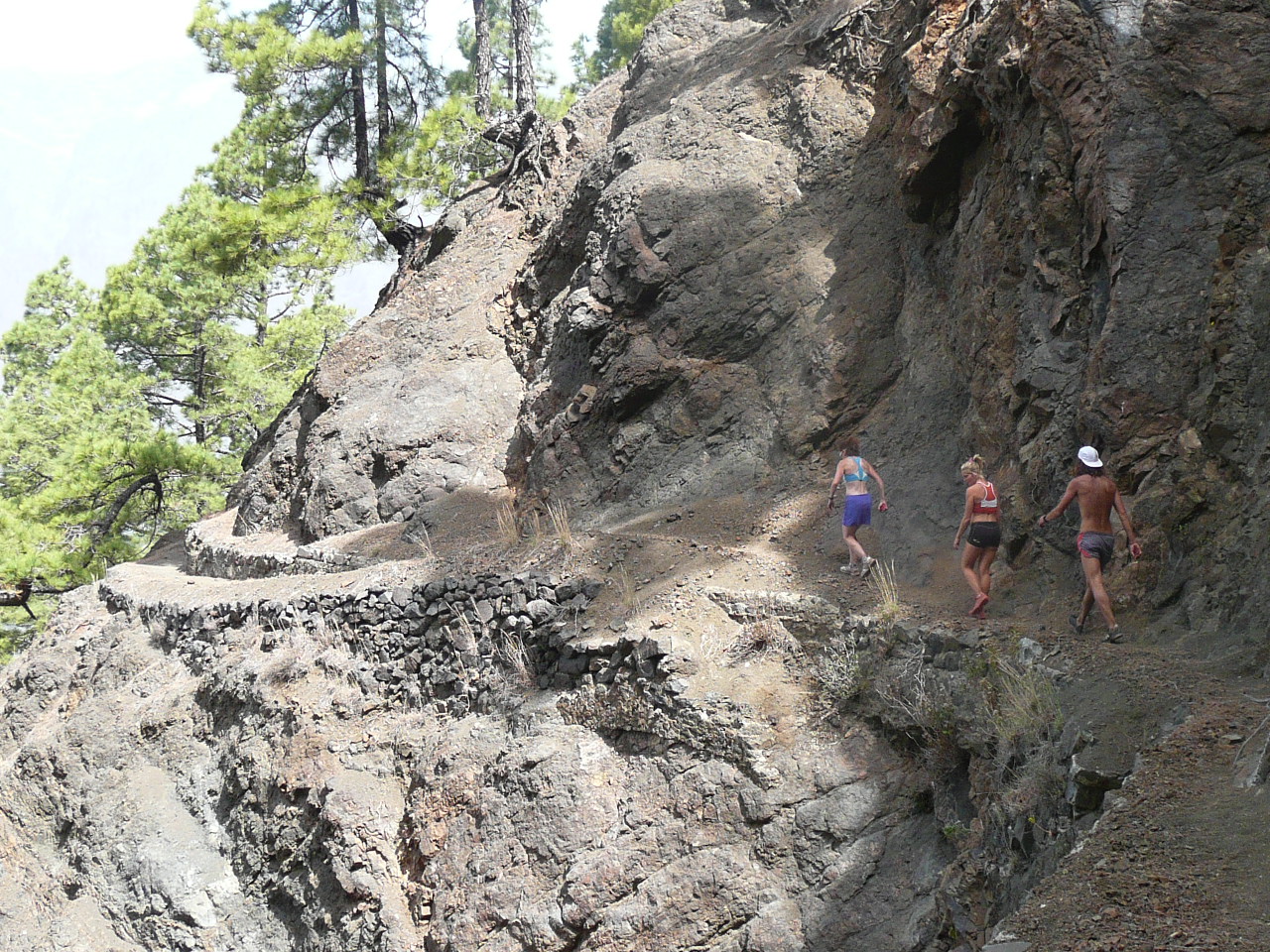
Top of the Escarpment at 4 miles; photo by Drymax Socks


Writing up something about the 2012 Western States 100 could be a 10,000 word novella but I'm going to save that version (including swearing and long descriptions about being generally very uncomfortable) in my head.

Bryon Powell's irunfar has covered most of it in minute detail, mainly summarized here so instead I'll give a quick overview of one of the most memorable and inspiring days in trail running history. Admittedly there were a few top runners who either didn't enter or had to miss the starting line, but on paper it looked like the men and women would be racing to new levels of excellence.

After doing the 2010 and 2011 races, both with what were considered to be faster snow course diversions, I was looking forward to the full course. Weather reports suggested it'd be cold and wet early on then not very hot at all later and these proved to be true.

In summary, it started cold with rain then snow, sleet and hail. Winds cooled things down further and it wasn't until getting below 5,000ft for the first time after maybe 40 miles that temperatures became more comfortable. The canyons were mild and the hottest temperatures all day were barely over 70F (around 20C) - way lower than the usual furnace.


A lead pack of six hit the Escarpment summit at four miles and these guys pushed each other all day. After reaching that point a few minutes behind and around fifteenth, I zoomed down the first descents and really enjoyed the lack of snow on the course. I wasn't trying to eat into their lead, but went a little too fast and so had sore thighs from very soon afterwards which groaned at me all day. But thanks to the lead pack (Wolfeman, DBo, Jesus 2, Smokey (see the cigar photos of Nick Clark), Elder Statesman Mackey and the Zeke) getting lost along the still-marked 2011 snow diversions for a few minutes, I was somehow in the lead with Ryan Sandes.

They caught back up, then by Duncan Canyon at 23.8 miles I was with Ryan and they had a small lead. Some walking left me in eighth as they climbed to Robinson Flat, but I went past Zeke who looked rough. I wished him luck and suggested he spend a few mins in the next aid station to recover (he did and then had an amazing surge late on to come in sixth) then powered on in seventh, which I held solo for about eight hours. Annoyingly, the six ahead were together and at each aid station I was told this, so knew that catching one of them meant getting back in the lead.

But by Foresthill at 62.0 miles the group had spread slightly with Timmy leading and powering on to his new, super-human, course record. I was 18 minutes behind him and just behind Nick who supposedly looked rough and would be 'easy to catch' according to the volunteers. He wasn't and his ability to come back from the dead suggested more Jesus-like powers, combined with the beard...maybe that does help (beard thoughts). Or maybe his strength comes from the beard, like Samson. Whatever it is, it's biblical.

With my pacers along to help me out, I hoped to capitalize on the easier running in the course in the last 38. Instead I'd used up my ammunition too early and could only grunt through to the finish, albeit fairly steadily. Mike Wolfe was seen after the river doing a slow walk and I thought he was dropping at Green Gate (79.9 miles) but he battled on like at last year's UTMB and still finished a respectable eighteenth man.

Some miles went by well but I was in more pain than previous years, compensated for by being better trained for the hills and starting the race fresher than 2010 or 2011. All I wanted was to break 16 hours and I'd take whatever position that meant. I needed around 10 minute miles for the last 20 miles and kept pushing through miserable sections, just wanting it to finish. With a couple of miles to go I caught Dylan Bowman who was spent, then kept going with a little sprint around the track at the end, mainly to get it over with faster.

Here's a video of the first 10 men finishing and another of the first 10 women too. Plus Greg Lanctot was kind enough to scream at me while shooting me sprint round Placer High track:


I'd describe it as the hardest day of my life (yes, I've led a sheltered life) but with the consolation that as soon as you stop, much of the pain and effort evaporates. Focusing more on this race in 2012 has helped but there are still a lot of things to work on for next year, as I'm sure there will be for the following year, etc. Much as it felt like hell for most of the day, there's something irresistible about the race, not least the level of competition.

Six of us broke 16 hours when only nine had ever done this before and most had done it on supposedly faster (but hotter) courses. Anyway, irunfar can give you all the stats and full results are here. I was extremely happy with 5th in 15:54 and a third top 10 finish. But hats off to so many people for their speedy running, particularly Timmy and Ellie's ground-breaking course records of 14:46 and 16:47.

Damned good runs by Oregonians too with three in the top 10 men and the same in the top 10 women. Too many great performances to mention but it'll be worth reading all the blog reports and irunfar will link to plenty of them once they've been written. Thanks to everyone who helped to put on the race, help out or just turn up and especially to my pacers Zach Violett and Jeff Caba. Somehow listening to me grunt for several hours didn't put them off the race at all.

Friday, 15 June 2012

Dirty Half Marathon

The past two years I've had my Junes filled with Western States and the Dirty Half Marathon in Bend two weeks before. Usually I also had Comrades two weeks before that but this year in an effort to be slightly more sensible (unlike Ellie Greenwood who foolishly put in lots of effort for her close second place at Comrades just three weeks before WS - tut, tut [head shake]), I skipped Comrades and the days of flying it involves.

Last year I opted to run the Dirty Half in 10 layers of clothing for heat training and most people kept asking if I was ok or if I wanted to leave some layars at an aid station. I didn't. This time I tried going for a hard run, especially since it's a competitive race with the leaders gunning for the national USATF half marathon trail title. It's really a race for second since Max King rolls out of bed each time after a hard shorter distance race the day before (this time it was an Olympic Trials qualifying time of 8:36 in the 3,000m steeplechase in Portland). He won in 1:15, as expected. 

The course is pure Central Oregon with beautiful, twisty single-track trails through the pine forests with plenty of sandy-colored background inbetween thanks to this being the beautiful Central Oregon High Desert. Not too much ascent, just rolling and sharp mini climbs. Basically really fun and fast for most of it. I managed a 1:20 so was happy with 8th and some faster running on trails thaan I usually would do.

Everyone had a great time, but later that day we found out there was a real tragedy that one man had collapsed on the course and died. The organizers weren't at fault at all and put on a fantastic event again, but there's always that chance that something can go wrong with any extreme exercise, as accidents can happen anywhere, any time.

The women's race was tight with local Marci Klimek edging out Colorado's Megan Kimmel in a sprint to the line in 1:24. My North Face team-mate (and Bend resident), Steph Howe rounded out the podium in 1:26 after winning her third Pole, Peddle, Paddle race the month before. Full results here. Come and do this sell-out trail race next year.

Sunday, 10 June 2012

Do Ultra Beards Make You Run Faster?

Nick Clark - definitely bearded


At the end of last year I made a few light-hearted predictions about ultrarunning in 2012, including that ultra beards would go out of fashion. From what I've seen so far this year the men with beards still have beards. But for anyone trying to emulate their achievements, the important question is...do beards make you run faster in the mountains?

Using rigorous scientific methods which I'm unwilling to disclose, I've decided that the secret to success does not lie in some kind of Samson-like ability from not cutting your hair anywhere. Western States and Hardrock will put this to the test in the US but here's a sample comparison for interest's sake:

Bearded:

Tony Krupicka (injured)
Geoff Roes (taking time off to get back his mojo)
Nick Clark (see photo above which I'm posting again - clearly there are some issues)
Joe Grant (calls everything 'douche grade' and wears racing flats to do muddy, technical, Spanish mountain races)
Timothy Olson (seems to be winning a lot of stuff and providing a ray of hope for pogonophiles)

Unbearded:

Kilian Journet and all the Europeans (they seem to do well in general)
Dakota Jones (pretty sure he couldn't grow a grizzly beard yet but this isn't holding him back)
Mike Wolfe (with a name like that you might expect a beard, but it would just get in the way of him Tweeting)
Dave Mackey (Ultrarunner of the Year 2011 with zero beard)
Adam Campbell (on fire, so it's lucky he doesn't have a beard to burn)
Anna Frost (unstoppable and definitely beard-less)

Clearly beards are not benefiting runners in 2012 as much as, say, in 2010. My own accidental experiment with a pathetic beard while I forgot my razor in Chamonix did seem to suggest I was improving...but that could well have been down to training rather than mystical beard-related powers. The beard has gone and I haven't slowed down, so I believe it was either too weak a beard or just didn't help anyway.

I'm also fairly confident that beards don't make women faster. I'm yet to see a woman with a beard win a race, although I'll admit there may be a few further back in the pack.

The predictions in full and how they're panning out:


1. Mike Wardian will win at least one really major trail ultra, finally proving that he can find his way through the woods as well as run fast. It's only mid-season so Mike has at least 30 ultras left this year and I'm confident he'll win plenty.

2. Several people will run under 14 hours for 100 miles on various surfaces and at least a couple will break 13 too. Mike Morton is making this true all by himself with three already in 2012, plus Hal Koerner knocked out a 13:24 at Rocky Raccoon. I think there's still scope for some sub-13h action this year.

3. Western States will be run on the normal course and won't be as fast as the past two years. Looking like a safe bet, but with such a classy field they may well run the fastest full course time to break the 15:40 best by Mike Morton.

4. Some men you've never heard of will win big ultras in the US but you'll have the same names for the women at the front of the top races. Ok, this hasn't really happened yet but it's only the start of the main summer season.

5. China will join the ultra bandwagon, train up some marathon runners and send them to races to make them the 'Salomon' of 2012. These runners will then run away at the finish line and claim asylum. I've heard there's a secret program and these Chinese runners will be at the Olympics then will become British citizens.

6. North Korea will try to copy this 'success' but their runners will run away before the starting gun even goes off. I think they're too messed up to know what the Chinese are up to right now.

7. Races in the Euro area will become very cheap (to the rest of the world) as the currency becomes monopoly money. This is happening to an alarming degree and if Greece leaves the Euro, as it looks like they may, then plan to do some cheap trips to Europe.

8. In the quest for lighter and more minimalist shoes, one company will come up with the idea of injecting shoes with helium, which will lead to hilarious accidents on course as people with squeaky voices limp into aid stations. If anyone does this I'm suing as it's my idea and I'm in America so I'd probably win.

9. Ultra beards will go out of fashion. See above.

10. A tribe from the Amazon will be discovered who run all day and night in Hoka-like shoes and have done for centuries. A book will be written and Scott Jurek will race them. I'm really hoping there's an explorer down in the Amazon who'll find a lost tribe who run all day with dead leopards stuck to their feet and that these large, cushioned shoes allow them to achieve untapped levels of running. If so, I'll let Scott know and he can take a break from his book tour.

Wednesday, 6 June 2012

Chamonix in Photos - Mountain Training

I just got home from a month away in Europe where I fitted in more mountain running than ever before. It's eye-opening to try to fit in more vertical than I'm used to and on gradients that are steeper than I'd usually train on (up to 1,900ft/mile - definitely not douche grade as the Skyrunners described easier slopes!). I have an even more deep-founded respect for the guys who can fly up those slopes and achieve things like 30-minute Vertical K times (a 3,300ft climb over 3 miles or less).

Combining the volcanic slopes of La Palma for the Transvulcania race, then muddy slopes of the Spanish Pyrenees for Zegama-Aizkorri was tough. Then an easier weekend at the Northants Ultra 35 miler with just 2,000ft of ascent before heading to Chamonix to run around the Mt Blanc area and 'run' (ie hike) up thousands of feet per day and trash the legs on the downhills. And all while watching the Comrades Marathon jealously from afar, especially the incredible runs from Ellie Greenwood (2nd), Jo Zakrzewski (4th) and Devon Crosby-Helms (5th) and Mike Wardian battling through pain from the start line to still run 6h03m, only half an hour off the men's lead.

There's an obvious trade-off within training that if you run up and down mountains all day long you lose some of that speed for the flatter races and specialization is the key to success within the increasingly competitive men's fields. For example, just nine minutes separated the top 10 men at Comrades. So this summer I'm giving Western States a bit more respect and training for it rather than the road races. It's just 17 days away and I'm getting kids-at-Christmas giddy about it. As a nice reward, I got some of the views below within the last week.

Chamonix Vertical K course up a ski slope


Monday, 28 May 2012

Western States Training Runs and Different Styles of Races Internationally

The UK during the summer of the Queen's Diamond Jubilee (60 years since coronation),  plus with some national pride for the Euro 2012 Football Tournament and the little matter of the Olympics


Memorial Day weekend at the end of May has the traditional three days of training runs along the lower parts of the Western States course and there are people out doing that as I write. But I'm over in Europe so had to do my best to get in the right kinds of runs - ideally lots of +/-, long downhills and heat.

Without realizing it, I picked ideal events in Transvulcania, Zegama and the lesser known Northants Ultra 35 miler yesterday in the UK. Transvulcania had heat and huge climbs as well as a steep 8,000ft descent to trash the legs. Zegama was a beast, largely due to the cold and muddy weather but again with lots of up and down. Then weekend three had the flatter Northants Ultra but it was on about as hot a day as we get in the UK with humidity to make it tougher too. It also helped that it started and finished two miles from where I grew up and where my parents still live (much easier than trying to do a long run in the rolling countryside filled with farmland and fields).

I hadn't run a trail race in the UK for a while and it reminded me of some of the things I love and also some that I don't like about races here. In the US and Europe they generally mark trail courses really well, especially in continental Europe - I've never come close to getting lost on any mountain/trail races there. The US marks courses too and generally does a good job, although getting lost is still a distinct possibility if you stop concentrating for a minute. But in the UK you pay less for an entry and often have to part or fully navigate a course. That was the case yesterday and I had to run the whole thing with a set of maps in my hand, stopping often to work out which unmarked and un-sign-posted route to take.

The low key, fun atmosphere is a positive part of most UK races but getting lost and orienteering is not the best aspect of racing and is kind of a different event. Each country has multiple types of off-road races and UK fell running is very similar to European mountain races, except for the lack of course markings - I felt like I was running in Northern England in winter while out on the Zegama course. But I can't help but think that finding your way shouldn't be a big part of a running race, especially when it involves stopping a lot and scratching your head.

The US trails are often so well manicured that I'm amazed how people have the time and energy to maintain them so well. It was one of the first things I noticed when I moved to the States and I like it. Going off piste is fun too, but many areas have fantastic trails systems that mean you at least know whether you're on a trail that goes somewhere or not. Many times yesterday I wished for a trail that at least looked like a trail rather than a right of way that goes along the edge of a farmer's field and splits into several possible directions, none of which is noticeably a trail, i.e. any of the directions looks equally as little used and wrong. I'm sure that'll offend some Brits, but it's just a matter of preference.

However, the navigation aspect does make for a different challenge on a rare occasion and I like variety, being a fan of pretty much every type of running and loving road, trail, mountain, jungle, desert...basically anywhere you can run.

So here's a photographic comparison of some typical trails in the US, UK and continental Europe to show some differences. Obviously not all trails are like these but from my racing in all three places they sum up my experience of something like 50+ different ultras across those areas.

A more-obvious-than-most path in the UK through farm land, right outside my parent's house.

Marin Headlands north of San Francisco in the US, used for numerous races, including Miwok and TNF50. 

Part of the Zegama route showing what the higher parts of continental European races often look like (the easy bits, anyway). This could easily be from a fell race in the UK too.

For completeness, I should probably list my results too:

May 12th, Transvulcania 83k, La Palma, Canaries, Spain - 8h20m - 15th (16th really as I was chicked after racing it hard)

May 20th, Zegama Marathon, Spain - 5h21m - 143rd (really 151st, purely as a training run) running in with Nikki Kimball

May 27th, Northants Ultra 35 miles, UK - 4h18m - 3rd (aimed for a training run but had a group of two fast guys who it was worth sticking with to avoid getting too lost...we only added about half a mile but on my own I'd have got lost much more)

Four weeks left until Western States and I'm getting very excited about going back there and doing the full course after two snow years. It'll feel flat compared to the Skyrunning races, which is exactly how Kilian described it after his first attempt.

Monday, 21 May 2012

Zegama and the Hoopla Around The American Invasion of Skyrunning

Kilian winning Zegama. Photo: Bryon Powel of irunfar from his website


This is a just a quick post before I leave Zegama but I think all the Americans (and Brits tagging along) thoroughly enjoyed the experience of running the Transvulcania 83k on the Canaries (off Africa - very hot and humid) and the Zegama Marathon (in the Spanish Pyrenees - very wet, snowy and muddy). The details of the races have been out in the interweb in minute detail thanks to irunfar, Talk Ultra and Ultra168, so I won't go into that too much. But with how slippery Zegama was, I felt very Spanish after a slide down a hill left me with a grassy arse (say it out loud and you'll get what I mean).

It was fun to see what the Skyrunning guys do and to see really European-style races with huge amounts of vert and more technical running than back in the US. In fact, the mud, rain and snow of Zegama made me feel like I was on a fell run in northern England...just wish I'd had some fell shoes with me.

The sport is clearly progressing and becoming more media-friendly and I see no problem there. It got a bit much sometimes to have cameras and microphones everywhere but it still boiled down to two very hard races and some excellent competition and scenery. There's always going to be a place for big and small races alike and the nature of the sport means it'll never reach the hoopla around the main US or European sports. Maybe closer to cycling but probably still limited too much by courses and entrant levels to make it go as far down that road.

It comes down to this - it'll never be a sport of millionaires and the training and commitment it takes to run mountain ultras is so huge that only people who genuinely love it will even consider it. Doing it just for the money just doesn't seem realistic to me...ever.

So back to reality for a while now before the US has it's own mini-media frenzy at Western States. I can't wait to run there again!

Monday, 14 May 2012

Transvulcania and the International Skyrunning Federation


The hotel for the week on La Palma

Part of the 'media frenzy' - Bryon 'irunfar' Powell interviewing Darcy Africa and Nikki Kimball

Sunset outside the media room

A morning run for the cameras with the Salomon contingent

Camels on the island, not sure what the farmers use them for - meat?

Nikki Kimball helps fix Nick Clark's neck after a crick from the long plane ride

A mid-week run with a view - L-R: Dakota Jones, Joe Grant, Anna Frost, Nikki Kimball and Anton Krupicka

Nikki on a great mountainside trail we all found

Nikki, Anna and Tony

The beach near the hotel with a comfy bar above it

Max King's secret tactic for speed - cigars

Hog roast courtesy of the locals

Dakota's prize being shared out - Bryon rocking the look

Nick Clark looks too comfortable with this. Think he should probably try a business suit and leather  couches with expensively bound books on the shelves behind him. Maybe a glass of Hennessy cognac too.

Anna's clearly used to having the cameras in her face the whole time

We were given these when we arrived - a bird only found on the island (see next photo)
This is what the bird actually looks like - not so cuddly


Transvulcania lived up to its billing as a competitive, tough and beautiful ultra in the Canary Islands. It was also hot and fairly humid, draining the energy out of many runners and causing several to drop. Reported temperatures hit the mid-90s in Fahrenheit and left many to walk it in from a long way out.

I came to it knowing that the huge amount of ascent would be very tough for my legs and a fair bit steeper than other ultras I’ve done. It was supposedly an 83km (almost 52 miles) course but most GPS readings had to closer to 70km, so even allowing for some error and tree cover, that meant it was even steeper as the climb wasn’t reduced. 

Here's my Garmin measurement of it - 14,717ft of ascent (less descent than this as it finishes above sea level) and 44.64 miles (just under 72km)

The thing that everyone out here has commented on is what a beautiful island La Palma is, even though most of us hadn't heard of it, just knowing of the more famous nearby tourist islands of Tenerife and Lanzarote. When the sun rises and you get views over black, volcanic lava flows, then the sea far below, it’s hard to not be amazed…even when your body is working so hard to keep climbing.

In summary, the course was a 6,500ft climb to start off with, partially pre-dawn and through villages with a UTMB atmosphere, then a downhill before a steeper climb, some undulation and a final push to over 8,000ft before descending to sea level. Then the last few miles were flat followed by a final, sharp 1,000ft climb and a mile long road sprint to the finish in the blistering heat. From that highest point you could see much of the island (including the finish line over a half marathon away) and I wish I could have spent time enjoying it instead of then hammering downhill and looking just ahead of my feet the whole way.

The International Skyrunning Federation (“ISF”) have moved into the ultra world this year and this race kicks off their season of races with more than a bang. Dakota Jones (6:59) and Anna Frost (8:11) smashed the course records with incredibly impressive runs against stiff competition. Virtually everyone I saw seemed to be in the Salomon kit and I spent the whole day around different Salomon racers – they’ve really thrown their weight behind this.

Given the difficulty of the course I thought top 10 was a tough aim and would still require besting some incredibly strong runners. In the end I got 16th in 8:20, but am very encouraged that the 8,000ft+ descent went well (ideal training for Western States), moving from 30th at the top to my final position a half marathon later.

It was a tough day and the heat was more of a factor than I expected, with dehydration causing me some issues (my own fault for not drinking enough), but the North Americans had a much better showing than at UTMB with the men’s win and 3rd (Nikki Kimball) and 4th (Darcy Africa) in the ladies’ race. In fact, I was the last of the North American men to finish (Geoff Roes dropped after some nasty stomach problems) so the rest were all ahead – Rickey Gates (10th), Joe Grant (11th=), Mike Wolfe (14th). Full coverage of the race and results is here.

If you get the chance to run this and like the idea of a beautiful tropical trip before the summer starts, plus a very hard course, then this is perfect.

The next few days have a 3-day seminar about the future of Skyrunning, plus some pool time. Then off to northern Spain and the Pyrenees for the Zegama Marathon. At the moment none of us plan to go all out as we have varying degrees of minor limps, but I’m sure some of the guys out here will end up going hard. Fantastic trip so far and well worth the long flights – thanks ISF! 

Monday, 7 May 2012

Race Travel

The trail to Everest Base Camp at the only ever running of the multi-day Land of the Yeti Duathlon, 2009


Tomorrow I head off for the Canary Islands for the super-stacked Transvulcania 83k with around 15,000ft of climbing in a double marathon. It starts off a month of travel back to Europe for the Skyrunning Federation conference and two of their races (the other is the Zegama Marathon in the Spanish Pyrenees), plus the Northants Ultra by where I grew up and a quick trip to Chamonix for some training. Bryon Powell from irunfar will be covering both Skyrunning races live and has noted yet another long list of fast runners will be there - see his article here.

Both these mountain races are extremely tough by my standards in terms of the amount of climbing so they're mainly a new and harder challenge for me and a chance to see some new places and faces. One of the things I most love about ultras is that they provide an excuse to see incredible locations around the world and I've tried to use races to see more of the planet, having raced in over 30 countries currently (I have zero chance of ever completing my wish list as I won't live long enough to fit it all in - I'd need a millennium). New cultures and friends really add spice to life, although returning home can sometimes be depressing...although that's not really the case now I'm in Oregon, which kind of feels like a permanent adventure.

Without events that take me to some of the best scenery I can imagine, I'd probably never have seen the middle of the Sahara, small alpine villages or a whole host of other fantastic places. I'm often amazed by the commitment and organizational ability of race directors to create courses in harsh environments and out of the way locations, so I'm very thankful for the great work so many of them do, often purely for love of running and not for profit.

Race travel has been a large part of my life since I started running in 2005 and I can't imagine doing without it (just ask my wife who complains that it'd be nice to have the occasional holiday that didn't include a race). But I also try to take advantage of local races too since travel can be a hassle. Given I'm not from the US, just being here and doing almost any event feels like it's exotic. So this year I've got plenty of trail races close to Bend, OR, as well as fantastic Oregon ultras like the Gorge Waterfalls 50k in March and the Waldo 100k in August. I'm even counting Western States 100 as kind of local since it's at least in the same time zone (that's close for Americans, but not for my British sense of distance).

The one big downside to all this travel, excluding the cost, is adjusting to time zones. My wake up call for Transvulcania will be around 3am local time...or 7pm for my West Coast-adjusted body. After a couple of days of flying then just two days to adjust to this, I'll be a mess. I suspect the Americans may suffer a little from sleep deprivation at the race so don't be surprised if that gives an edge to the European athletes (plus many of them train on more similar terrain, which has a tiny benefit - although we have plenty of tough terrain to play on in the US).

So I hope to have a really enjoyable time meeting some of the most talented people in the sport and seeing places I'd probably never have visited otherwise. Is there any other sport that can offer this to the same degree and allow competitors to get into the least accessible, most beautiful areas? Or if you prefer you can race along a canal which seems to be popular back in the UK, offering such sights as dead homeless people, shopping trolleys (carts), toxic water and being attacked by killer geese.

Monday, 30 April 2012

Why Run A Road Half In Training For A Trail Ultra?

Running hard in a half marathon in 2009


I got back from a trip to Eugene, Oregon this weekend for the half marathon there as part of my Western States build up. So, apart from the fact that I enjoy road racing and that Eugene is Track Town USA (with the US Olympic Trials occurring around WS time), why is that a good training run for a mountainous trail ultra?

One thing that I have found over time is that the more I just run trails, the more I tend to slow down. Yes, the ability to climb and descend gets better, but the pace on easier trails goes down. And WS, like most trail ultras, has a lot of faster running in there as well as some climbs to slow things down a bit.

Apart from downhill, most people are unlikely to hit their half marathon road speed in a trail ultra, but by working on the uncomfortable pace close to your lactate threshold (as a half marathon does), you force your body to adapt and be able to sustain a higher pace when on long runs. Your lactate threshold is basically the exercise intensity where lactic acid starts to accumulate in the blood, when lactate is produced faster than it can be removed. Effectively, this causes a runner to slow down so the higher this boundary can be pushed, the higher his or her sustainable pace becomes.

If you can make 6-minute/miles feel easier (or 7s, 9s, 11s etc) at the high end then it really helps to make cruising speed more efficient too in a really long run.

So why is a half marathon particularly good for this type of training? There are two main reasons I'd suggest for this:

1. Half marathon pace is fast enough to get close to your lactate threshold and push that boundary out so you can run faster, plus it is a long enough race that you have to push hard for a sustained period.

2. It's short enough that it doesn't take too long to recover from for a regular runner, certainly less time than a marathon.

Admittedly, guys with incredibly fast sub 2:20 marathon times haven't generally done as well in 100 milers as their speed would suggest. But it's the combination of the flat out speed and trail fitness that counts. Put a Kenyan Olympian on a mountainous 100-miler without specific training and they'd obviously not be bad, but they wouldn't automatically be the best unless they trained well for and adapted extremely well to the specifics of a mountain ultra (the same applies in the other direction but is more obvious to people and has been more tried and tested).

Speed training can be done on trails and hill work is similar in many ways, but if you like roads then they can really help as part of trail ultra training.

Monday, 23 April 2012

Kit Choices For 100 Milers

Which shoes to choose?


The one rule that every ultrarunner learns to stick to, often after a bad and long day on the trails, is to not try anything new on race day. So Western States is exactly two months away today and I realized I needed to make sure everything I want to use there gets well tested and worn in. It also brings home that I only have 61 days left to get in the best shape possible, which seems like hardly anything.

So it's time to try out all those flavors of Clif gels I haven't tried yet (just in case they work better or worse), to wear in the shiny new shoes that I've been saving for the race and to make sure I have everything I think I'll need (anyone got a spare pair of Kilian legs?). It may seem a long time in advance to do this, but this way it's possible to have complete confidence in all the gear I'll take with me.

Made me think there's probably a few other people (approximately 400) who are starting to realize that WS is just around the corner, especially after a scorching weekend all along the west coast. And all those who have other summer target races - they're all very close now so don't leave things to the last minute.

And the obvious way to prepare for those summer mountain races...to run the Eugene Half Marathon on Sunday. Because when Track Town USA is a short drive away it's a waste not to.