Sunday, 31 March 2013

Gorge Waterfalls 50k

Multnomah Falls


After taking February off running to let my remnants of a sore knee heal, plus to have an off season for once, the perfect first race back is the stunningly beautiful Gorge Waterfalls 50k along the Columbia River Gorge in Oregon. With waterfalls in virtually every mile it's just about the prettiest 50k course I'm aware of anywhere. The most spectacular waterfall (and most popular with the tourists) is Multnomah Falls but there are so many  along the out-and-back route that it's almost a shame we race past them and can't stop to appreciate them all. Given I'm moving back to the San Francisco Bay Area next month this is the ideal send off and reminder of everything I love about Oregon.

There was even a pre-race Trail Film Fest at McMenamins Edgefield the night before with inspiring movies like the 'Dipsea Movie' and Kilian's 'A Fine Line.' Great idea and it looks like it be back again for next year.

Film Fest with Simon Mtuy's film about running around Kilimanjaro


The course is certainly short (probably somewhere around 28 miles allowing for the cliffs and trees interfering with the GPS) but has plenty of climbing (at least 4,500ft by general consensus and my barometric GPS showed 5,600ft). Also, the trails are rockier, twistier and more technical than most of what we see in Oregon, but that's what the Rainshadow Running races are known for.


As with last year, this was one of the most competitive ultras in Oregon which says a lot when you consider how many sponsored ultrarunners there are in the state, especially in Bend, Portland and Ashland. The race was close at the turn-around Chris Kollar from Missoula (MT) with Bend's 1:06 half marathoner, Mario Mendoza then ex-pro skier, Zach Violett (also Bend). Not far behind were James Bonnett from Scottsdale (AZ), Yassine Diboun (Portland), me, Hal Koerner (Ashland) and a string of other fast runners. Steph Howe (Bend) had a solid lead in the women's race too, as expected.

There were certainly some early season cobwebs amongst the runners but it was fun to leapfrog Hal throughout the first half (he had to be careful on the rocky sections due to a foot injury) then spending the entire second half doing the same with Yassine.

My legs felt dead throughout after a tough training week so I was really happy to keep gaining positions and be able to keep up a decent pace, not realizing I was only a little behind 2nd and 3rd, eventually finishing 4th.   As a bonus we had freaky weather for March (70 degrees F) and Hood River is just down the road, full of wineries like Mt Hood Winery - see the views of Hood below!


Results are already on Ultrasignup but Mario unfortunately bruised his foot and was limping so decided it wasn't worth pushing since he only recently came back from foot surgery which left Chris Kollar to win comfortably. He's clearly got a lot of speed and can run technical trails since he smashed Mike Foote's The Bear 100 course record last year by 44 mins, which beat Geoff Roes' record, which beat Karl Meltzer's record, which beat Hal Koerner's record.

Men:

1. Chris Kollar 3:22
2. James Bonnett 3:35
3. Zach Violett 3:37
4. Ian Sharman 3:38
5. Yassine Diboun 3:40
6. Jeff Browning 3:42
7. Jonathan Heinz 3:44
8. Jason Leman 3:46
9. Hal Koerner 3:47
10. Aaron Ray 3:47

Women:

1. Steph Howe 3:49 (NEW CR)
2. Catrin Jones 4:05
3. Darla Askew 4:24
4. Susan Barrows 4:24
5. Jenny Capel 4:27
6. Alicia Woodside 4:37
7. Lynde Fitzpatrick 4:51
8. Jessica Lamanna 4:57
9. Shamai Larsen 4:59
10. Debbie Gibson 5:00

Steph and myself at the finish
More photos (of all the runners as well as couple of waterfalls) by Glenn Tachiyama here.

Sunday, 10 March 2013

Hydration - Tim Noakes' Waterlogged And Personal Experience

Having a drink on Mt Diablo, CA


Having read plenty on the subject of hydration relating to exercise, I thought I'd write a high level discussion about it, based on the controversial conclusions from Professor Tim Noakes' book, 'Waterlogged: The Serious Problem of Overhydration in Endurance Sports' as well as my own personal experience and that of friends and coaching clients. His previous book, 'The Lore of Running' is like a bible in the exercise science world and has been very helpful to me in everything I do within the running world. With temperatures starting to warm up and races like the Marathon des Sables (article about how to train for the MdS) in the Sahara Desert around the corner I thought it's a topic that could hopefully help some runners to avoid bad races, based on advice from the book and my own experiences from 170+ ultras and marathons across the world.

One thing I've noticed a lot since I started coaching a couple of years ago is that almost everyone in the world of sport clings to the idea that athletes must remain 100% hydrated to not suffer from a drop in performance. The sports' drink industry has put countless millions into marketing this idea and telling people that 2% dehydration (presumably 2% loss of body weight due to sweating) can seriously affect performance and should be avoided. They backed studies to show that losses in excess of 5% of body weight can decrease the capacity for work by about 30% (Armstrong et al. 1985; Craig and Cummings 1966; Maughan 1991; Sawka and Pandolf 1990).

This is advice I assumed to be unbiased and effective so I followed this advice in one of the first ultras I ever ran, the Marathon des Sables in 2006. Unfortunately, I'd never heard of hyponatremia, an electrolyte disturbance in which the sodium concentration in the blood serum is lower than normal from drinking too much. So I drank virtually every drop of the 9Ls (304 ounces) of water provided per day by the organizers and found myself fainting twice on day two as the symptoms started to affect me.


The author hydrating in the Sahara in 2006
So after that experience I certainly questioned the general advice at the time to drink as much as you can to stay hydrated. I've never heard anyone mention the dangers of drinking too much, yet when you hear about a death at a marathon or half marathon, more often than not over-drinking. Considering how dangerous it is to drink too much during a race, surely the dangers of drinking to little must be equally as severe?

When Professor Tim Noakes published his book on this subject last year, 'Waterlogged: The Serious Problem of Overhydration in Endurance Sports,' I knew he'd have a thorough review of all the evidence without any pre-existing prejudices or corporate sponsors wanting a bias to the conclusions. Bear in mind that Gatorade and the Gatorade Sports Science Institute (GSSI) funded much of the research on this subject with a clear interest in telling people to drink lots.

His book is more than thorough, looking at every single published study on this subject that he could find in all scientific journals, including all those written by the GSSI. There was a striking common theme amongst these studies that either examined the effects of dehydration on performance or the effects of exercise-associated hyponatremic encephalopathy (EAHE). It was that dehydration levels seen in an ultra or Ironman race (never mind a marathon or less) don't reduce performance and many of the studies had conclusions that were the opposite of what the evidence they presented showed. This is particularly worrying because the guidelines produced by the American College of Sports Medicine (ACSM) still provides guidelines that suggest dehydration is the main worry for athletes, not the effects of hyponatremia. US races therefore still urge runners to drink too much, although I'm noticing more of them start to tell people that drinking too much can be dangerous too, but that's not the focus of the advice.

EAHE is a much more serious danger than dehydration in races and the percentage of people having medical issues in races has increased as more people follow the advice of drinking to maintain body weight during exercise, with the major cause (based on the clearly defined and explained symptoms in Professor Noakes' table below, backed up with extensive evidence from his book). The striking point is that the main symptom of dehydration is thirst and it's only when an athlete feels very thirsty that performance can be reduced. The old advice of ignoring the body's thirst mechanism and trying to stay ahead of thirst by drinking to maintain body weight is a load of rubbish.

Table taken from 'Waterlogged' by Professor Tim Noakes, 2012. Note that EAPH refers to Exercise-Related Postural Hypotension

The clearest evidence of this is that in the many high-level races where body weights were taken before and after for lead runners and people running more slowly, the highest levels of dehydration (biggest percentage of body weight lost) were found in the leaders with the winner almost always being the one who lost the most body weight percentage. So if losing any water through exercise reduces performance, how come the best performers are the ones who lose the most (as a percentage)? The evidence suggests the ability to run while 'dehydrated' is an attribute of a top athlete, not a reason they fail.

From my own experiences in marathons and ultras, as well as those of people I know and coach, I'm not aware of anyone having their performance reduced from dehydration except Kilian Journet in the 2010 Western States 100 where he ran without water bottles in extreme heat and lost the lead to finish third. Even in that instance, heat-stroke probably played a large part, not just dehydration (see next section for more details). In every other instance I can think of, dehydration has not been a problem as long as drinking to thirst was adhered to. I've run some of my fastest marathons on barely more than a couple of sips of water (in cold conditions) but I wasn't particularly thirsty on those days in those temperatures. On the other hand, I've suffered from drinking too much at both the Marathon des Sables (desert) and Western States 100 (extreme heat).

Heat-stroke versus dehydration

The general fallacy that has been popularly disseminated is that drinking too little raises the body temperature to dangerous levels when exercising which affect performance so endurance athletes are particularly prone to this. However, to summarize Prof. Noakes' evidence and conclusions, there are two key problems with this:

1. Body temperatures rise more in higher intensity, shorter forms of endurance running such as 10ks or below - the chance of heatstroke is much higher in these than in a marathon but a very hot day can cause this too (think Western States, not a 70F road marathon).

2. Importantly, drinking has a very minor effect on cooling the body although iced water would have marginally more effect. Getting into the shade or an ice bath is the only effective way to reduce body temperatures fast in a race and have an effect on heat-stroke.

Again, personal experience suggests this is true. I've crewed for people at Badwater 135 through Death Valley where temperatures can hit 130F and external cooling like ice baths helped my runner while constant drinking only served to quench thirst. It certainly seems that heat-stroke is more likely to happen to ultrarunners than dehydration, particularly in the exposed sections of extremely hot courses. However, drinking alone won't help much here and use of ice and water externally will make much more difference, as well as adjusting effort levels to reduce heat produced in the muscles.

Mike Wardian in an ice bath at the 2011 Badwater 135 
What about electrolytes?

Another commonly-assumed piece of running lore is that as a body exercises, electrolytes are lost and must be replaced. This is a reason to drink Gatorade instead of water and therefore pay Pepsico (owners of Gatorade) for their product. Yet Prof. Noakes also examined this area using all the evidence available as well as his own research. In summary, he found that the body is very good at regulating electrolytes and that the levels lost in sweat and urine are adjusted by the body based on exertion and liquid intake. He basically says we don't need to try to replace these with drinks or salt tablets.

That sounds counter-intuitive as most runners will have experienced cramps or bonks that were seemingly fixed once they took on electrolytes. However, he goes on to show that cramps and bonking are unrelated to salt/electrolyte intake and are really affected by exertion levels above what the body is trained for (something that will typically happen in an ultra given its extreme nature) or a lack of fuel in terms of glycogen. That means that getting energy (not salts/electrolytes) into the body combined with lower effort levels such as walking for a while are what fixes these problems. Given that most runners have to slow down and will eat as well as take salt tablets, the effects can get muddled and improvements attributed to the wrong factors.

Sports drinks do have glucose and there's no doubt that taking this on board in endurance activities is beneficial. At least Prof. Noakes didn't burst that bubble!

Conclusion

I found the book to be very illuminating but it won't alter my own tactics in races much, mainly because I don't tend to over drink since that means carrying too much liquid between aid stations in an ultra which therefore weighs more. I will be more careful in trying to identify and stop the causes of things going wrong in a race such as Western States. In fact, I'll use the mantra of drinking to thirst rather than aiming for a certain volume of liquid per hour.

Sports drinks are still good for athletes, we just don't need to drink as much since hyponatremia is a bigger worry than dehydration. Also, I'll still take on electrolytes within drinks because they haven't been shown to cause any harm, so even a placebo effect is useful. Besides that, electrolytes are usually bundled with calories in the form of glycogen in drinks, but any low calorie drinks will be off my list during races and I'll stick to my Clif Shot Electrolyte drink because it has calories and sugars (basically, glycogen). If the electrolytes help then that's a bonus, but it seems the calories will do the job anyway and I won't aim to take on extra electrolytes in tablets etc unless things go really wrong - it's worth trying anything at that point.

For food during races, gels and similar products will still be the basis of my own nutrition (Clif Shots) to provide the energy required to sustain a long endurance effort. However, the place for salty foods isn't so much to replace lost salts as to provide a change in taste after hours of sugary foods during an ultra.

It helps to learn more about the way the body works during exercise so that errors can be avoided or minimized as well as successes being better understood.

Saturday, 2 March 2013

24 Hours Around Bend

After enjoying the volcanoes around Ometepe Island in Nicaragua at the Fuego y Agua races, I thought it was time to see a bit more of the volcanic activity around Central Oregon. Since many of the mountains near Bend are volcanoes within the Pacific Ring of Fire, there's a lot of volcanic rock and volcanic buttes.

Over the past 24 hours I've been out to Smith Rock, a famous climbing area formed from igneous basalt and tuff (volcanic ash) for a long run with Jeff Browning and some hiking at Lava Butte (a cinder cone) and along the Deschutes River Trail (good views of volcanoes). So here's my free tourist guide to these places via photos.

Smith Rock:

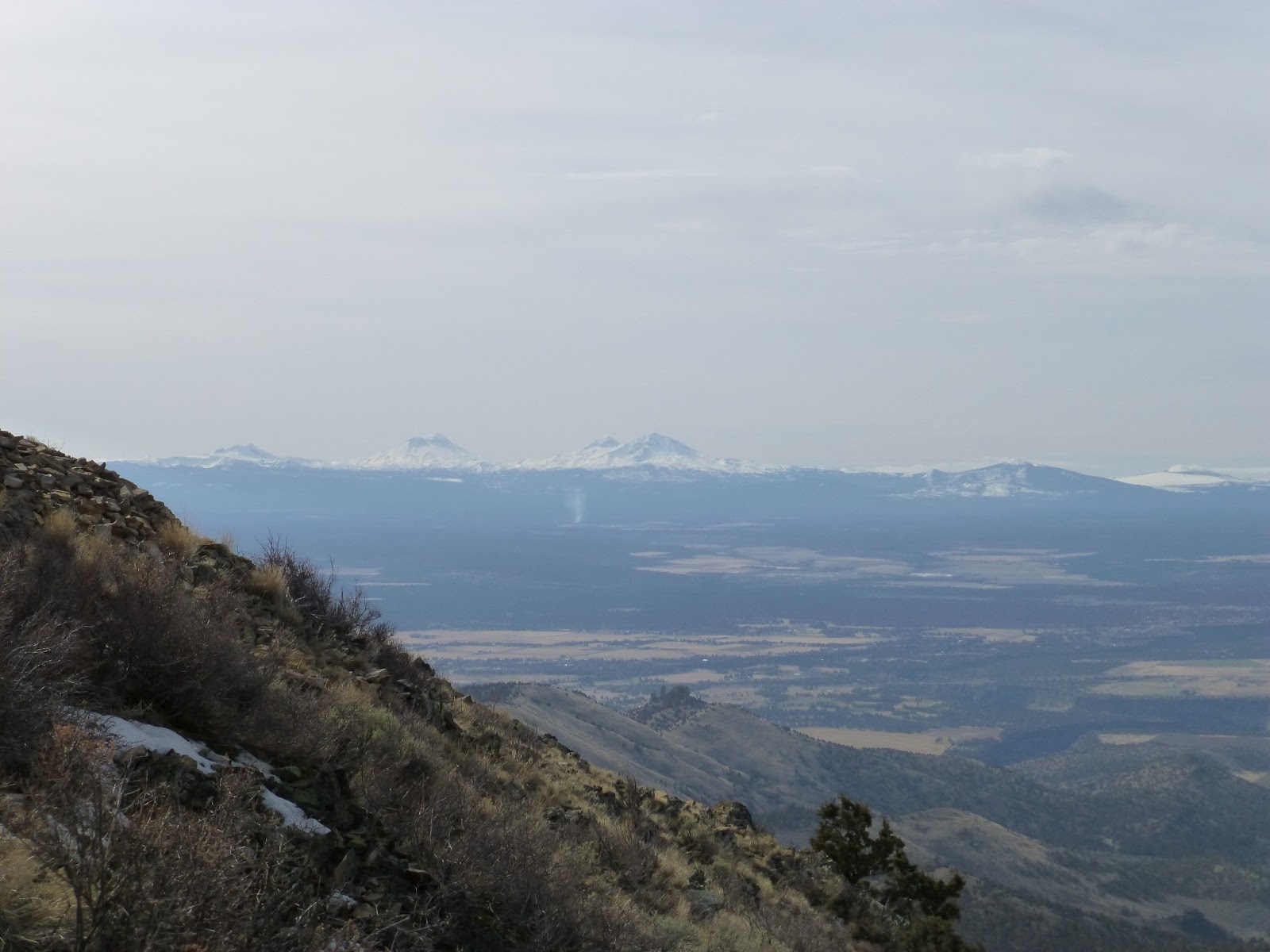
View from Gray Butte near Smith Rock


Jeff ahead of me heading towards Monkey Face

Crooked River around Smith Rock


Monkey Face


Mt Jefferson in the background

Mt Jefferson

Smith Rock from Burma Road


Lava Butte:


Mt Jefferson way behind Black Butte

Mts Bachelor, Broken Top and the Three Sisters

Three Sisters and Broken Top


Mt Bachelor and the lava field that exploded out of Lava Butte 

The crater in Lava Butte


Deschutes River Trail in Bend:


Thursday, 21 February 2013

10 Days in Nicaragua - Fuego y Agua Ultra


Writing this on my way home from an incredibly memorable trip to the Fuego y Agua ('Fire and Water') set of races on Ometepe Island in Lake Nicaragua, it seems I've been away for a month, not 10 days. Developing countries always throw interesting experiences your way and my first trip to Central America didn't disappoint. It was great to get away from winter and into 90F+ weather but I'll be glad to get a good night's rest where the air doesn't try to cook me at night while the bugs are kept away by industrial levels of repellent.

Volcanoes - Concepcion (left) and Maderas (right) in Lake Nicaragua


With two volcanoes on the island, separated by an isthmus and several miles, there were three running races on offer (25k, 50k and the main event in the 100k) as well as an intriguing new 70km obstacle race called the Survival Run. The latter barely registered on my radar when I signed up, but when I got there and started hearing about it I found out all about a parallel sub-culture to the running world. And the more I heard, the more I wanted to know - it was like a baseball fan finding out that basketball exists.

The first couple of days were spent with irunfar's Sean Meissner and Eric Orton (Christopher McDougall's coach in 'Born to Run'). We were treated exceptionally well by Race Directors, Josue and Paula Stephens, and his team with trips to sight-see the town of Granada, a mini boat cruise and a plush press conference with national TV coverage - not something you expect at an ultra. But one thing that would have helped is if any of us could speak more than restaurant-menu-level Spanish. Not many Nicaraguans speak any English and I only ever learnt any French and German, which didn't help (despite one failed attempt...you never know!).

Over the next few days we headed over from the capital, Managua (not particularly fascinating) to Ometepe, involving a choppy small ferry ride. By this point Nick and Jamil Coury (fast Race Directors for Aravaipa Running who put on the 24-hour races I ran in December) had joined the group, as had Margaret Schlachter (an obstacle racer and owner of Dirt In Your Skirt, which is similar to irunfar but for that sport and with more of a female focus). Nick Clark, Dave James, Yassine Diboun and the elite obstacle racers started arriving and it began to get a feel like Transvulcania last year where plenty of fast runners were just hanging out and catching up. The main difference this time was more beer.

Thursday morning included a group trash pick-up on the streets of the village of Moyogalpa, where the races started and half of them finished. Having never done this, it was a fitting way for the 90% of the racers from abroad could help out with the local community and raise the impact of the race for the locals. Mind you, there's so much trash I'd guess that by now it's already back to its previous state.

After that I hiked up the nearest volcano, Concepcion, with the Courys and we found it was scorching under the sun, albeit with some cover on the way up through the jungle. Monkeys could occasionally be seen and always heard and iridescent butterflies added to the exotic assault on the senses. It was also way steeper than expected with not much in the way of switchbacks on the 3,000ft climb to the high point that the race follows on that climb. Views from the top were obviously spectacular and the top of the volcano was visible with smoke trickling out from the lava within. This is a rare thing to see since the top half of the mountain is usually cloaked in puffy clouds.

Nick and Jamil Coury heading towards the volcano for a hike


High on Concepcion. L-R: me, Nick and Jamil Coury

Dodging the barbed wire on the final descent


We had to hurry back down since I'd arranged a beer mile at 4pm, my first foray into race directing. Beer was definitely a theme of the whole week and local beer, Tona, sponsored the race - we certainly justified that and chose it as the official beer of the inaugural Fuego y Agua Thursday Beer Mile, using an out-and-back 1/8 mile stretch of road by the main race start.

Most people can guess how these things go with each runner drinking a beer before running a quarter of a mile and repeating four times with a penalty lap for not keeping it down. In the heat, a bare-footed Patrick Sweeney ran his slowest beer mile ever to win in 6:29 while I was beaten by the remaining 12 or so runners, including a close run-off for last with Sean Meissner after virtually everyone else had had time to have a shower. I believe I posted a 21:20, so purposefully left myself plenty of improvement for next time. But serious runners, Nick Clark and Dave James (both highly favored in the pre-race odds) chose to not run because they'd already been drinking earlier in the day and had just got off the ferry...a very poor excuse.

Beer mile winner, Patrick Sweeney
Race directing the beer mile. Photo: Matt B. Davis


The race itself started at 4am on Saturday so we didn't get much sleep with all the contenders in the 100k staying at the race hotel/hostel in a dorm room in the heat. Given I've had knee issues since early December which flared up at Across the Years 24-hour on NYE, I'd decided that the Carlsbad Marathon at the end of Jan needed to be my last run for a month. Missed training and not wanting to make the knee continue to be a problem meant I dropped out the race a couple of weeks previously but decided to do an irunfar-style job of live tweeting what I could by cycling along the course.

Unfortunately the road sections were often on sand or were rocky enough to require a 4WD vehicle and my cheap rental road bike was broken within minutes with the back wheel bending and rubbing the frame. I barely made it to the 50k point (finish of the 50k race and half-way for the full distance) before the runners. That was with them having to climb up Maderas volcano through mud, cliff-edges, a 'jungle gym' of scrambling through trees and some descents that needed ropes. This isn't a beginner-level race and even the leaders took almost three hours to cover 10k of Maderas volcano.

Nick Coury had the lead 100k lead in 5:14, ahead of the 50k front-runners, then Dave James, Nick Clark and Yassine just behind. Around 5:43 the next runner was the 50k winner from Costa Rica, Diego Mendez, around a minute ahead of Jamil Coury who claimed second in that race with Alex Kurt in third. Alex was at the race to write an article for Trail Runner Magazine so that'll be out in a few months.

Jamil relaxing in the lake after taking second in the 50k

50k and Survival Run finish

Nick Coury in the lead in the earlier miles

Nick Clark at about 17 miles around dawn


Since my bike wasn't much use, I waited for a shuttle back with Jamil and Alex but it took a very long time (one of the few areas to improve in future) so I tried to ride back to make sure I'd be at the 100k finish in time for the winners. I got half way before Jamil and Alex drove past in the shuttle bus and got the driver to pick me up, saving me from the burning sun and lack of shade. Luckily we did make it back in time to see Nick Clark predictably come in first in a new course record of just under 10:35. Dave James was next in 11:06, also under the old record and Nick Coury held on for third around 11:20 while Yassine had to drop with pain in his kidneys at 70k (he's fine now). All suffered through the heat and with the climb up the Concepcion volcano, plus course markings weren't ideal so there was some time spent getting lost for many runners that day - Clarky reckons he went wrong to waste 10 mins.

However, the race I really wanted to see more of was the Survival Run because they followed the 50k route plus lots of additional diversions. Margaret's blog covers their race in detail, but they all had to start by running the first five miles with a chicken then they got put in handcuffs by the local police to run for another two miles (without the chicken). Obstacles included climbing trees, carrying 40lbs of wood and cutting down trees. Even their packet pick-up the day before involved not knowing what they'd need to do, then they had to swim out to a boat to pick up their numbers and swim back within a short time limit.

Given this was the first year of the event and most obstacle races are much shorter than an ultra and include looped courses in more controlled environments, this was at the very hardcore end of the spectrum. Of 50 entrants, only two finished - world class Junyong Pak (apologies if I mis-spelled but couldn't find his name anywhere) and local hero Johnson Cruz. Johnson was the big story of the whole event, not just for winning by almost half an hour and finishing, but because he lives on the island and holds the 50k course record (5:06). He's also about the nicest guy you could ever meet, shown by the fact he helped out Jun Yung on one of the obstacles (not a normal thing in a race from what I understand unless the person is in danger or a back of the pack competitor just trying to finish).

Yassine Diboun out acting as a life guard for the Survival Run  packet pick-up and having to dodge a ferry

Starting the Survival Run with a chicken

Survival Run packet pick-up

The start of the 50k, 100k and Survival Run at 4am


Overall it was a fantastic course and I'll have to come back to see the Maderas volcano since it's dormant (unlike Concepcion) and has a crater lake and unique jungle and terrain. Everyone seemed to have a great time at the race, but the Survival Racers had a lot of cuts and bruises to show for their efforts.

The drama wasn't over with the race finish since the weather turned and by Monday was cloudy and windy with some rain too, stopping the ferries from being able to operate due to poor infrastructure at the mainland side. The next day the only ferry was at 5am and many of us sat in the port all day long until we finally accepted nothing would be operating. However, the ferry problems meant most people who didn't leave on Sunday had to rearrange flights, often at great expense and hassle. We did get off the island on a 5:30am ferry on Tuesday and got a chance to relax back in Managua before heading back to the cold of more northern winters. However, since we didn't see any lava we did still get the fuego side of things to go with the agua of the island - a security guard started a fire on an empty lot 200ft from our Managua hotel because he'd been told to clear the land. Smart guy...almost burnt down the neighborhood.

Yassine fire-watching (from a safe distance)


Overall, I'm honored to have been lucky enough to experience the long week with so many great runners and to have met kindred spirits (even if they do like Cross-Fit) in the obstacle racers. I'm even going to do a Spartan Race at some point to see what it's like and why the sport has grown from nothing a couple of years ago to many times larger than ultrarunning in the US. Might need some gym work first!

Full results from the races are soon to be on Ultrasignup. Of note, Sean Meissner came 4th, which he hates, but he did break the female course record. Sean also wrote up articles on irunfar about the event.

More links:

Yassine Diboun's report
Sean Meissner's irunfar write-ups of before, race report and after
Nick Clark's report

Other random photos:

Relaxing on the island


Granada's cathedral


Meissner and Tona

Pre-race press conference


Church on Ometepe Island

Pre-race dinner


Clarky winning in 10:34

Meissner and the grande cerveza

Yassine trying out a Survival Run training piece

This is how Meissner coaches people at irunfar

Not so sure he wants to dangle on the rope

The podium prizes - locally crafted masks