Monday, 29 April 2013
Big Sur International Marathon
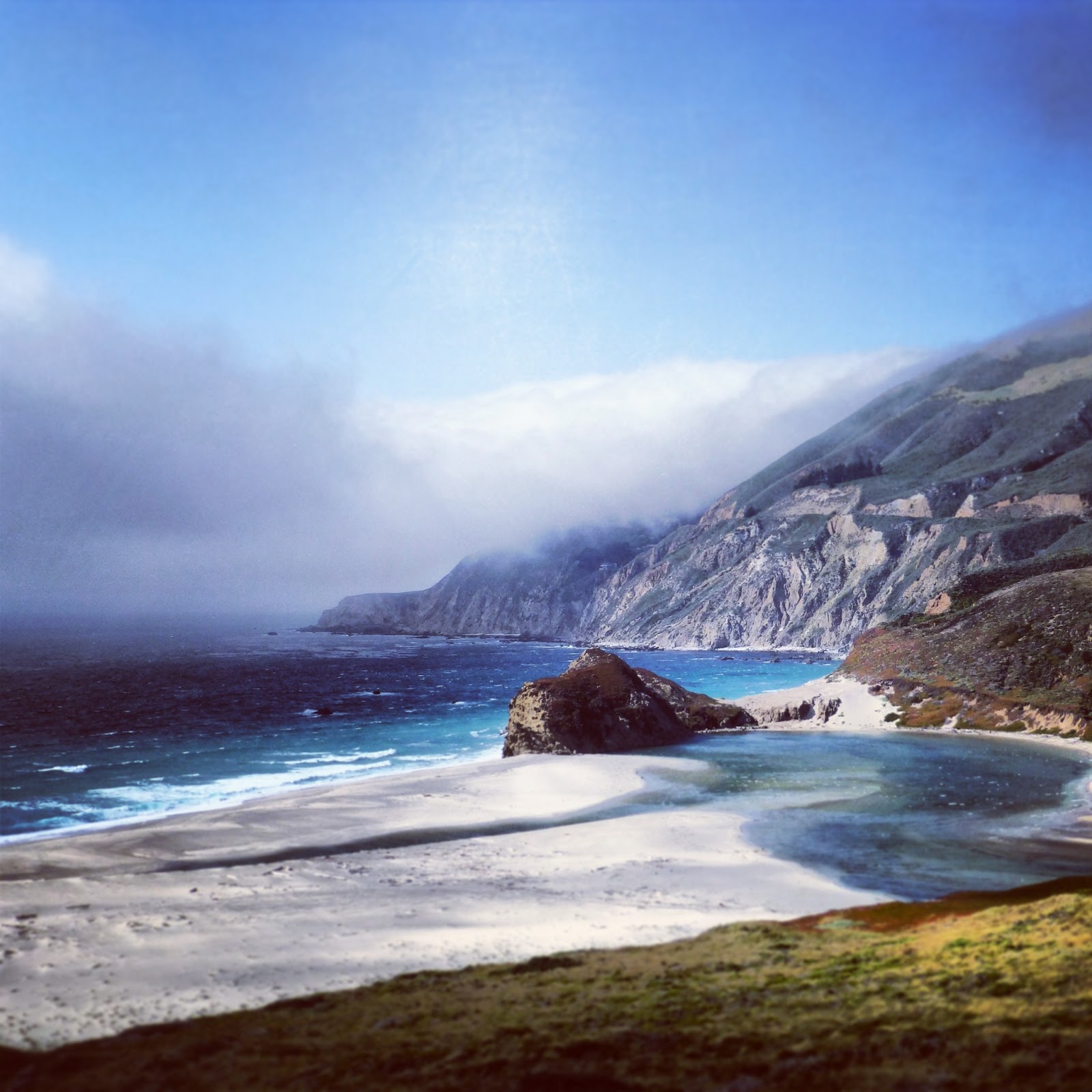
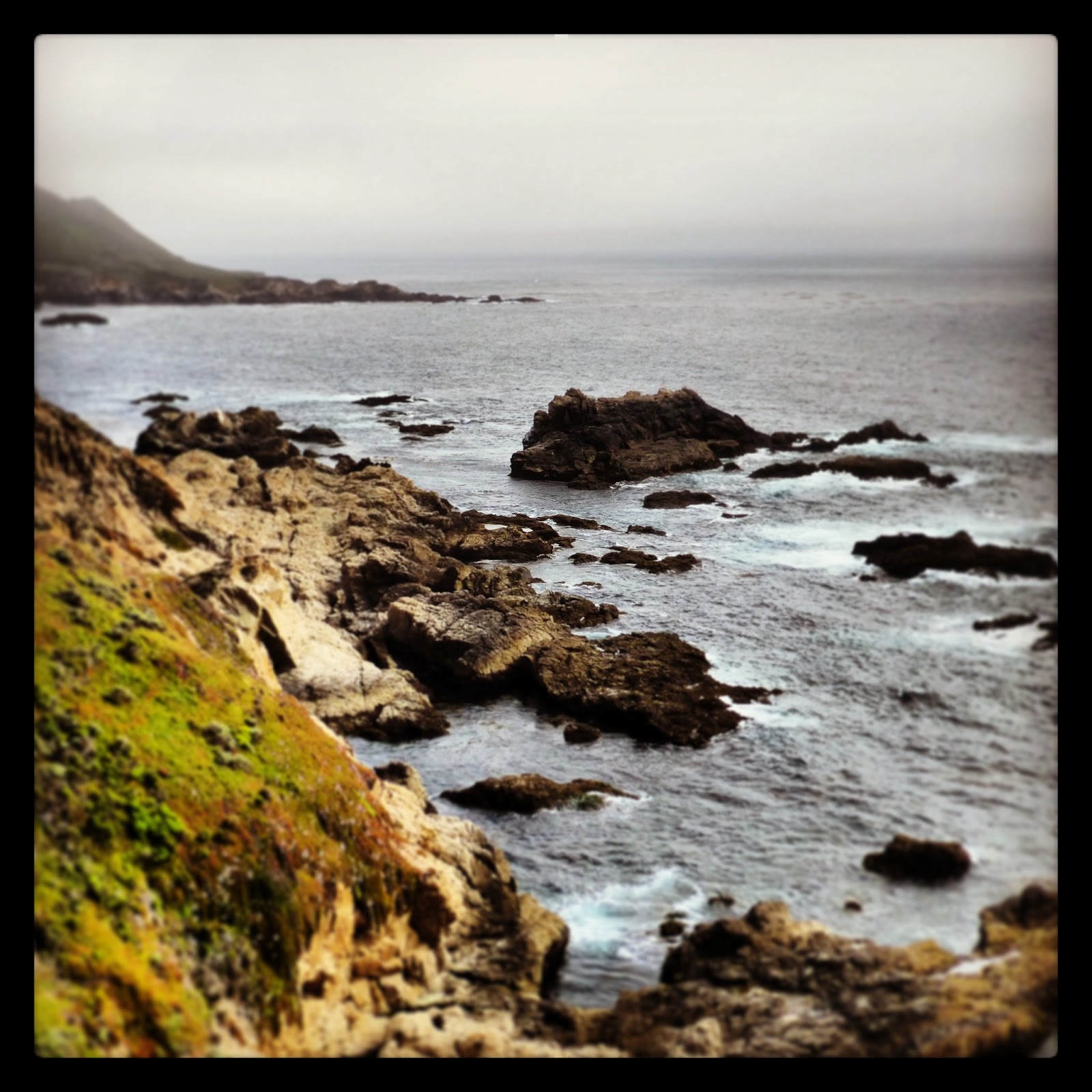
This weekend I was down at the spectacular Big Sur International Marathon south of the Bay Area in California. What an amazing course! Two years ago there was a land slide that meant the course was an out-and-back and missed the first half of the normal course, so it was great to go back again this year to do the whole thing.
It's one of the most beautiful road marathon courses in the world, as the photos below show, plus it attracted a fair few ultrarunners this year - Mike Wardian getting back to form after injury, Badwater winner Oswaldo Lopez, Sean Meissner, Scott Dunlap and more. Always great to catch up with friends at races, but it doesn't happen as much at the road stuff as on trails.
Due to the 50k last weekend and Miwok 100k next weekend, my main aim was for a hard tempo run and to enjoy the views. However, it's traditionally a ridiculously windy course with around 2,000ft of climbing so it's not the fastest marathon out there. The first 6-7 miles were easy and fast but then we suddenly hit a wall of wind which increased the effort level exponentially. The strength of the wind ebbed and flowed but it was always a head-wind to the finish. In addition there are several other shorter races using the same course and all have significant number of walkers so the day is spent weaving around people but not in a way that slows the runners down.
Put this on your to-do list if you like road races...or even if you don't. Full results are here.
Monday, 22 April 2013
From Winter To Summer In One Day...Plus Diablo Trails Challenge 50k
I've been in California almost a week so far after living here back in 2010/11 too and much as I really love Oregon, it'd been so good to get some hot weather. As if to reinforce this point, we loaded up the moving truck in a snow-storm, drove it in a very dangerous blizzard then woke up in a motel in Weed (they have a lot of obvious tourist T-shirts) in northern Cali to drive through the sun to Walnut Creek in the Easy Bay of the San Francisco area. Unlike the micro-climate of San Francisco with its fog and generally poor weather, Walnut Creek has some foothills as a barrier to the Bay and therefore has more typically California weather. In fact the temperatures have been freakishly hot and even hit 90F (32C) today.
One of the things I most love about the Bay Area is the variety of trails and number of races. It's easy to run a trail race of any distance from about 5k to 50 miles virtually every weekend, if you so choose. And I often so choose...
Even more conveniently there was a race at Mt Diablo State Park on the first weekend of living down here with multiple distances, but I needed a long training run so did the 50k with a solid 7,000ft of ascent. Since I last lived here several new trail racing companies have popped up or grown much larger and this is organized by Brazen Racing who did an immaculate job with a perfectly marked course and nothing to fault at all. They also have the largest medal I've ever earned! In addition it's all for a good cause, the Save Mt Diablo project which aims to buy up the large patches of the mountain that are privately held to make them usable for all instead of developing it.
I saw the course record was 4:51 and that it usually doesn't have a deep field so I thought it'd be a perfect, no stress race which I could just relax in. However, the owner of the new San Francisco Running Company store, Brett Rivers, decided to turn up in great shape and proceeded to head out at a fast pace in the early miles. My legs were still sore from moving into my third floor apartment without a lift/elevator so I really didn't want to chase him, but I also kind of wanted the win. It didn't help that I was interviewed at the start and cited as the favorite to win and break the record...no pressure, then!
Brett dragged me along and I just aimed to keep him in sight on the climbs but with the last few miles being mainly downhill I managed to take the lead at 26 miles then hang on for dear life til the end. Brett finished within a minute of me and I just wish I'd been able to run side by side the whole way instead of with a small gap almost all the time as it was good to catch up with him. At least we both ran good times and lowered the course record to 4:15 with Brett coming in at 4:16. The women's course record also fell to Katie Murphy in 5:22 - full results here.
| Start line in the morning warmth (that's a change from recently) |
| Mt Diablo from the south before we got very close |
| Brett about a minute ahead of me maybe 10 miles into the race |
![]() |
| Diablo in the background and Lon Freeman just behind me. Copyright: Scott J Hein |
![]() |
| At the finish line. Copyright: Katherine Ingram |
| Two very tired runners - nice work Brett in pushing me as had as I could go |
| Good food at the finish |
On a separate note, I've recently started using Strava to upload my GPS runs to. I never really got the point until I saw the geeky fun of formalizing fastest known times (FKTs) for pretty much any run or segment of a run. It certainly adds to the challenge on the standard routes I do regularly to have mini sections to use a time trials and aim for the times other locals ran those sections at. It's certainly strangely addictive and turns tempo runs into races.
The next few weeks should be fun too with more Bay Area races lined up. The beautiful Big Sur Marathon next weekend (along with friends from all over like Mike Wardian, Mario Mendoza and Sean Meissner) then the Miwok 100k the week after that, one of my favorite trail races. For once I won't be either jogging it or wearing an Elvis costume so it should be a great test for the Grand Slam.
Monday, 8 April 2013
Last Days in Oregon (For Now)
With only one week left for me before moving to the San Francisco Bay Area I've been trying to fit in the best of what I can on the trails at this time of year. Sadly the mountains are still in ski mode so Smith Rock's the best bet, plus the trail running season just kicked off in Bend with the Horse Butte 10-miler.
After getting destroyed on the climbs on recent training runs and at Gorge Waterfalls 50k last weekend I've been including more uphill speed sessions which left me exhausted on the minor climbs at Horse Butte. It's worthwhile and I'm very glad I could fit this race in, especially since I was able to go a few seconds quicker than last year despite really windy conditions. Hopefully faster times at both this and Gorge Waterfalls are a reflection of better fitness than the same time last year.
Anyway, more photos of Smith Rock are below. I've been making sure I have plenty of these in case I don't come back for a while. And full results from the 10-miler are here.
| Gray Butte |
| My father-in-law, Clint Andring, with Monkey Face in the background |
| Monkey Face from afar |
| Monkey Face from the angle that shows why it has that name |
| Clint on top of Smith Rock |
| Cheesy grinning on top of the Rock |
Labels:
2013,
Horse Butte,
Oregon,
Smith Rock,
Trail
Sunday, 31 March 2013
Gorge Waterfalls 50k
| Multnomah Falls |
After taking February off running to let my remnants of a sore knee heal, plus to have an off season for once, the perfect first race back is the stunningly beautiful Gorge Waterfalls 50k along the Columbia River Gorge in Oregon. With waterfalls in virtually every mile it's just about the prettiest 50k course I'm aware of anywhere. The most spectacular waterfall (and most popular with the tourists) is Multnomah Falls but there are so many along the out-and-back route that it's almost a shame we race past them and can't stop to appreciate them all. Given I'm moving back to the San Francisco Bay Area next month this is the ideal send off and reminder of everything I love about Oregon.
There was even a pre-race Trail Film Fest at McMenamins Edgefield the night before with inspiring movies like the 'Dipsea Movie' and Kilian's 'A Fine Line.' Great idea and it looks like it be back again for next year.
![]() |
| Film Fest with Simon Mtuy's film about running around Kilimanjaro |
The course is certainly short (probably somewhere around 28 miles allowing for the cliffs and trees interfering with the GPS) but has plenty of climbing (at least 4,500ft by general consensus and my barometric GPS showed 5,600ft). Also, the trails are rockier, twistier and more technical than most of what we see in Oregon, but that's what the Rainshadow Running races are known for.
As with last year, this was one of the most competitive ultras in Oregon which says a lot when you consider how many sponsored ultrarunners there are in the state, especially in Bend, Portland and Ashland. The race was close at the turn-around Chris Kollar from Missoula (MT) with Bend's 1:06 half marathoner, Mario Mendoza then ex-pro skier, Zach Violett (also Bend). Not far behind were James Bonnett from Scottsdale (AZ), Yassine Diboun (Portland), me, Hal Koerner (Ashland) and a string of other fast runners. Steph Howe (Bend) had a solid lead in the women's race too, as expected.
There were certainly some early season cobwebs amongst the runners but it was fun to leapfrog Hal throughout the first half (he had to be careful on the rocky sections due to a foot injury) then spending the entire second half doing the same with Yassine.
My legs felt dead throughout after a tough training week so I was really happy to keep gaining positions and be able to keep up a decent pace, not realizing I was only a little behind 2nd and 3rd, eventually finishing 4th. As a bonus we had freaky weather for March (70 degrees F) and Hood River is just down the road, full of wineries like Mt Hood Winery - see the views of Hood below!
Results are already on Ultrasignup but Mario unfortunately bruised his foot and was limping so decided it wasn't worth pushing since he only recently came back from foot surgery which left Chris Kollar to win comfortably. He's clearly got a lot of speed and can run technical trails since he smashed Mike Foote's The Bear 100 course record last year by 44 mins, which beat Geoff Roes' record, which beat Karl Meltzer's record, which beat Hal Koerner's record.
Men:
1. Chris Kollar 3:22
2. James Bonnett 3:35
3. Zach Violett 3:37
4. Ian Sharman 3:38
5. Yassine Diboun 3:40
6. Jeff Browning 3:42
7. Jonathan Heinz 3:44
8. Jason Leman 3:46
9. Hal Koerner 3:47
10. Aaron Ray 3:47
Women:
1. Steph Howe 3:49 (NEW CR)
2. Catrin Jones 4:05
3. Darla Askew 4:24
4. Susan Barrows 4:24
5. Jenny Capel 4:27
6. Alicia Woodside 4:37
7. Lynde Fitzpatrick 4:51
8. Jessica Lamanna 4:57
9. Shamai Larsen 4:59
10. Debbie Gibson 5:00
| Steph and myself at the finish |
Labels:
2013,
50k,
Course Record,
Gorge Waterfalls,
Oregon,
Race,
Trail
Sunday, 10 March 2013
Hydration - Tim Noakes' Waterlogged And Personal Experience
| Having a drink on Mt Diablo, CA |
Having read plenty on the subject of hydration relating to exercise, I thought I'd write a high level discussion about it, based on the controversial conclusions from Professor Tim Noakes' book, 'Waterlogged: The Serious Problem of Overhydration in Endurance Sports' as well as my own personal experience and that of friends and coaching clients. His previous book, 'The Lore of Running' is like a bible in the exercise science world and has been very helpful to me in everything I do within the running world. With temperatures starting to warm up and races like the Marathon des Sables (article about how to train for the MdS) in the Sahara Desert around the corner I thought it's a topic that could hopefully help some runners to avoid bad races, based on advice from the book and my own experiences from 170+ ultras and marathons across the world.
One thing I've noticed a lot since I started coaching a couple of years ago is that almost everyone in the world of sport clings to the idea that athletes must remain 100% hydrated to not suffer from a drop in performance. The sports' drink industry has put countless millions into marketing this idea and telling people that 2% dehydration (presumably 2% loss of body weight due to sweating) can seriously affect performance and should be avoided. They backed studies to show that losses in excess of 5% of body weight can decrease the capacity for work by about 30% (Armstrong et al. 1985; Craig and Cummings 1966; Maughan 1991; Sawka and Pandolf 1990).
This is advice I assumed to be unbiased and effective so I followed this advice in one of the first ultras I ever ran, the Marathon des Sables in 2006. Unfortunately, I'd never heard of hyponatremia, an electrolyte disturbance in which the sodium concentration in the blood serum is lower than normal from drinking too much. So I drank virtually every drop of the 9Ls (304 ounces) of water provided per day by the organizers and found myself fainting twice on day two as the symptoms started to affect me.
![]() |
| The author hydrating in the Sahara in 2006 |
When Professor Tim Noakes published his book on this subject last year, 'Waterlogged: The Serious Problem of Overhydration in Endurance Sports,' I knew he'd have a thorough review of all the evidence without any pre-existing prejudices or corporate sponsors wanting a bias to the conclusions. Bear in mind that Gatorade and the Gatorade Sports Science Institute (GSSI) funded much of the research on this subject with a clear interest in telling people to drink lots.
His book is more than thorough, looking at every single published study on this subject that he could find in all scientific journals, including all those written by the GSSI. There was a striking common theme amongst these studies that either examined the effects of dehydration on performance or the effects of exercise-associated hyponatremic encephalopathy (EAHE). It was that dehydration levels seen in an ultra or Ironman race (never mind a marathon or less) don't reduce performance and many of the studies had conclusions that were the opposite of what the evidence they presented showed. This is particularly worrying because the guidelines produced by the American College of Sports Medicine (ACSM) still provides guidelines that suggest dehydration is the main worry for athletes, not the effects of hyponatremia. US races therefore still urge runners to drink too much, although I'm noticing more of them start to tell people that drinking too much can be dangerous too, but that's not the focus of the advice.
EAHE is a much more serious danger than dehydration in races and the percentage of people having medical issues in races has increased as more people follow the advice of drinking to maintain body weight during exercise, with the major cause (based on the clearly defined and explained symptoms in Professor Noakes' table below, backed up with extensive evidence from his book). The striking point is that the main symptom of dehydration is thirst and it's only when an athlete feels very thirsty that performance can be reduced. The old advice of ignoring the body's thirst mechanism and trying to stay ahead of thirst by drinking to maintain body weight is a load of rubbish.
![]() |
| Table taken from 'Waterlogged' by Professor Tim Noakes, 2012. Note that EAPH refers to Exercise-Related Postural Hypotension |
The clearest evidence of this is that in the many high-level races where body weights were taken before and after for lead runners and people running more slowly, the highest levels of dehydration (biggest percentage of body weight lost) were found in the leaders with the winner almost always being the one who lost the most body weight percentage. So if losing any water through exercise reduces performance, how come the best performers are the ones who lose the most (as a percentage)? The evidence suggests the ability to run while 'dehydrated' is an attribute of a top athlete, not a reason they fail.
From my own experiences in marathons and ultras, as well as those of people I know and coach, I'm not aware of anyone having their performance reduced from dehydration except Kilian Journet in the 2010 Western States 100 where he ran without water bottles in extreme heat and lost the lead to finish third. Even in that instance, heat-stroke probably played a large part, not just dehydration (see next section for more details). In every other instance I can think of, dehydration has not been a problem as long as drinking to thirst was adhered to. I've run some of my fastest marathons on barely more than a couple of sips of water (in cold conditions) but I wasn't particularly thirsty on those days in those temperatures. On the other hand, I've suffered from drinking too much at both the Marathon des Sables (desert) and Western States 100 (extreme heat).
Heat-stroke versus dehydration
The general fallacy that has been popularly disseminated is that drinking too little raises the body temperature to dangerous levels when exercising which affect performance so endurance athletes are particularly prone to this. However, to summarize Prof. Noakes' evidence and conclusions, there are two key problems with this:
1. Body temperatures rise more in higher intensity, shorter forms of endurance running such as 10ks or below - the chance of heatstroke is much higher in these than in a marathon but a very hot day can cause this too (think Western States, not a 70F road marathon).
2. Importantly, drinking has a very minor effect on cooling the body although iced water would have marginally more effect. Getting into the shade or an ice bath is the only effective way to reduce body temperatures fast in a race and have an effect on heat-stroke.
Again, personal experience suggests this is true. I've crewed for people at Badwater 135 through Death Valley where temperatures can hit 130F and external cooling like ice baths helped my runner while constant drinking only served to quench thirst. It certainly seems that heat-stroke is more likely to happen to ultrarunners than dehydration, particularly in the exposed sections of extremely hot courses. However, drinking alone won't help much here and use of ice and water externally will make much more difference, as well as adjusting effort levels to reduce heat produced in the muscles.
| Mike Wardian in an ice bath at the 2011 Badwater 135 |
Another commonly-assumed piece of running lore is that as a body exercises, electrolytes are lost and must be replaced. This is a reason to drink Gatorade instead of water and therefore pay Pepsico (owners of Gatorade) for their product. Yet Prof. Noakes also examined this area using all the evidence available as well as his own research. In summary, he found that the body is very good at regulating electrolytes and that the levels lost in sweat and urine are adjusted by the body based on exertion and liquid intake. He basically says we don't need to try to replace these with drinks or salt tablets.
That sounds counter-intuitive as most runners will have experienced cramps or bonks that were seemingly fixed once they took on electrolytes. However, he goes on to show that cramps and bonking are unrelated to salt/electrolyte intake and are really affected by exertion levels above what the body is trained for (something that will typically happen in an ultra given its extreme nature) or a lack of fuel in terms of glycogen. That means that getting energy (not salts/electrolytes) into the body combined with lower effort levels such as walking for a while are what fixes these problems. Given that most runners have to slow down and will eat as well as take salt tablets, the effects can get muddled and improvements attributed to the wrong factors.
Sports drinks do have glucose and there's no doubt that taking this on board in endurance activities is beneficial. At least Prof. Noakes didn't burst that bubble!
Conclusion
I found the book to be very illuminating but it won't alter my own tactics in races much, mainly because I don't tend to over drink since that means carrying too much liquid between aid stations in an ultra which therefore weighs more. I will be more careful in trying to identify and stop the causes of things going wrong in a race such as Western States. In fact, I'll use the mantra of drinking to thirst rather than aiming for a certain volume of liquid per hour.
For food during races, gels and similar products will still be the basis of my own nutrition (Clif Shots) to provide the energy required to sustain a long endurance effort. However, the place for salty foods isn't so much to replace lost salts as to provide a change in taste after hours of sugary foods during an ultra.
It helps to learn more about the way the body works during exercise so that errors can be avoided or minimized as well as successes being better understood.
Sports drinks are still good for athletes, we just don't need to drink as much since hyponatremia is a bigger worry than dehydration. Also, I'll still take on electrolytes within drinks because they haven't been shown to cause any harm, so even a placebo effect is useful. Besides that, electrolytes are usually bundled with calories in the form of glycogen in drinks, but any low calorie drinks will be off my list during races and I'll stick to my Clif Shot Electrolyte drink because it has calories and sugars (basically, glycogen). If the electrolytes help then that's a bonus, but it seems the calories will do the job anyway and I won't aim to take on extra electrolytes in tablets etc unless things go really wrong - it's worth trying anything at that point.
For food during races, gels and similar products will still be the basis of my own nutrition (Clif Shots) to provide the energy required to sustain a long endurance effort. However, the place for salty foods isn't so much to replace lost salts as to provide a change in taste after hours of sugary foods during an ultra.
It helps to learn more about the way the body works during exercise so that errors can be avoided or minimized as well as successes being better understood.
Labels:
2013,
Coaching,
Hydration,
Waterlogged
Saturday, 2 March 2013
24 Hours Around Bend
After enjoying the volcanoes around Ometepe Island in Nicaragua at the Fuego y Agua races, I thought it was time to see a bit more of the volcanic activity around Central Oregon. Since many of the mountains near Bend are volcanoes within the Pacific Ring of Fire, there's a lot of volcanic rock and volcanic buttes.
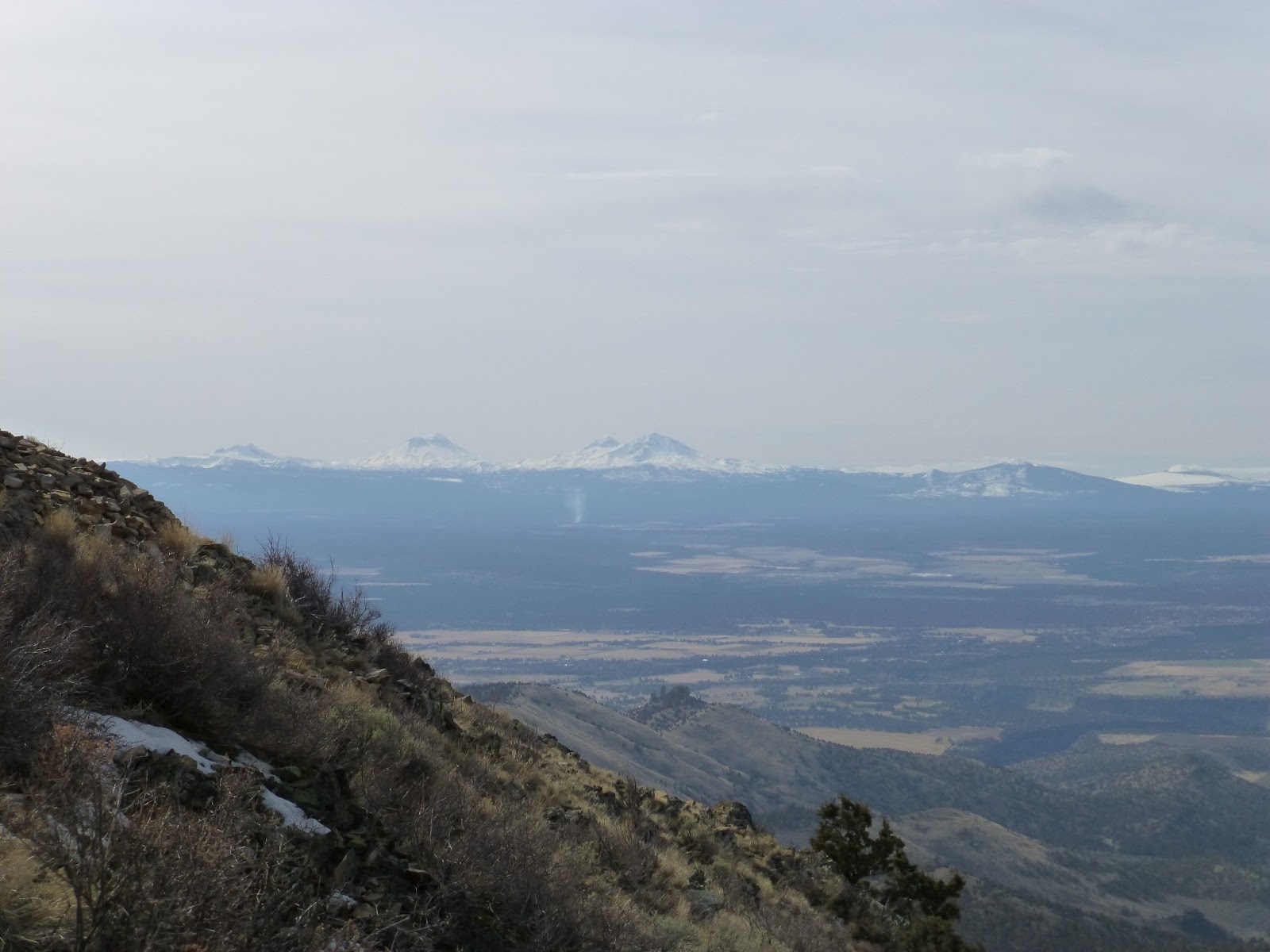
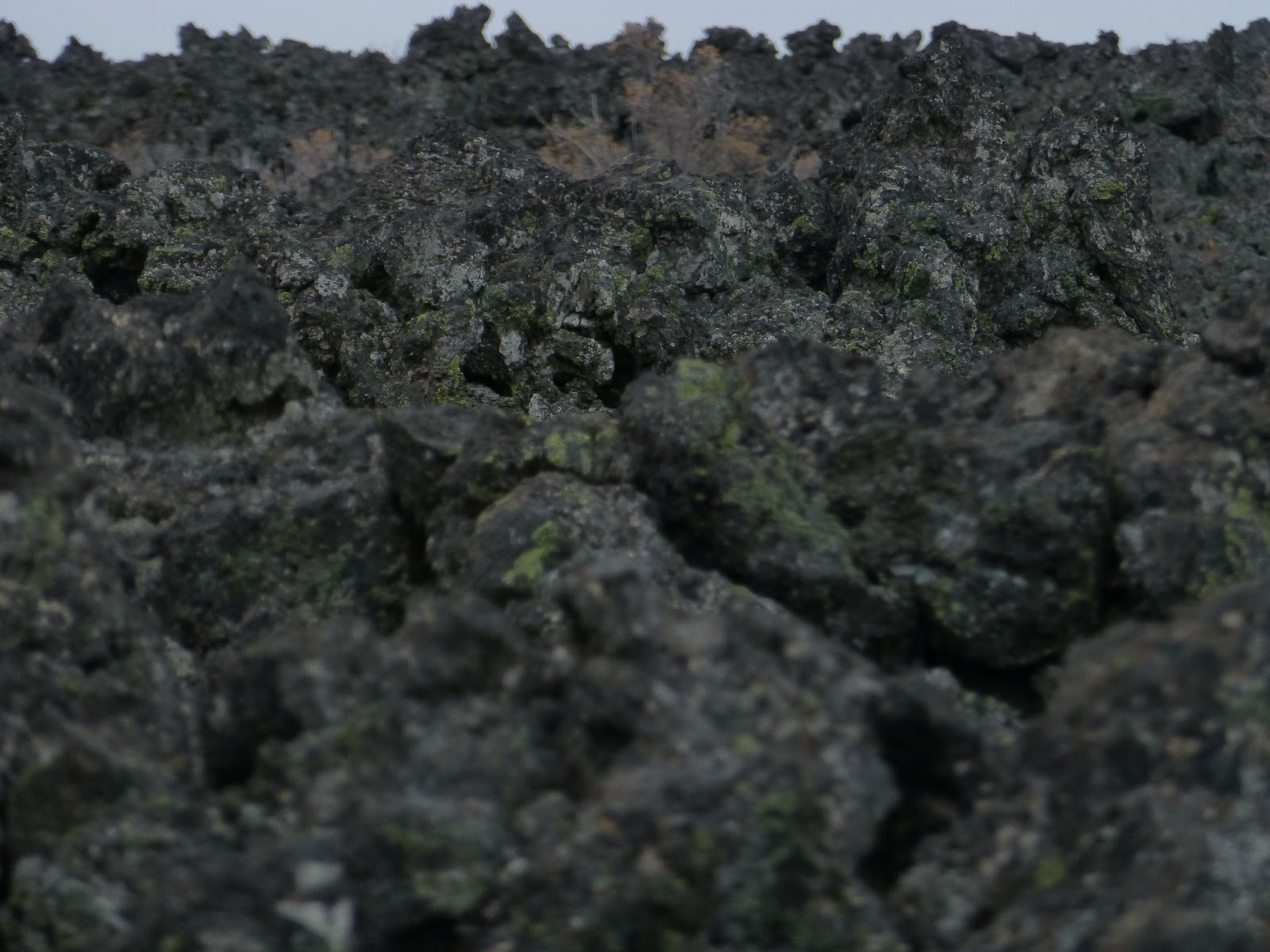
Over the past 24 hours I've been out to Smith Rock, a famous climbing area formed from igneous basalt and tuff (volcanic ash) for a long run with Jeff Browning and some hiking at Lava Butte (a cinder cone) and along the Deschutes River Trail (good views of volcanoes). So here's my free tourist guide to these places via photos.
Smith Rock:
Lava Butte:
Deschutes River Trail in Bend:
Over the past 24 hours I've been out to Smith Rock, a famous climbing area formed from igneous basalt and tuff (volcanic ash) for a long run with Jeff Browning and some hiking at Lava Butte (a cinder cone) and along the Deschutes River Trail (good views of volcanoes). So here's my free tourist guide to these places via photos.
Smith Rock:
| View from Gray Butte near Smith Rock |
| Jeff ahead of me heading towards Monkey Face |
| Crooked River around Smith Rock |
| Monkey Face |
| Mt Jefferson in the background |
| Mt Jefferson |
| Smith Rock from Burma Road |
Lava Butte:
| Mt Jefferson way behind Black Butte |
| Mts Bachelor, Broken Top and the Three Sisters |
| Three Sisters and Broken Top |
| Mt Bachelor and the lava field that exploded out of Lava Butte |
| The crater in Lava Butte |
Deschutes River Trail in Bend:
Subscribe to:
Posts (Atom)