Wednesday, 11 September 2013
Grand Slam Stats
Some facts and figures I found interesting from the Grand Slam of Ultrarunning, involving running the Western States 100, Vermont 100, Leadville Trail 100 and Wasatch Front 100 in the same summer.
Average age of finishers: 44.77
Official finishers prior to 2013: 266
Official finishers including 2013: 288
Number of those 288 who broke 100 hours in total: 54 (plus Nick Clark)
Number of women who broke 100 hours: 6 (including Krissy Moehl, Darcy Africa and Ann Trason...plus Abby McQueeney Penamonte in 2013)
Most finishes by one person: 8 (Dan Brendan - missed only two years from 2004 to 2013)
Most starters in one year: 36 (1998)
Most finishers in one year: 22 (plus Nick Clark for 23) (2013)
State or country with most finishers since 1986: California (51)
Total ascent according to run100s.com: 74,732ft
Total descent according to run100s.com: 78,861ft
Total ascent according to my Garmin: 74,116ft (including several hours of using a less accurate 305 model at Wasatch that tends to underestimate)
Most stats above taken from run100s.com, the rest from Strava/Garmin.
Labels:
2013,
Grand Slam,
Leadville,
Stats,
Ultra,
Vermont,
Wasatch,
Western States
Saturday, 7 September 2013
Wasatch Front 100 - The Finale of the Grand Slam of Ultrarunning
![]() |
| The end of 400 miles. Photo: irunfar |
Just 20
days after Leadville the remaining 23 Grand Slammers turned up in Utah to crown
the summer's efforts. Much as Nick and I wanted to do well in the race itself,
it was now all down to whether he could beat me by over 69 minutes, which was
my lead from the other races. As he said in post-Leadville interviews, it was
'game on.' See my race reports from the other three races (Western States,
Vermont and Leadville).
A
canceled flight the day before the race didn't help my stress levels but I
eventually got to the race briefing late, direct from the airport. There was a
lot of uncertainty in the air for me despite the fact everyone I spoke to
seemed to think I had the Slam record in the bag. I didn't think that, but at
least I was uninjured and as well rested as possible.
The race
itself started with almost two hours of dark and the first few miles were on
gently rolling trails, an easy introduction into the 26,500ft of ascent and
almost that much descent (it's a point-to-point course). This race is by far
the hardest of the Grand Slam events and wasn't helped by it being one of, if
not the, hottest year in the race's history.
Nick and
I went to the front from about mile three onwards then the first huge climb
started and Nick disappeared into the darkness. By the top of the climb, a
4,000ft net gain, I could just see him about three minutes ahead and I was just
ahead of the chase pack. I felt that was a good start and that my legs were cooperating.
Some of the early miles were beautiful and I was able to enjoy it before
feeling the fatigue and soreness that would inevitably follow. Rod Bien and I
ran together for many miles and I considered him the biggest threat for the win
after Nick since I used to live in Bend, OR, where Rod lives and I'd seen his
strength on the climbs. Rod eventually got a comfortable margin for third, but
all I cared about was how far ahead Nick was.
Nick led
from start to finish and I was in second almost the whole day as well, but he
had me worried when he started increasing his lead through the day. It didn't
help that I missed a turn before half-way and added 15 minutes, meaning he had
a 38-minute lead at mile 52. The heat took it's toll in the first half too and therefore
many people dropped fairly early on, plus all the runners were slowed by the
lack of shade for long sections. Even though Western States was far hotter this
year than Wasatch, I had about as many issues dealing with dizziness and
difficulty eating at both. The additional altitude of Wasatch certainly added
to this, with much of the course above 9,000ft.
From
about 25 miles in I could definitely tell my legs had run several 100s
recently, which wasn't how it felt at Leadville. All I could do was to look
after myself enough to avoid a melt-down (or a serious one anyway). Yet Nick
kept his lead to between 27 and 41 minutes for most of the second half so I had
to push.
I've
never vomited in a race before so when I got light-headed then started spewing at
mile 80, I got very worried. It had been dark for over an hour and the trails
in the last 25 miles are sketchy to say the least. Technical, rocky trails are
fun, but there were some nasty super-steep descents down v-shaped scree slopes
with fist-sized rocks throughout. Combining high altitude, exhaustion, night
and those downhills led to a lot of falls, swearing and frustration. I
struggled to get into a rhythm with constant ups and downs from mile 85 and was
generally feeling sorry for myself. I was sure Nick must have been zooming
ahead of me to get close to the 69-minute win he needed, but I wasn't the only
one feeling the effects of the day and the previous races.
After a
9.7-mile stretch between aid stations on the hardest terrain of the day I'd somehow
pulled back a few minutes, which got me so excited I sped up then had to puke
again. With 7.6 miles to go Nick was only about 35 minutes ahead, so even my
second bout of stomach issues wasn't enough to worry me.
In
contrast to some of the insanely hard night sections before it, the last few
miles are gentle and very runnable. There's still a lot of downhill to the
finish but it's at more of a pedestrian 12% gradient than the near vertical
sections earlier, plus it's all on fire roads finishing with a couple of miles
of paved road.
Wasatch
is undoubtedly the hardest race I've ever run and makes for a seriously tough
finish to the Grand Slam. I look back now and know the only reason I got
through it and kept motivated was that nick and I had pushed each other for the
whole summer and I was never going to let that hard work go to waste.
Nick won
in 20h24m, a slower time than he should have run due to the heat and leg
fatigue. I heard him finish as I was running down the side of the mountains
about three and a half miles away. Then I came in just under 21 hours after
more night running than I've ever dealt with, but couldn't find the route to
the finish line when just feet away from it. I was shouted at very angrily by a
race volunteer (I assume) who told me to follow the glow-sticks, which just
weren't very visible from 100ft away. That little altercation cost me a couple
of minutes and I finished in 21h01m. I felt no emotion, not even relief, and
was just drained. The day had been full of so many emotions and highs and lows
as varied as the course profile, that I think there was just nothing left. It
took me about two hours to eat a grilled cheese sandwich as even that was too
much effort after the running stopped. Full race results here.
![]() |
| Nick at the finish. Photo: irunfar |
![]() |
| Congratulating each other on our wins (everyone's a winner). Photo: irunfar |
In summary
So Nick
ran the fastest combined time for the four Slam races in 70h21m but 37 minutes
later I lowered that again to 69h49m. Just writing that makes me wonder how we
both were able to go head-to-head for such a huge amount of time and finish so
close. It really came down to the final miles and nothing was certain until we
both crossed the line.
Much as
the body gets damaged by these consecutive 100-milers, the mind takes a beating
too. Forcing myself to give it everything through the last 30-70 miles (depending
on which race in the series it was) four times in succession drained me to my
core.
I'll have
many fond memories of this summer and the main theme will be the friendly, but
committed, competition with a good friend and incredible runner. I've nothing but
the utmost respect for Nick and we drove each other to perform better and run
faster than solo efforts would have allowed. It's rare to see a close rivalry
between just two runners in the ultra world and to have us so evenly matched
through the summer. I look forward to the next time we face off against each
other, probably at the 2014 Western States.
There
were 22 finishers in the official
Grand Slam plus Nick completed the races without entering the overall series.
Their details are here and all went through more than I could have imagined before
I attempted it myself.
My full
Grand Slam write-up is on irunfar.
Also,
here are the Strava GPS files for the four Slam races:
And finally the gear I used, which was basically identical through all four races and worked really well for me:
UltrAspire handhelds, Spry and Alpha vests
Julbo Dust shades
Clif Bar Shot gels and Shot Bloks
Drymax Max Protection Trail socks
Hypoxico Altitude Tent (for Wasatch only)
Thank you to everyone who helped or supported me, whether it was my pacers Sean Meissner and Aaron Keller, my sponsors or my wife who had to put up with me spending half the summer away from home.
Sunday, 18 August 2013
Leadville Quick Race Report
![]() |
| Photo: irunfar |
![]() |
| Epic summer battling with fellow Brit Nick Clark. Photo: irunfar |
Leadville went well, especially since it was race three of the Grand Slam and race two (Vermont 100) was kind of horrible for me. Since my body won't let me sleep I might as well write the race up briefly.
In summary, there were some fast guys aiming to do ridiculous times. Scott Jurek wanted to be the second man to break 16 hours and Ryan Sandes was coming back after a fast win in 2011. irunfar did a great write up of the contenders. So Nick Clark and I were dark horses given the two 100s in our legs from recent weeks and we weren't expected to be around the lead at the end.
It started off with a huge pack zooming off in the pre-dawn dark, which wasn't surprising given it's downhill and there were around 1,000 runners. Most of that pack stayed together to Mayqueen at 13.5 miles but then by the first proper climb around mile 15, former Olympian Mike Aish took off followed by Ryan Sandes, Andrew Catalano, Nick Clark and myself. I was amazed by how flat a lot of the course was, especially the road sections, but I bore this in mind for later so that I could aim to conserve energy to allow me to run those easy bits on the way back (it's 50 miles out and back).
Nick and I spent much of the first half running together or near each other in around fourth and fifth and entered the Twin Lakes aid station at mile 39 together. We'd had plenty of banter all day long but were both running well so headed off towards the 3,000ft+ climb up Hope Pass.
I decided fairly early on that since I live at sea level and the race is almost all above 10,000ft I'd need to keep my perceived effort down to make my legs and energy reserves last the whole way. Plus I'd already run the other 100 milers recently so wanted to be conservative due to that too. So I hiked every step of Hope Pass both directions but I practice that a lot since I'm not a strong uphill runner and it seemed to work well since I got into second by the top (12,600ft) on the way out, although Nick and Ryan were just behind. Ryan dropped at this point with back problems after looking so strong through the first half.
On the return journey I kept focusing on power-hiking anything tougher than about a 5% gradient and was catching Mike Aish gradually as well as pulling away from Nick. Now I was thinking about the possibility of winning but couldn't let myself think about that and instead stuck to my tactics and just hoped they'd pay off. Amazingly I was still feeling good at mile 60 and at around mile 67 I caught Mike as he was walking - he looked destroyed and I just hoped he'd be able to finish after dropping the previous year.
Things kept going well through to the Outward Bound aid station at mile 76 and my crew and pacers, Meredith Terranova and Sean Meissner were looking after me well. Hiking up Powerline in the next few miles I still felt fairly good but by about mile 82 things turned and I felt delerious. On the downhill trail into Mayqueen (86.5 miles) I was dizzy and almost tripping over every rock. Nick managed to close on me during this section although I had no idea. Then after Mayqueen a toilet stop seemed to bring me back to life and I was able to cruise along the rolling lake single track.
About eight miles from the finish I was told at the last time check (Mayqueen) Nick was 10 mins behind me so that lit a fire under me and I suddenly kicked it up a gear and ran really hard. I couldn't eat anything and just hoped I wouldn't bonk and that Nick wouldn't catch me - frankly I was terrified he'd take the win from me in the last couple of miles.
Somehow my body let me run in those final miles fast enough to break two hours for the split for the last 13.5 miles and I gapped Nick by 36 mins in the end, but I only found that out when he crossed the line. I assumed he was still catching me.
So Grand Slammers got 1-2 in the race and now we're around 4h40m (me) and 3h30m (Nick) under the Slam record splits with just Wasatch Front left. I really don't want to think about doing another 100 now but I'm sure that'll change in about a week.
My GPS watch lasted long enough to capture each of the three Slam races so far so here are the data for my runs on Strava:
Western States 100 (6/29): http://app.strava.com/activities/63921494
Vermont 100 (7/20): http://app.strava.com/activities/69091265
Leadville Trail 100 (8/17): http://app.strava.com/activities/75597891
Gear used at Leadville:
Scott Kinabalu T2 trail shoes
UltrAspire handhelds and Spry vest
Julbo Dust shades
Clif Bar Shot gels and Shot Bloks
Drymax Max Protection Trail socks
Also, here's a TV interview I did about the race with Mike Wardian called Gotta Get Running:
![]() |
| Mayqueen on the way out (mile 13.5), briefly leading. Photo: irunfar |
![]() |
| Meredith helping a speedy transition around mile 72. Photo: Eric Senseman |
![]() |
| Nick and myself at the finish, completely drained. Photo: Meredith Terranova |
Labels:
2013,
Grand Slam,
Leadville,
Race,
Trail
Thursday, 1 August 2013
Top Five Tips for Recovering Between Grand Slam Races
| Only photo I have of massage, back at the 2009 Rome Marathon with Roberto 'the Butcher of Pimlico' |
One of the biggest challenges of running four 100-milers over the summer for the Grand Slam is recovering in the three to four weeks between each race. So far I've found a few easy tips have helped but the more races I do, the more the body has to deal with so the more important these become.
1. Rest - don't feel the need to run much between races. The main training occurs before the first race so I take at least one week completely off running after each 100. Even after that my mileage is tiny compared to normal, generally not running on consecutive days.
2. Don't race in the rest periods - it's tempting to throw in extra races to fit in long runs to get rid of the 'guilt' of running less than normal. I paced at the Badwater 135 a few days before race number two at Vermont. The speeds involved were gentle enough to not be an issue but the sleep deprivation and overnight flights didn't help.
3. Eat well - the body has so much more muscle damage to deal with than during normal training and the recovery rate needs to be so much quicker. Nutritionist Meredith Terranova gave me some pointers here - lots of protein, branch chain amino acid supplements, CoQ10 supplements and BComplex/B12 vitamins. Generally I try to get my nutrients purely through food, but in this extreme case I can see the benefit of topping things up.
4. Quality sleep - giving sleep a higher priority than usual and aiming to get eight hours or more as often as possible allows the body to heal itself more effectively. Events like the Grand Slam involve a huge amount of time so it's worth including this as part of that commitment.
5. Massage - I generally get a sports massage every two to four weeks even when in normal training, but I find it really helps to get one of these about three to four days after each race (to allow enough time for muscle soreness to subside) and again about a week later (when a deeper massage can be given). It reduces tightness and I certainly find it speeds up recovery, even if that hasn't been proved conclusively in scientific studies.
Labels:
2013,
Coaching,
Grand Slam,
Ultra
Monday, 22 July 2013
Vermont 100 - Stage Two Of The Grand Slam
When I first signed up for the Grand Slam of Ultrarunning
(four of the original 100 milers in one summer – Western States, Vermont,
Leadville and Wasatch Front), I never expected it to be easy. That’s kind of
the point, to challenge my mind and body in a new way. However, I think I was
getting caught up in the fun side of things and not appreciating that even the
race with the least climbing of the four, Vermont, is very tough just three
weeks after running Western States.
If there’s a theme so far in this year’s summer for me, it’s
heat. Western States was the second hottest in its 40-year history and Vermont
in summer is guaranteed to be humid and probably boiling too. The North-East was
hit by a heat wave combined with huge amounts of rain so I mentally prepared
myself for dealing with that and applying the lessons from Western States on
keeping cool.
Just to add to the mix I decided to pace a friend, Glen
Redpath, at Badwater 135, which finished just four days before Vermont and
screwed up sleep and rest in the final week. However, it was very enjoyable and
worthwhile to see Glen wrestle through 125 degree Fahrenheit highs and close
well enough to finish under 30 hours, in 29h58m for 12th place. It’s
the third year I’ve paced through Death Valley and each has been rewarding as
well as very enlightening about how to deal with extreme heat and lack of
shade. If I was to run that race in the future I know I’d be much better
prepared but pacing is a lot more pleasurable, and at a fraction of the cost.
Just to make the rest of us feel like wimps, Keith Straw is running the Grand
Slam plus Badwater for the second time…he ran sub 24 hours at both Western and
Vermont!
| Badlands near Badwater |
| 10am start wave at Badwater 135 |
| Glen being paced by his brother, Mike Redpath |
| Glen at the dawn of day two of Badwater |
| Long road to Mt Whitney |
| Glen with the crew he may have wished he had |
I took a red-eye to Boston from Badwater on Wednesday night
pre-Vermont then arrived at the race HQ, a field with no phone reception and
basically no nearby hotels, on Friday. Spirits were high as everybody
contemplated the weather and how that might impact things. With many people
camping I opted to sleep in the small rental car, which wasn’t ideal. When a
seriously impressive and dramatic thunderstorm erupted at 11pm, I was happy I’d
avoided my tiny, non-waterproof tent. Even though I had to be up for the 4am
start I couldn’t help watching the storm for a while as it lit up the sky and
helped to bring the humidity and temperature down briefly.
That storm helped to make the weather much more manageable
for the first 40-50 miles of the race although it warmed up and both Nick Clark
and Nick Pedatella told me afterwards that they really felt the heat. The
weather was the least of my worries since I’ve never had so many things go
wrong in a race. Although I’d done some test runs, even with speed, I hadn’t
run anything remotely long since Western States and therefore didn’t know how
much fatigue I would have to deal with on race day. The answer was lots.
Eating too much at the pre-race dinner meant I had three
emergency toilet stops in the first 20 miles and kept dropping off the lead
pack each time then gradually reeling them in. The fairly gentle hills and
mainly fire-road trails felt reasonably good, even in the first hour which was
fully dark. We had plenty of chat and banter between our small group, which
included Jason Lantz (the eventual winner), Chad Ricklefs (leader up to mile
98.5) and Nick Clark. The race within the race was between Nick and myself since
we were both comfortably under the Grand Slam record split from Western States
with a relatively narrow margin of 36 minutes between us. So when Nick
disappeared in the distance and I dropped to around eighth after 25-30 miles,
it wasn’t a good sign. Getting lost for a few minutes at mile 40-something
didn’t help either, but the mistake was quickly corrected.
The relatively easy and non-technical terrain is deceptive
in that much of it (but not all) is fast and gentle in itself but it
cumulatively adds up enough that tired legs soon become nearly useless. 100
milers tend to be large patches of feeling good mixed in with a few bad spots
and a grind to the finish. This one was almost reversed for me, with long
sections of feeling completely fatigued and sore with the occasional fast
couple of miles. I had periods of dizziness, light-headedness and sickness with
the best sections merely hurting, even early on. Throughout it all I had to
fight off the demons of negative voices in my head and stop myself from thinking
about anything that wasn’t going well, instead reminding myself I was moving
forwards and that nothing was serious enough to warrant giving up or not
pushing on. As per Bryon Powell’s, it was all about ‘Relentless Forward
Progress.’
It wasn’t fun for me and I wasn’t able to enjoy the course
like I’d hoped to. At mile 70 my pacer, Jordan Fields, joined me and I felt sorry for him for having
to go so slowly since he’s a top class cross-country skier and 12-15 minute
miles were like going backwards. Miles 70-80 were so about my slowest and I
expected that the final 20 would be equally poor. Luckily the pain and
dizziness faded to a more standard dull ultra ache and that meant faster
running was more feasible. I was in fifth and Nick was 13-14 minutes ahead so
my aim was to minimize that gap and maybe catch him if he hit a particularly
bad spell.
In honesty I don’t want to remember much of the day because
the best memory was crossing the finish line. I’m very happy I didn’t give up
and managed the worst parts of the day well enough to keep moving at a fair
pace throughout, so I’ve got my grinder hat on and am ready to dig in for the
last two races of the Slam. DNF is not an option, especially after forcing
myself through two tough days already.
I closed slightly on Nick in the final miles and overtook last year’s winner (who only missed the course record by a minute in 2012), Brian Rusiecki, to climb to fourth. He passed me like I was petrified at mile 50 but was suffering at the end and didn’t really try to race me. 15h57m was my eventual time, three minutes behind Nick and with splits that weren’t too uneven – around 7h30m for the first half and 8h27m for the remainder. Here’s the Strava data. Both Nick and myself clocked the altitude gain at 15,300ft, a little more than advertized (in contrast, my watch showed WS as 500ft of ascent less than advertised). Full results here.
The race had several differences to what I’m used to on the West Coast, including having multiple distances of horse races at the same time as the run, although they didn’t really impact runners under about 18 hours in the 100 mile run. Aid stations were plentiful as there were 30, but many were unmanned with just water, Coke and Gatorade in huge containers that were awkward to fill water bottles from. No gels at any aid stations also made it harder to fuel as I usually have 50+ in this type of race and was limited to what I brought with me. I’d guess this is a result of littering on the private property the race goes through in the past.
I closed slightly on Nick in the final miles and overtook last year’s winner (who only missed the course record by a minute in 2012), Brian Rusiecki, to climb to fourth. He passed me like I was petrified at mile 50 but was suffering at the end and didn’t really try to race me. 15h57m was my eventual time, three minutes behind Nick and with splits that weren’t too uneven – around 7h30m for the first half and 8h27m for the remainder. Here’s the Strava data. Both Nick and myself clocked the altitude gain at 15,300ft, a little more than advertized (in contrast, my watch showed WS as 500ft of ascent less than advertised). Full results here.
The race had several differences to what I’m used to on the West Coast, including having multiple distances of horse races at the same time as the run, although they didn’t really impact runners under about 18 hours in the 100 mile run. Aid stations were plentiful as there were 30, but many were unmanned with just water, Coke and Gatorade in huge containers that were awkward to fill water bottles from. No gels at any aid stations also made it harder to fuel as I usually have 50+ in this type of race and was limited to what I brought with me. I’d guess this is a result of littering on the private property the race goes through in the past.
It’s an historic and great race which I feel I didn’t do
justice too, except through the fact I didn’t give up. On second thoughts that’s
probably the most defining aspect of a 100-miler, so the other bits I care
about personally (like times and positions) are less relevant. The scenery very
much reminded me of the UK and of many trail races I’ve run there, including
the muddy woodland paths.
Leadville is four weeks away so the extra week of recovery
should help, plus I’ll be staying in Colorado for two weeks pre-race to get
some easy altitude acclimatization in. From speaking to past Slammers things
usually feel better by Leadville so I really hope that’s true. Paul Terranova
was able to run the Hawaii Ironman after his 80-hour slam last year and did so
pretty fast (for mere mortals, not by his standards).
Number of starters – 31 (plus Nick Clark unofficially)
Number of runners left after Western States – 28 (plus Nick)
Number of runners left after Vermont – 26 (plus Nick)
Neil Gorman’s 2010 total time to the end of Vermont when setting the GS record: 34h47m
Scott Jurek’s 2004 total time to the end of Vermont in his GS: 32h17m
Nick Clark’s total GS time to date: 32h51m
My total GS time to date: 32h18m
Gear used at Vermont:
Scott Kinabalu T2 trail shoes
UltrAspire handhelds
Julbo Dust shades
Clif Bar Shot gels (not nearly as many as I needed)
Drymax Max Protection Trail socks
Number of runners left after Western States – 28 (plus Nick)
Number of runners left after Vermont – 26 (plus Nick)
Neil Gorman’s 2010 total time to the end of Vermont when setting the GS record: 34h47m
Scott Jurek’s 2004 total time to the end of Vermont in his GS: 32h17m
Nick Clark’s total GS time to date: 32h51m
My total GS time to date: 32h18m
Gear used at Vermont:
Scott Kinabalu T2 trail shoes
UltrAspire handhelds
Julbo Dust shades
Clif Bar Shot gels (not nearly as many as I needed)
Drymax Max Protection Trail socks
Tuesday, 2 July 2013
Western States 2013 And The Start Of The Grand Slam
![]() |
| Day before the race with Jorge Maravilla and Cameron Clayton. I told them we should have waited til the countdown clock showed 14:45... |
This year was hot at Western States. If you're reading this, you already know that (and you probably followed it on irunfar and Twitter). You also know that Oregon dominated the race with the male and female winners (Timmy Olson and Pam Smith) and 3/10 of the top men (I only recently left the state and still count myself as being from there) and 4/10 of the top women, especially three of the first four! Not bad considering the high at Auburn airport was 102F (39C), which is the measure used for comparison between the years. On the course itself it could have been as high as 110F!
The starters' list was deep as always with a good 10-15 men who'd place at the top of any trail ultra you chose to name and almost as many women. However, the heat meant that more would drop or fade than in a cooler year so the priority for most was to run an intelligent race and deal with the conditions and take advantage of the faster sections of the course. I was worried about an ankle sprain from three weeks earlier but it was only noticeable in the first half of the race and somehow faded after that so I think I got lucky in not damaging it too much.
![]() |
| Near the top of Emigrants Pass at dawn. Photo: Drymax Socks |
I think of the race as being made up of four parts - the high country (miles 0-35), the canyons (miles 35-62), Cal St down to the river (miles 62-78) then the flatter other side of the river (miles 78-100.2). The heat didn't really hit until the end of the high country and that section was the most fun I've had in a race for a while. The weather was beautiful, the High Sierra views were stunning and I got to run with the chase pack behind early leaders Cameron Clayton and Hal Koerner (who both dropped later in the race). The good thing about 100s is that the early pace is comfortable but I usually can't keep up with the mountain guys on the climbs so I knew the training had paid off when that wasn't an issue.
![]() |
| WS profile, run from right to left |
As we started to drop down towards the canyons the pack (which now contained Hal) split up with Hal charging ahead to take the lead. I had a bad patch from 28-38 miles but knew it was early on so focused on eating more and aiming to keep myself cool with ice and cold water on my head. It worked and I only dropped back to 8th place, not helped by a section of trail for a few miles with no markings on it which made me question the route, turn around then run back until I bumped into Rob Krar and Dylan Bowman.
Starting the canyons it was certainly getting hot but nowhere near the maximums for the day so there were no real issues and I had a few miles with Jorge Maravilla who I then expected to run with for the rest of the day. He faded slightly and at an aid station I was leaving as he entered so I missed out on more fun with him (trust me, running with Jorge is always a pleasure).
I hiked up to Devil's Thumb at 47.8 miles and had to concentrate on taking it easy as the temperatures rose, but at least the trees provided plenty of shade. The only thing that really helped to make it more manageable was having ice in my bandana around my neck and this was the single most important thing I did at each aid station, stopping me from melting. Immersing myself in every small creek or stream was also worth the time so much more effort was put into physical management than the previous cold year at the race. On average I probably spent 1-2 mins at each aid station after mile 30 and that was time well spent.
The favorite for the Grand Slam as well as a likely winner of WS100 itself, Nick Clark, was in the Devil's Thumb aid station when I got there so we set off down the long descent to El Dorado Creek together. He's not the chattiest of runners but both of us were suffering by this point anyway so we barely exchanged a few sentences. He did get to hear me grunt a lot and have some heavy breathing every time I took a drink then had to regain my breath. I also think Nick didn't want to let me pass, even though it was relatively early in the race so he pushed the pace downhill and we were frequently running around a 6:30/mile pace.
At El Dorado Creek the now familiar restocking of bandana ice was the priority plus taking on plenty of calories and a drink of iced coke. Rob Krar was there too and he must have left while my back was turned since I thought I was the first out the aid station and only found out much later that he was still ahead. However, I was in 5th at this point and over half-way through plus I was holding together well so kept looking after myself and not worrying too much about where the guys ahead had got to.
The ascent to Michigan Bluff went fairly quickly but not fast enough to stop the ice melting so I was starting to get woozy by that aid station at 55.7 miles. A restocking from my crew with military precision (literally - I had Casey Cooper helping me out and he flies those famous Obama drones so dealing with a dizzy Brit in the sun wasn't taxing for him) got me on my way but it wasn't long before Mike Morton caught me. We had a chat for a mile or so but he seemed to be almost unaffected by the heat so zoomed of and put a couple of minutes on me by Foresthill at 62.0 miles, which also ended the canyon section.
![]() |
| Foresthill with a pat on the back from Brett Rivers (SF Running Co). Photo: Drymax Socks |
This is where the race really starts so I ate and drank, restocked on ice and eventually got out the aid station and on my way. Suddenly I felt great and the 3.7 miles down to Cal 1 took a mere 28 mins. The aid station volunteers commented that I looked like I'd just started running, although that short burst of feeling amazing only lasted a couple more miles.
Cal St was tough as ever and it always seems that the next aid station is much farther away than advertised. Since I had a GPS watch with enough battery for the whole race I could tell for once how close I was getting but it wasn't very encouraging as my pace was slower than I hoped but I did pass DBo while he had some stomach issues at an aid station plus Hal before he dropped. Luckily most of Cal St was shaded at this time of day so I was saved from the hottest sun of the day except on a few exposed sections, then again for the final miles to the river.
Even though WS100 is famed for the rope crossing over the American River at 78 miles between the two Rucky Chucky aid stations, I've never crossed it on my own and have been boated across every time. My fourth experience here was just the same, but I spent plenty of time in the water on the other side to cool down, just up to the point where I heard DBo getting into the boat on the other side.
![]() |
| Rucky Chucky. Photo: Gary Wang. |
![]() |
| Rucky Chucky far side. Photo: Patrick Sweeney. |
I grunted and groaned my way through those miles with Gary talking and me generally giving short answers. At least I was running the easier stuff and power-hiking well on the slower terrain, but I had several bouts of giddiness that were only partially fixed by small amounts of food and drink. Dbo remained a few mins behind and I managed to extend that gradually to five mins by Highway 49 at mile 93.5. A final burst of energy allowed me to run hard down to No Hands Bridge and fly through that aid station without taking anything on board.
The gamesmanship came into play now and I told Gary to not use his headlamp on the final ascent to Auburn and to not talk so Dylan wouldn't have a clue how close we were if he was catching. It was fully dark by halfway up the climb but the adrenalin was pumping and it was easy enough to get to the top unscathed. That just left the final 1.3 miles through Auburn from Robie Point, which I powered through so that I could end the pain sooner.
As ever, the last sections of the race felt like hell and I questioned several times why I think it's a good idea to do these races. I completely avoided thinking about the rest of the Grand Slam on purpose as that was too overwhelming and it's only a couple of days later that the other three 100s this summer seems like a good idea.
It was an emotional race and drained me completely, leaving me feeling temporarily empty and wiped out at the finish. The only emotion I really felt was relief that it was over, but as I recovered in the following hours it all seemed worthwhile. Still, I strongly believe that this race is a hugely enjoyable endeavor for 364.5 days a year with just a mere half day of nastiness after about 50 miles into the race. Being in Tahoe and Squaw Valley pre-race is incredibly enjoyable and exciting plus it's the best chance of the year to catch up with ultra friends from all over the US and also the world.
![]() |
| Finish line with repeat winner Timmy Olson and Gary Gellin. I think Timmy had time for a shower, meal and sleep! Photo: Shahid Ali. |
All results are here and the top 10s were a lot more spread out than last year with a lot more carnage. In hindsight I can enjoy the spectacle that is Western States and pretend I loved every second. Well, I did love most of it.
![]() |
| Awards with my fast coaching client Henrik Westerlin (2nd left), his wife Barbara and pacer Victor Ballesteros. A solid 20:46 for Henrik in his first 100. |
One down, three to go. My 16:20 is 1:54 under the Grand Slam record set by Neal Gorman in 2010 but it's just the beginning so there's a lot to deal with before I can get too excited about the record being achievable. Nick Clark finished in 6th in 16:56 so he's also comfortably under the record so far.
Neal's 2010 race times were as follows:
Western States 100 - 18:14:00
Vermont 100 - 16:33:11
Leadville Trail 100 - 18:47:54
Wasatch Front 100 - 21:19:11
Total - 74:54:16
Thanks so much to my the organizers, my crew and my wife plus my sponsors - here's the gear I used in the race, which I spent months deciding on and it all worked perfectly:
- UltrAspire Alpha and Surge hydration packs (switching between the two)
- Scott T2 Kinabalu shoes
- Drymax Max Protection Trail Running Socks
- Julbo Dust Sunglasses (blue)
- About 60 Clif Shot gels
Plus some general photos in and around Tahoe and Squaw from the week before the race.
Labels:
2013,
Grand Slam,
Race,
Trail,
Ultra,
Western States
Tuesday, 18 June 2013
Grand Slamming
![]() |
| Buckles from the Grand Slam |
It's almost time for Western States 100 again (this is my fourth year in a row) but this year I wanted to try something new and attempt a bigger challenge for the sake of variety. So I'll be running the Grand Slam of Ultrarunning, one of the classic ultra challenges which dates back to 1986. It involves running four of the oldest 100 milers in the US in one summer - Western States 100, Vermont 100, Leadville Trail 100 and Wasatch Front 100. That totals 400 miles of racing with around 74,000ft of ascent and more descent due to WS100 being a net downhill course.
Here's Keith Knipling's 2006 set of profiles for the four races:
I've only ever run the first of these races and have never tried to run 100s this close together. I'm definitely nervous. However, one of the biggest draws about ultrarunning is that it gives runners the chance to push their limits and try things that initially don't seem possible. Since I've already run WS100 a few times it made sense to try the Grand Slam since I at least know how I'm likely to feel three weeks after the first race and last year I think I'd have been ok to run that far again. The other big factor is that WS100 has a lottery and the guaranteed routes to entry (placing top 10 the previous year or getting a spot from top two in a Montrail Ultracup race) are getting more and more competitive every year. There's no guarantee I can keep qualifying so it makes sense to try this while I have a WS100 entry for certain.
Here's an interview I did about the Grand Slam for Julbo.
Training For Multiple 100 Milers
In terms of training I've mainly focused on WS100 since if you're fit enough to run one race like this really well then the main issue for doing four is recovery. Doing four times the training would have been ridiculous and just led to injuries and a lot of slow running. Besides, each 100 will be a great long training run for the next one. The one difference to previous years is that I've given a bigger focus to WS100 training and made my build-up harder in terms of training intensity but lower in terms of number of races and length of races. I've been conservative at the build-up races too since I can't afford to start the Grand Slam tired or injured.
Unfortunately I have had a couple of pieces of bad luck with injuries. A slight knee issue from last December stayed with me until February when I took a month off and it basically went away. I had the tiniest inkling it was back when running in Peru last month so opted to play it safe and keep my eye on the prize of WS100 and the Grand Slam. It doesn't concern me and I can't see it being an issue, but I've played safe recently.
The more annoying injury is that as soon as I got back from Peru I was running on a bike path, placed my foot on the edge of the pavement and twisted my ankle worse than I ever have. Luckily it seems to be a grade 1 ankle sprain with minor damage that meant I was running again within about four days and doing technical all-out trail running within a week. It also held up through a tempo long run at the San Francisco marathon at the weekend but it's not perfect and the remaining 11 days to WS100 will be helpful in making sure it has time to heal, especially as it's taper time and the hard training is over with.
Anyway, I'm very excited about WS100 and it seems to get more enjoyable each year. Then I can focus on race two, but it's definitely a case of taking it one at a time.
Grans Slam Stats
Below are some stats about the Grand Slam with more details here:
- Completed 266 times since 1986 by 234 different people
- Number of finishers from England: 3
- Record for the combined time: 74h54m16s by Neal Gorman in 2010 (Neal was meant to be running WS100 and Hardrock 100 this summer but is out of at least the first with illness)
- Number of people who've broken 80 hours for the Grand Slam with these four races (in the past Old Dominion 100 and Arkansas Traveler 100 could also be included, but not in recent years): 6
- Number of women who've broken 80 hours for the Grand Slam: 1 (bet you can guess her name...I'll give you a hint - she's the only person to win Western States and Comrades, male or female)
What If Four 100s Is Too Easy?
For those who think the Grand Slam is just too short, there's the option of extending it to six 100s for The Last Great Race which adds Old Dominion 100 and Angeles Crest 100 to the Grand Slam. Or you could see how many 100s you could do in a year, like Liz Bauer who ran 36 of them last year. None of this is on my radar in the foreseeable future, which my wife is very glad to hear.
Labels:
2013,
Grand Slam,
Leadville,
Race,
Trail,
Ultra,
Vermont,
Wasatch,
Western States
Friday, 7 June 2013
The Andes And The Amazon - Peru
| Indiana Jones-style in the Amazon |
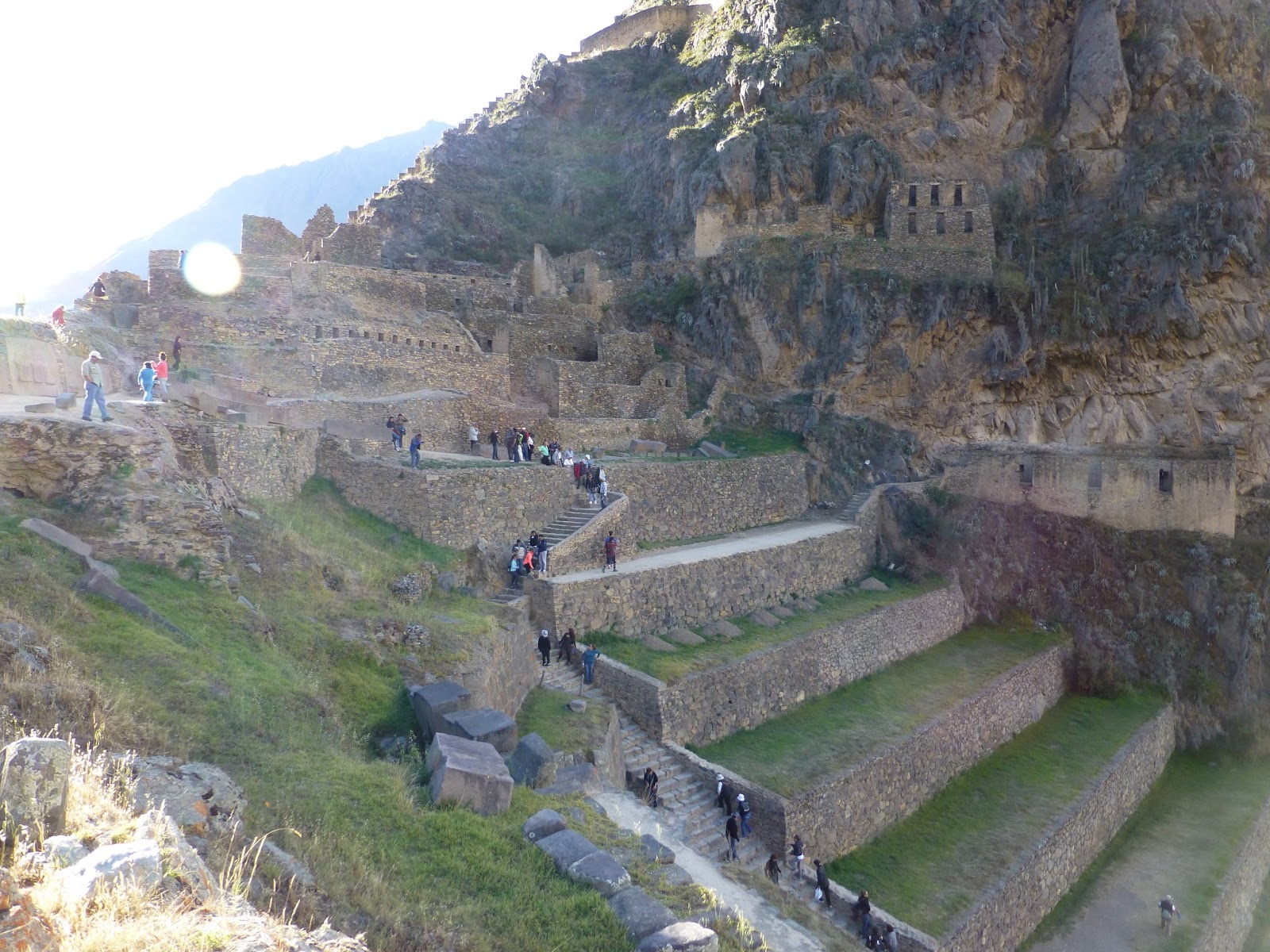
In the Andes the Incas made something like 60,000 miles of roads according to the guides I met (basically stone steps over very steep routes). These aren't runnable uphill since they're often at 45 degrees or steeper and at altitudes that are sometimes higher than any point in the European Alps. They're also tough to run downhill but the combination of power-hiking and running allows a lot more distance to be covered than the tourist masses are willing to attempt.
Then in the Amazon the trails are usually cut straight up and down steep muddy slopes with a machete, leaving sharp stubs of bamboo and other trees along the floor. Everything seems to want to bite, sting or puncture you in some way with plenty of poisonous snakes (be careful of the ones that will chase you rather than just bite if you're close by), spiders, other bugs or larger animals like wild boars, jaguars, caimans (like crocs). Also, most of the undergrowth is spiky so it's a harsh environment with high temperatures and 100% humidity.
The underlying theme is that it's all very beautiful and trail runners won't find many better locations to visit, although guides are required for many places including the famous Inca Trail to Machu Picchu and parts of the jungle.
![]() |
| Race photos courtesy of Martin Paldan |
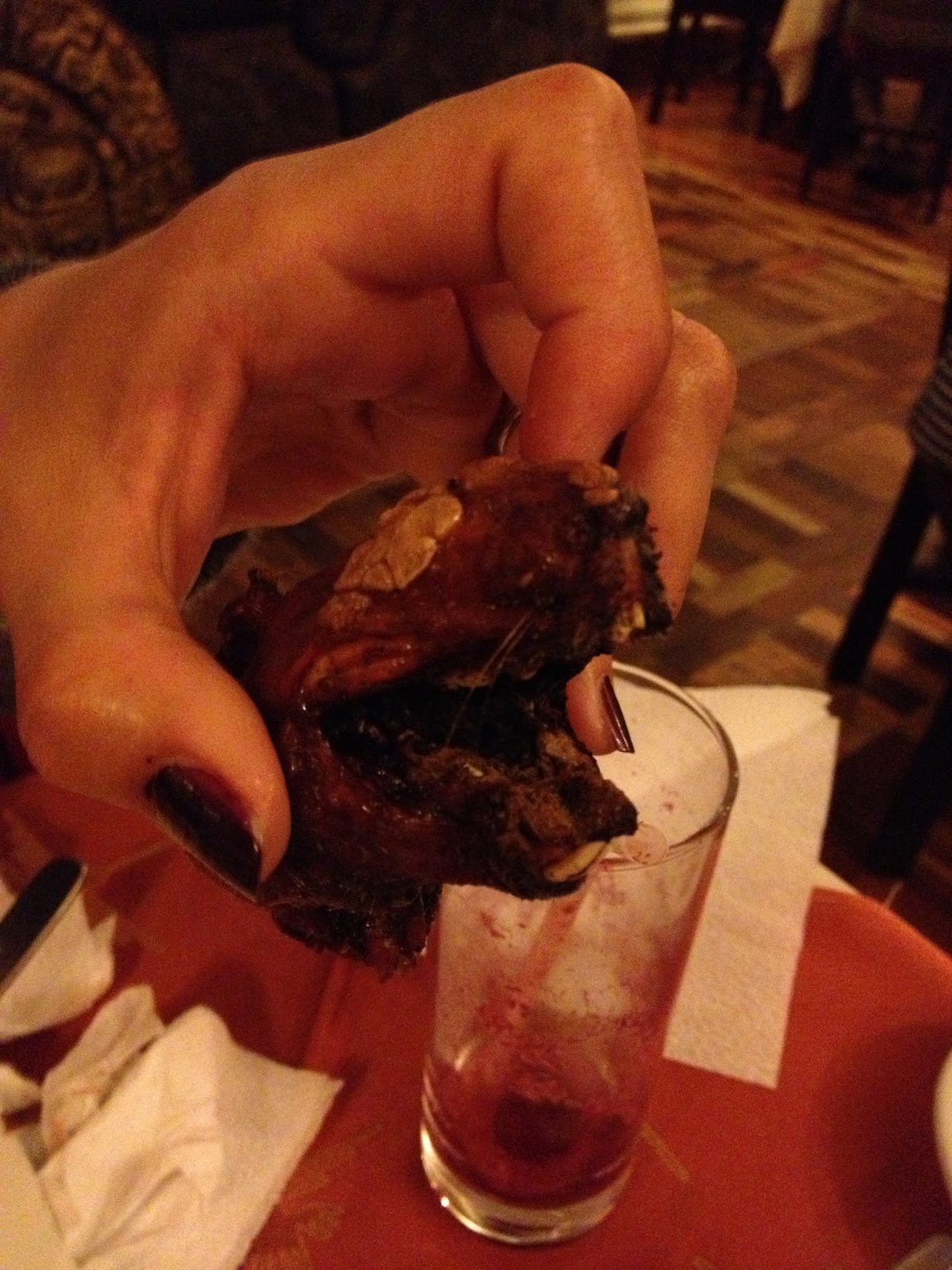
| Guinea pig head (the rest was already eaten at this point) |
| Not my foot, but everyone got eaten alive in the jungle. |
Subscribe to:
Posts (Atom)