|
| Big Sur Marathon start, before it gets scenic |
Back in 2011 I wrote my first comparison of the road marathons I've run around the world since I thought it could be useful for people when deciding which ones to choose. Each year I've updated this with new races I've run so here's my 2014 version. The three additions this year are:
- One additional marathon (CIM)
- I state the last time I ran each of the races since some may have changed slightly since I ran them
- Strava data for race courses, where I have it (only from the past three years)
There're a lot of fantastic races out there and many in locations that make for a great trip - a perfect way to see various unique cities. Overall it covers Europe and the west coast of the US in more detail but I'll keep searching out road marathons around the world since there's something about them that appeals just as strongly as other forms of running.
Bear in mind the list isn't exhaustive but includes well over
50 different marathons across the world, including a good portion of the most well-known ones, so there's some decent variety.
After each description I show my estimate of how many minutes to add on to your perfect time due to the course/conditions
for a three hour marathoner to give a comparison, so add on more of less minutes in proportion for your pace.
Amsterdam Marathon (2007 - this date refers to the last time I attended the event), The Netherlands (October) - Very fast course with typically perfect weather. Helps to be at near the front but not too big a race. Pancake flat and not necessarily very scenic but it does finish in the 1928 Olympic stadium so you can pretend you're finishing an Olympic marathon around the Great Depression, which isn't that far off the truth. Highly recommended, especially as it's a good excuse to visit the legal(ish) version of Sin City.
ADD 0 MINUTES
Arizona Rock 'n' Roll Marathon (2011), Arizona, USA (January) - If you want to have no off season then this is a great one to focus on for pure speed with comfortable temperatures and a slightly dull, but flat course around the Phoenix megapolis. They bill all the Rock 'n' Roll series races as a party but it's probably the most corporate running experience you could ever have (pay extra for VIP toilets at the start!) with less music along the course than many big city marathons. But the point of this one is really to have an easy course that's fast and to get away from winter snow.
ADD 0 MINUTES
Athens Marathon (2006), Greece (November) - Not particularly pretty but it does cover the original route from Marathon to Athens which is 24 miles, so it includes a loop to reach the adjusted distance of 26.2 miles. Flat first half then gently up before the last quarter is all downhill, finishing in the 2004 Olympic stadium. Kind of has to be done at some point just because of the history, but no need to do it a second time.
ADD 2 MINUTES
Barcelona Marathon (2008), Spain (March) - A great city to run around and a fast course too. Beautiful views of the sea and less overcrowding than at some of the larger city races.
ADD 0 MINUTES
Beaujolais Nouveau Marathon (2008), France (November) - a large percentage of people run in costumes and the race is similar to other wine country marathons like Medoc in that it's a way to celebrate the new season's wines. Wine, bread and cheese at every aid station, including pre-race so it's not exactly a fast marathon for most people. The highlight was running down steps into a wine cellar, past huge barrels of wine and an aid station, before running out the other end of the cellar and continuing on the course.
ADD 5 MINUTES
Belfast Marathon (2009), Northern Ireland (May) - Often windy, rainy and with a few hills to slow people down, yet strangely enjoyable even with sections along a motorway out to the airport. But running through republican
Falls Road and loyalist
Shankill Road with their sectarian murals is an interesting experience (especially if you're English).
ADD 3 MINUTES
Berlin Marathon (2007), Germany (September) - Fastest marathon course I've seen and the multiple world records broken there (the last four men's records were set there...excluding the disallowed Boston 2011 time). It starts on a wide road so the masses get moving faster than at similar-sized marathons. That allows more of the field to have a fast start, although many people still inevitably have to go very slow in the initial miles. Beer at the finish too.
ADD 0 MINUTES
Big Sur International Marathon (2014), California, USA (April/May) - Adding the word 'International' shows the aim of having people travel from all over the world and it fills very quickly but has a reasonable-sized field of 4,500 runners. Incredibly scenic along a beautiful stretch of California coastline but this is generally one to enjoy the views rather than go for a time. There's also a Boston 2 Big Sur challenge for people who run both, usually about a week apart.
ADD 4 MINUTES STRAVA DATA
Boston Marathon (2014), Massachusetts, USA (April) - In the US this is the big one everyone wants to get to thanks to the need to qualify, the history and the fact the locals get into it more than for any other marathon I can think of. I love it and it does feel special but it's not the fastest course normally due to cross-winds and those famous Newton Hills. Highlight is definitely the Wellesley girls whose screaming you can hear a mile before you get there at halfway. 2011 had a tailwind for much of the course but the 2:03:02 by Geoffrey Mutai may not have been an official world record due to the net downhill and point-to-point course, but I have no doubt it was the best run ever. This course can be fast, but on average
ADD 2 MINUTES STRAVA DATA
Brussels Marathon (2006), Belgium (October) - Pretty parks along the course and you get to see a good selection of the Brussels scenery including parts of the EU bureaucracy. Warning - your time may be worsened if you sleep through your alarm on race day like I did.
ADD 1 MINUTE
California International Marathon (2014), California (December) - Billed as a fast, net downhill course and it attracts top level US runners. The rollers in the first half are certainly significant so I found these more than make up for the 300ft net drop. It's faster than most Bay Area marathons, but only because they are generally very hilly. If you want a perfect course for a PR, this isn't it, but it's close to it.
ADD 1 MINUTE STRAVA DATA
Carlsbad Marathon (2013), California (January) - Want to get away from the winter cold? This is certainly a good option in South California and is well organized with a pretty course along the beach-front for most of the race. The half marathon attracts a world class field and the marathon is reasonably competitive too, but this isn't the place to come for a fast time due to the rolling hills (especially the big one at mile 9) and 900ft of ascent.
ADD 4-5 MINUTES STRAVA DATA
Copenhagen Marathon (2006), Denmark (May) - Much of the course is run twice with overlapping loops, but I wasn't very inspired by the course which was fairly average, without too many memorable sights.
ADD 1 MINUTE
Crater Lake Marathon (2012), Oregon (August) - There aren't many road races in National Parks and this one circumnavigates the hilly road around the Crater with views of the lake most of the time. Plenty of big hills plus the elevation is mainly between 7,000ft and 8,000ft so it's not fast. It also finishes with a nasty steep two mile climb up on a fire road then straight back down the same way to trash the legs.
ADD 16-20 MINUTES
Dublin Marathon (2007), Ireland (October) - Not a very scenic course, with wind and some small inclines to make it slower. But it gives an excuse to drink Guinness where it comes from and hang out with the Irish.
ADD 3 MINUTES
Duchy Marathon (2009), England (March) - One of the oldest marathons in the UK which used to be extremely competitive for a small event, attracting the top British marathoners back when if you ran a three hour marathon you were last. Surprisingly tough course with a beautiful exposed coastal stretch that can be blustery and has to be run past twice.
ADD 4 MINUTES
Edinburgh Marathon (2008), Scotland (May) - Net downhill but not a fast course thanks to the majority being along the Scottish coastline, famous for howling winds and rain. Only the first four miles are really in Edinburgh then it heads out along the coast into a prevailing headwind which turns into a tailwind on the return last eight miles, still finishing way out of the city. The out-and-back is lonely in terms of supporters but then has the entire field supporting each other as they run past both ways.
ADD 3 MINUTES
Eugene Marathon (2011), Oregon (May) - Fast and flat, as befits 'Track Town USA' and the home of so many Olympians. There's something special about finishing around the historic Hayward Field track and the weather will probably help your speed, even though it'll probably be wet.
ADD 0 MINUTES
Florence Marathon (2006), Italy (November) - The first few miles are downhill so it's easy to go off too fast, then dead flat along the river for most of the rest of the way. One of the best city marathons for scenery as well as being incredibly fast if you don't overdo those first miles. It includes virtually all the main tourist sights in one of Italy's most beautiful (and romantic) cities.
ADD 0 MINUTES
Fukuoka Marathon (2009), Japan (December) - If you get a chance, you're male and you're reasonably fast then you have to do this race at some point. Before there was a marathon world championship, this was the effective race where the best male marathoners came to duke it out. There's two qualification times: sub-2:27 for the A standard and sub-2:40 for the B standard with each having a separate start. You line up in rows in the exact order of your qualification times and can't drop below a 2:45 marathon pace or you get pulled from the course. It's a unique experience with a lot of crowd and TV support from the marathon-crazy Japanese. So if qualifying for Boston is too easy for you, give this a go. Highly recommended.
ADD 0 MINUTES
Louis Persoons Memorial Genk Marathon (2009), Belgium (October) - Not many marathons to choose from in January, especially in Europe, and this one has since moved to October. This is a very small, cosy race with a multi-loop course using bike paths and small sections of easy trail. It's a shame they moved it to the middle of the Autumn marathon season instead of the sparse winter marathon famine. It was a novelty to run this in the snow but that's unlikely any more.
ADD 2 MINUTES or 5 MINUTES if under snow
Halstead and Essex Marathon (2009), England (May) - A two-lap course with rolling hills in the Essex countryside. Full of people who didn't get a spot in the London Marathon and plenty who did it too.
ADD 3 MINUTES
Hastings Marathon (2008), England (December) - I'll include this even though the race was a one-off in 2008 to commemorate 100 years since the London 1908 Olympics where the marathon distance was defined. It may come back at some point and it'd be great if it does. A rolling course including some beach running near the finish and a generally fun, low-key event.
ADD 3 MINUTES
Helsinki Marathon (2008), Finland (August) - I did this to complete the set of Scandinavian capital city marathons and it rained. Surprisingly interesting course with some waterfront running and random city streets. But it finishes in the Olympic stadium built for the 1940 Olympics but used in the 1952 Olympics, which is a plus.
ADD 2 MINUTES
Honolulu Marathon (2010), Hawaii, USA (December) - The definition of a destination marathon but some gentle climbs and guaranteed humidity and heat mean you'll be slowed. You probably won't mind since it just means more time to enjoy running in Hawaii. And you'll be doing it with a lot of other people since this is one of the largest marathons in the US, plus the out-and-back course lets runners cheer each other on (and lets you see a lot of costumes).
ADD 8 MINUTES
Lake Tahoe Marathon (2010) - Emerald Bay Marathon, California/Nevada, USA (September) - Day one of the triple marathon around Lake Tahoe, and each is one of the most spectacular road marathons out there. Not the fastest course thanks to the big climbs and 6,000ft altitude plus most people will be doing the marathons over the next two days too. Fit this in if you get a chance since it's a perfect excuse to go to Tahoe and do so outside of the main tourist seasons, yet often with great weather.
ADD 4 MINUTES
Lake Tahoe Marathon (2010) - Cal-Neva Marathon, Nevada/California, USA (September) - Day two of the triple or a stand alone race and the fastest of the three days with smaller climbs and a net downhill from the highest point of the three days (7,000ft) back to the lake level. Easy to hammer those downhill miles too fast and ruin the legs, but if you're doing all three days it's easier to be sensible.
ADD 2 MINUTES
Lake Tahoe Marathon (2010) - Main Marathon, California, USA (September) - This is the biggest race of the three days and the one that has a lot of single day runners. It's also probably the hardest with some nasty climbs up to Emerald Bay and the best road views in Tahoe (where the first days starts). After the crest of the hill its downhill then flat for the last six miles then a barbecue on the sandy beach.
ADD 5 MINUTES
London Marathon (2009), England (April) - In the UK this is THE marathon and most people don't even realize there are other ones out there. Most people run for a charity with a huge number doing so in costume and there's a lottery for non-charity entries, although foreigners can just buy an over-priced package to get in. If you want to run a fast time (and you definitely can on this course), then you'll need to qualify with a '
Good For Age' or
Championship time to get near the front or you'll be stuck walking with the masses, being deafened by the crowds, especially near the end.
ADD 0 MINUTES (more if not at the front of the start-lines)
 |
| London Marathon through Canary Wharf |
London Marathon - 1908 Olympic Route (2008), England (July) - This course from Windsor Castle to BBC Headquarters may never be used again, but was recreated (without road closures) for a centennial commemoration of 1908 in 2008 by the 100 Marathon Club. Not a great route, including some dodgy areas of town but it has the same appeal as doing the Athens marathon and maps of the course can be found online if you want to try it solo.
ADD 3 MINUTES or more if you allow for traffic and map navigation
Luton Marathon (2006), England (November) - A three-lap course with joys such as scary council estates where you may get mugged mid-race, nasty headwinds that somehow follow you around the loop and the chance of cancellation due to icy roads. But it does have a good challenge for a small race, in that there's a three-man relay to race against.
ADD 4 MINUTES
Luxembourg Night Marathon (2007), Luxembourg (May) - An interesting twist in this race is that it starts soon before sunset, heading through the bridges and old buildings of the city. As it then gets dark part-way through the race, the final mile has candles lining the route and then finishing in an indoor stadium with techno music and disco lighting. Not a fast course due to the continuous rolling hills but pretty and unique.
ADD 4 MINUTES
Marrakech Marathon (2008), Morocco (January) - Maybe not the most effective organization but it's a great city to visit and weather will tend to be at least comfortable, but possibly hot. The course is mainly outside the old town with the souks and windy little side-streets so has some desert-like views but it's all on flat roads so is very fast if the heat stays low.
ADD 2 MINUTES
Malibu Marathon (2013), California, USA (November) - Want an excuse to visit the home of the stars and maybe even LA too? This course tends to have good weather, sometimes a little on the hot side and starts inland before running along the Pacific Coast Highway with some gentle hills, especially nearer the end.
ADD 2 MINUTES STRAVA DATA
Napa Valley Marathon (2014), California, USA (March) - Scenic point-to-point run through the Napa wine region with your weight in wine as a prize if you win (they're smart - the winner is unlikely to be big). The course rolls slightly but is quick in general with comfortable, if potentially wet, conditions.
ADD 1 MINUTE STRAVA DATA
New Forest Marathon (2008), England (September) - A scenic run through this forest in the south of England on roads with very small trail sections. Some gentle rolling paths and wind can slow the pace slightly but generally a relaxed and enjoyable smaller race.
ADD 3 MINUTES
New York City Marathon (2007), New York, USA (November) - The world's biggest marathon with multiple start areas and routes that stay separate until several miles into the course. This one has to be on every marathoner's to do list despite the fact it's fairly tough due to the bridges acting as nasty hills. If you want to run fast here then you need to qualify to be at the front but the
times required are tightening from 2012 due to the popularity of the race (for a senior man it will be 2:45, with times dropping for masters' age groups). It's a fun race with a chance to see plenty of NYC, much of which you might not need to really see, so this is really about the experience and it isn't cheap (I can't think of a more expensive entry fee for a road marathon). Don't expect to be running in those early miles or where the starts merge later on unless you're very near the front.
ADD 3 MINUTES (much more if not in the front corrals)
 |
| The New York Marathon start line |
Newport Marathon (2010), Oregon, USA (June) - An ideal race to go for a time plus some scenic views of the sea, a large bridge and along a river in the beautiful Oregon coast. Small enough that everyone can run immediately but fast and flat enough to let people nail the race, especially since the weather tends to be ideal for running. Only remotely difficult bit is a tiny hill in the first few miles, unless you decide to do the oyster challenge and eat as many oysters as you can as you go past the oyster farm on the way out and heading back (current record 80 oyster shooters).
ADD 0.5 MINUTES
Night of Flanders Marathon (2008), Belgium (June) - The marathon isn't the main event here as it's more focused on the 100k which has previously been the 100k World Cup race. But the courses are the same and the 100k just includes more loops through the countryside and small Flemish villages. The novelty here is that it starts in the evening and so some of the marathon is in the dark while most of the 100k is. Flat, slightly windy and with each lap going past weekend revelers in bars (who seem to be oblivious to the race).
ADD 2 MINUTES
Oakland Marathon (2014), California, USA (March) - Oakland doesn't have a great reputation and has very high crime rates, even though it's just across the Bay from San Francisco and near much less dangerous places. The marathon starts with a gradual then steeper climb up to Piedmont, which is the rich part of town and takes an effort. Then after 10 miles there's downhill into Oakland proper and flat, speedy roads. The front-runners spread out so if you go significantly under 3h pace then you'll run though much of the dodgy part of Oakland solo. So each time you see a cop blocking a road for the race, you'll be happy. This shouldn't be an issue for most people but I felt unsafe running along (having run through ghettos in Africa and several third world countries).
ADD 3 MINUTES
Oslo Marathon (2006), Norway (September) - A course that mainly goes along the bay in one of the richest and most expensive countries in the world. A chance to see Viking ships but if you want to do a Scandinavian marathon then Stockholm is prettier and more fun, not that this is a bad race at all.
ADD 1 MINUTE
 |
| Oslo Marathon |
Paris Marathon (2009), France (April) - Starting along the Champs-Elysees by the Arc de Triomphe so that it's a very wide start allowing the field to spread out on the very gentle downhill. Then you get the chance to see most of Paris' sights, two very French parks and a finish back at the Arc de Triomphe. Fast course, beautiful course and it includes a trip to Paris - highly recommended.
ADD 1 MINUTE
Portland Marathon (2011), Oregon, USA (October) - Although Portland is a very green city in every way, this course shows less pretty parts of town and has a big bridge crossing around 16 miles. A relaxed atmosphere and not too large a field, plus a focus on making the race good for beginners and be female-friendly means this is a chilled race. People aren't fighting for position at the start like at many races. It'll probably rain and could be cold and windy so this isn't a super-fast course but is good as a first race or if you want to avoid the over-competitiveness you get at many races (particularly near the front).
ADD 3 MINUTES
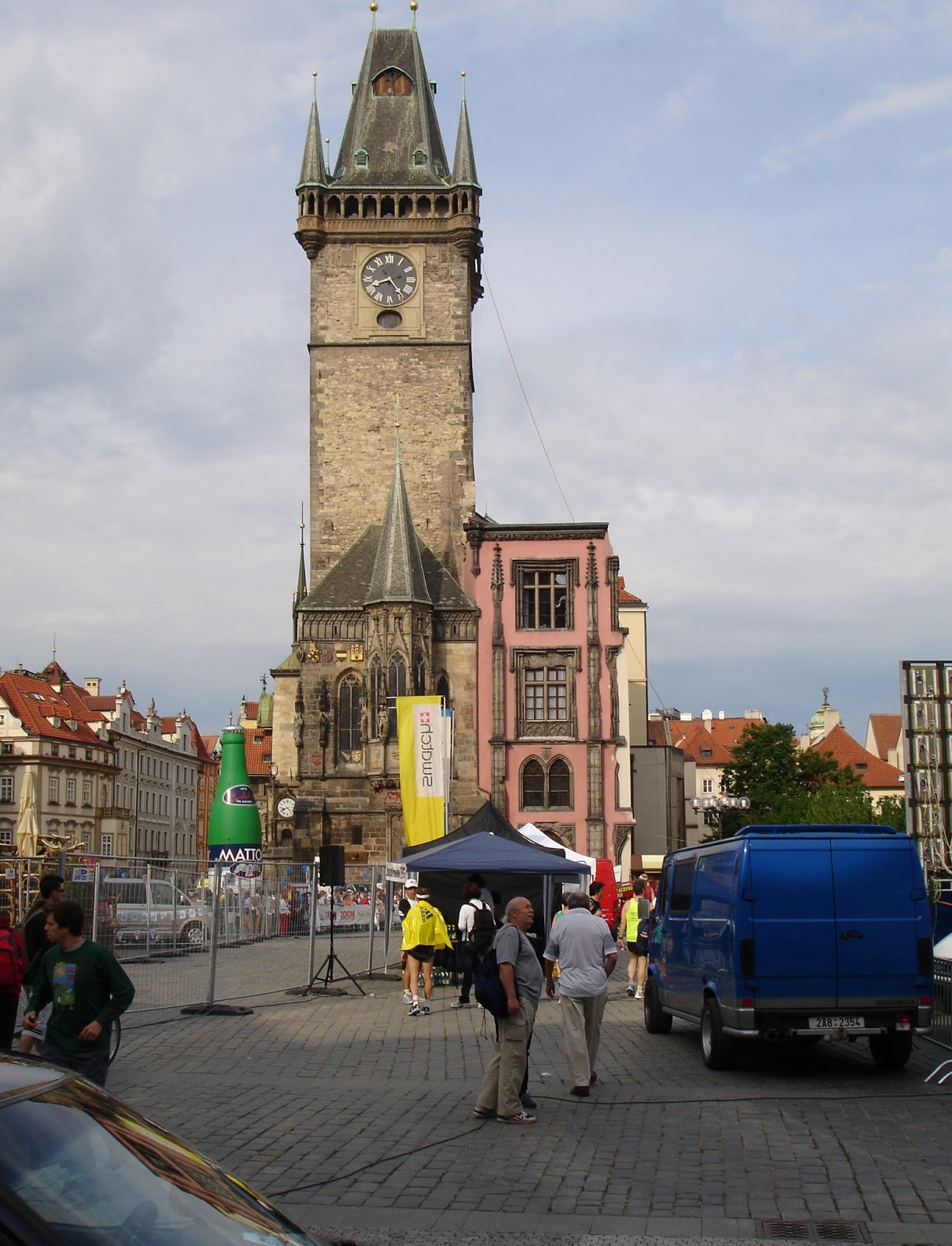
Prague Marathon (2005), Czech Republic (May) - As my first marathon, this feels particularly special to me and Prague is always a great city to visit, particularly the ancient old town where the race starts and finishes. The course has been improved slightly since I ran it but still involves some running on boring roads away from the center. Fast, although some people may not like the flat cobbles near the start and finish.
ADD 1 MINUTE
 |
| Prague Marathon start/finish area |
Quebec City Marathon (2009), Canada (August) - Not many marathons in August but this is a fun one that includes a chance to see a large part of the city along the water then finish at the bottom of the old town. Easy first half including some bike paths then there's a steep climb up to a big bridge halfway through and a prevailing headwind to the finish which can really slow everyone down.
ADD 4 MINUTES
Reykjavik Marathon (2009), Iceland (August) - Iceland is an interesting place to visit and the race coincides with their summer festival so the locals do the two things they're famed for - drinking heavily and being promiscuous (the latter is just what I've heard). The course is mainly along the Atlantic coastline and typically is windy, plus even August is generally cold. So even though this course isn't fast, it's the road marathon I've done the most and somehow led to four PBs in a row. But beware that if you run faster than 3h pace you'll be on your own for most of the time.
ADD 2 MINUTES
Robin Hood Marathon (2007), England (September) - This race in Robin Hood's locality in Nottingham follows the half marathon route, which is quite hilly, then heads off around man-made rowing lakes where there can be headwinds. A medium-sized marathon where a Brit is almost guaranteed to bump into a runner he or she knows.
ADD 2 MINUTES
Rome Marathon (2009), Italy (March) - This is one of the best road marathons out there and even has a quick course. Undoubtedly the most impressive city marathon course given you run past so many world famous sights (unlike, say, London which avoids most tourist areas). Starting and finishing at the Colosseum then including the Vatican, Roman Forum and everything else you'd want to include on a trip there. Some cobbles but they're flattened and shouldn't be an issue for 99% of people. Do this race and fit in a longer trip to Italy if you can.
ADD 1 MINUTE
 |
| Rome marathon start (that's me dressed as a gladiator) |
Salt Lake City Marathon (2010), Utah, USA (April) - A net downhill, but starting at almost 5,000ft which takes a tiny toll on sea-level dwellers. The start is around dawn with the views of the mountains surrounding the city just starting to be lit with purples and blues, so that distracts you at first before some rolling hills. The half starts at the same point then splits off a few miles in before joining back up near the end. Some freeway running but generally a decent course for views.
ADD 3 MINUTES
San Francisco Marathon (2014), California, USA (July) - Even though its at sea-level with mild weather, this is probably the hardest city marathon
course I've seen given the significant hills (ok, trail runners, it's flat in mountain terms). Starting pre-dawn means cold and probably misty conditions but the main draw is the chance to run over the Golden Gate Bridge on an out and back. I loved the course despite the fact it slowed me down a lot. Great excuse to visit a cool city too.
ADD 4 MINUTES STRAVA DATA
Santa Barbara Marathon (2013), California, USA (November) - A fast and generally flat or gently rolling course with a nasty hill at mile 23 that could put you off your target pace. Great atmosphere with a theme of supporting war veterans and the timing is around Remembrance Day/Veteran's Day.
ADD 1 MINUTE STRAVA DATA
Santa Rosa Marathon (2010), California, USA (August) - This small town race in wine country is very fast. Previously a two-lap course along a river, this is now a single lap with a small field and so an ideal course to go for a PB if you don't mind potentially running alone.
ADD 1 MINUTE
Seattle Marathon (2012), Washington, USA (November) - One of my favorite marathons and a good reason to go to Seattle just after Thanksgiving. Not a fast course but lots of running by the water before coming back inland to the finish, which includes some sharp hills. Another race run concurrently with the half marathon, but the half takes a short-cut so marathoners pop out into the back of the pack half runners, which can be really motivating given the mutual support runners provide to each other.
ADD 3 MINUTES
Shakespeare Marathon (2008), England (April) - A marathon in Shakespeare's base of Stratford-Upon-Avon which rolls through country lanes for two laps. Usually very close to the London marathon so it tends to include people unable to get a spot there. An ideal way to run through some gentle English countryside without doing a trail race.
ADD 3 MINUTES
Silicon Valley Marathon (2010), California, USA (October) - Out and back from San Jose to Los Gatos along a canal for most of the course, which is now defunct. The first half is gradually uphill then the return leg is fairly easy and the parks and greenery is better than you usually see in the area (I used to live there). No longer exists.
ADD 2 MINUTES
Stockholm Marathon (2008), Sweden (May/June) - Another of my favorites, this involves two slightly different laps across the islands of Stockholm with the only hard part being the double crossing of the long bridge back to the main city. It's scenic, involves visiting a great (if expensive) city, and usually has really pleasant weather although has been too hot a few times.
ADD 2 MINUTES
Sunriver Marathon (2014), Oregon (September) - Fast and flat around the golf course of beautiful Sunriver Resort, just south of Bend, OR. Mountain views of the Cascades mean there's always something to keep you occupied and the 4,000ft elevation will barely have an effect.
ADD 1-2 MINUTES STRAVA DATA
Tri Cities Marathon (2012), Washington, USA (October) - A small race through all three of the cities that make up the Tri Cities, along the Colombia River. Completely flat except the four river crossings but these hardly affect your speed, although it can be windy so that's the only risk. Great for a PB attempt, but this may involve running alone given the small field.
ADD 0.5 MINUTES STRAVA DATA
Tucson Marathon (2013), Arizona, USA (December) - A net downhill course starting at around 4,800ft and finishing at 3,000ft, this looks super fast on paper. In practice there are a couple of reasons it's maybe not quicker than other marathons in this list. Firstly, there's a prevailing headwind for much of the race which negates much of that downhill. Secondly, around 10 miles are flat, rolling or uphill and that wears the body down when mixed with the headwind. Finally, those downhills can wipe out your legs with the additional pounding and impact. Even as a trail runner focusing on huge amounts of downhill training, I found my legs were struggling near the end, purely due to the hard surface and leg damage.
ADD 1 MINUTE (MORE IF YOU'RE NOT A STRONG DOWNHILL RUNNER) STRAVA DATA
 |
| Tucson marathon course profile |
Valencia Marathon (2007), Spain (November) - This race used to be in February and filled a gap in the calendar nicely but has since moved to November. A surprisingly good-looking city with some interesting modern architecture which you see along the route. It's also a well-designed course that is completely flat and easy.
ADD 0 MINUTES
Vilnius Marathon (2008), Lithuania (September) - One of the things I love about running is that way it takes me places I wouldn't ever think of going otherwise. Lithuania is one of those places and it's a beautiful small city with plenty of Gothic architecture, windy little streets and, I found, rain. The course varies from old city streets to bike paths through woods plus it's not got any obvious difficulties.
ADD 1 MINUTE
Warsaw Marathon (2007), Poland (September) - As with Vilnius, I probably wouldn't have visited this historic city if it hadn't been for the marathon. It's a larger race but not as interesting since it includes some Eastern Bloc-style views of concrete faceless buildings and boring main roads as well as some of the old town.
ADD 2 MINUTES
Zurich Marathon (2008), Switzerland (April) - I usually prefer to run in the mountains when in Switzerland, for obvious reasons, but this marathon is executed with typical Swiss efficiency. Plus it has great views the whole way since most of it is out and back along Lake Zurich with the mountains adding a perfect backdrop. The course does have some gentle rolling sections but is still fast. If you miss out on London, this is a more than adequate alternative.
ADD 2 MINUTES