Tuesday, 20 September 2011
Running bucket lists
Although I'm obviously focused on the next race coming up (UROC 100k, in this case), I get a bit restless when I haven't got plenty of interesting challenges coming up. I learned after my first Marathon des Sables that it's good to have stuff to look forward to after a large challenge that occupies your mind and training for a long period of time. Otherwise, you (or I, at least) get back post-race and feel on a bit of a downer after such a great high.
Anyway, the reason for this post is I was just offered a spot in the largest ultra in South America (so they say - I haven't checked and am not very familiar with the choices down there), the North Face Ultramaraton de los Andes in Chile. Generally it's a good day when someone sends me an email to offer me a spot in a race, but this one sounds particularly cool for several reasons.
Firstly, Hal Koerner and Sean Meissner both ran it last year and seem to have very high opinions of it. Secondly, it's a very hard course what what I can see. But it's the third fact that has a slightly absurd appeal to me - that it's in a country and continent I've not been to and, importantly, not raced in.
There's something about racing on all seven continents that appeals to me, and to many others, although for the sake of a bucket list I don't feel the need to just waste tens of thousands of dollars on a trip to the Antarctic to do a race that may not even happen (sometimes the weather's too bad and the races end up being laps of the ship they travel on). However, if someone else paid for it...
Europe and North America are places where I've run plenty of marathons and ultras and covered many of the countries on both continents. In Africa I've raced one marathon and several ultras. Asia has been just one marathon (Fukuoka, Japan) and two adventure races (2x Kinabalu Challenge in Malaysian Borneo).
For years I've had Australasia and South America on my running to do list and I've never even traveled to anywhere in South America. I should probably point out that I'm almost as addicted to traveling as to racing so when I get to combine both it's especially fun. And I've made a point of doing so.
So it got me thinking about bucket lists and other arbitrary lists. I know plenty of runners (more likely than your average person to be a type A personality) who obsess about seeming pointless targets and lists and I have some of my own too. Here are a few examples from others I can think of then I'll list my own targets.
1. Running a marathon in every US State (surely after half of the States it just becomes list-focused rather than picking events that are genuinely interesting).
2. Running a marathon in every UK county (ditto).
3. Running a marathon on every continent (I'm happy to leave off Antarctica, but otherwise a good excuse to see the world).
4. Most sub 3:15 marathons in the world.
I think you get the point. There's an element of wanting to 'collect' these achievements and it can add fun and an additional challenge to the races.
My own lists are as follows and may seem unusual but add fun to my races but I'm not referring to targets like 'win this' or 'qualify for that', just additional stuff that helps me to select my races.
1. Sub 2:45 marathon on the six continents excluding Antarctica (currently only NA, Europe and Asia done) - odd time to choose but it's the London marathon Championship start qualification time. Look, it made sense when I started doing it, ok?
2. Run 100 sub 2:45 marathons (related to the last one). Currently I'm on 16, plus one 50k at that pace. I think that's rough half a year of Mike Wardian's schedule, except his target could be 2:30 :)
3. Hit every marathon minute under the Boston qualifying time (currently 3:10:59 but changing to five minutes quicker from 2013). I've hit every minute down to 2:35 so far, plus 2:33 and 2:32 and justify this as training myself to run at a variety of paces very evenly, plus it's generally more fun in a training marathon to have a specific target instead of just jogging off at sub-race pace. However, a pet peeve for me is any course where the final 0.2 miles is out (surprisingly many) as this had led to some ridiculous sprints to hit a time when I thought I was spot on for pacing. Not missed one yet, though.
4. Race in as many countries as possible (currently about 29 but I haven't added a new country since 2009).
5. Run the classic global ultras, which I define for this as the most prominent and historic ultras of each type in my subjective opinion: Marathon des Sables (multi-day, desert), Transalpine Race (multiday, mountains), Western States 100 (100 miler), Comrades (road), London to Brighton (road), Two Oceans (road), Spartathlon (road, extra long) and UTMB (100 miler new boy). Maybe Badwater is part of that list, but if so, I'm happy to tick it off having crewed there. And the only other two left for me are the Spartathlon and UTMB. However, I have a to-do list of countless other races, like anyone else, but these are the big daddies to me.
My lists aren't any 'better' than anyone else's but the thought of running in South America next month just got me thinking about them. Some of those targets are more from when I mainly did road marathons, but I still love those and still aim to keep doing them.
What unusual (weird?) targets do you have? If I like the sound of them I'll probably adopt them for myself too.
Saturday, 17 September 2011
Professionalism - Ultra Race Of Champions 100k Pre-Race
So the Ultra Race of Champions ("UROC") 100k is almost here, and with it the biggest push towards professionalism in our sport in North America. Prize money has always been non-existent or small in ultra-running (outside South Africa - I'll mention this more below), except in a few 'pedestrian' races from 18th and 19th century Britain which were popular for gambling crowds. And maybe a couple of other long multi-day events (I believe the Melbourne-Sydney races in Australia often put up a lot of cash). In particular, there's a good history of ultrarunning, which covers the early gambling start, in Professor Tim Noakes' 'Lore of Running'.
We do already have the North Face Endurance Challenge series with a $10,000 first prize in the final and these races are great, particularly the final. Last year's final was almost certainly the most competitive 50 miler ever and this year's will probably be even more so. So I should give credit here to this series, but it doesn't push the elite profile of the race much and it's only the money that makes it any different. UROC is much more focused on raising the profile of the runners, selling the race on the back of who will be there and purposefully opting for a more professional set-up for the runners, with some costs covered to some runners ('appearance fees') just for showing up. This is a move towards the more normal set-up for track and road races.
I know plenty of people have speculated, particularly in blogs, about whether it's good or bad for the sport to have more prize money and to make it possible to make a living from ultrarunning. Even about how possible it is to get enough interest in a sport where a dramatic move can still take hours to play out, often in remote locations.
Well, technology has certainly moved on dramatically in recent years to maybe make it possible for this to be a spectator sport. I never would have thought that following a race through one line updates on Twitter for hours could ever be interesting, yet this seems to have taken off in the past couple of years. With webcams along courses and instant updates online, maybe the time has come. Ultras have undoubtedly grown in prominence and popularity recently and stars like Kilian Journet even get their own adverts in Times Square, plus his well-known Kilian's Quest series of online shows.
Without the money from gambling that the pedestrians benefited from, it'll be interesting to see whether UROC successfully achieves its aim 'to create the Championship Event for the sport of Ultra Distance Running' (quote from the UROC website, and here's the list of elite entrants). Money is only part of the equation given that there's no doubt that UTMB attracts the world's best mountain ultrarunners with no prize purse, just like Western States which has nearly the same profile from a North American perspective.
But given the huge effort involved in training and high cost of attending races far from home, it seems only fair that the runners who provide the entertainment and help to sell sponsor's products don't do it all on their own dime. It's true that many do have sponsorship deals, but these generally just cover the main costs and very few people come away from a race cash-neutral, never mind having earned even as much as if they'd worked at McDonald's for the few days they were away from home.
Personally I hope UROC is a big success and that our sport grows and grows. It's a great way to push your boundaries and find out about yourself, while shorter distances rarely have those epiphanic moments. The more people who run ultras, the better for society. Ok, it means more lotteries in classic races but it also means more races to choose from. Choice in this sense is a good thing and there'll always be races around for 'purist' runners who want to avoid the crowds and fanfare. I wouldn't want to be without these for a second, but the opportunity to race against the best and to have everyone really focusing on that race is something that excites me both as a runner and as a fan of the sport.
One last word has to cover the South African ultras which are on a scale of their own and dwarf any other races out there. Having run the two prominent ultras over there, once at Two Oceans 56k (my blog) and five times at Comrades 89k (my 2009 blog, 2010 blog and 2011 blog), I can say that the significant prize money at both of these only enhances the races. Helicopters provide live TV coverage, as do lead vehicles (admittedly easier for road races).
Comrades is on national TV for the full 12 hours of the race, plus before and after. Yet the celebrities it makes of the runners and the extremely high quality organization only add to the experience for the thousands that participate and millions who watch. To put it in context, the winners of this race earn at least US$80,000 including sponsorship bonuses, plus more money for being the first to particularly points on the course, being local or a course record. If a local won in a course record, I estimate they'd win over US$140,000 at current exchange rates!
I expect I might prickle a few people's sensibilities with this posting and will have many negatives pointed out to me, but I'd certainly like to hear all the (non-troll) points of view.
Also, irunfar has put up coverage of the men's elite race and will probably do the same for the women.
Labels:
100k,
2011,
Comrades,
Professionalism,
Race,
Road,
South Africa,
Trail,
Ultra,
UROC
Wednesday, 14 September 2011
TNF UTMB 2011 - Spectating/Crewing for Hal Koerner
I finally got back home yesterday after a long trip to Europe, mainly to see the most famous mountain ultra in the world - the Ultra Trail du Mont Blanc. 103 miles (before any course changes) and over 30,000ft of ascent/descent makes for one of the hardest races around...and also one of the most competitive.
I wanted to check it out in advance of racing it myself since this type of event demands respect. You don't just turn up to this and expect to finish at all, never mind finish well, without doing hard work in the mountains first. And part of that for me was to do my homework and see the whole course and what the runners put themselves through.
Plenty of people have written up their reports which include a lot more detail that I could, since I was only able to get into a handful of checkpoints with the group of TNF employees helping Hal out (official TNF blog posting from Nichol, another of the crew members, is here and Hal's own account is here). A few good blogs include Geoff Roes, Joe Grant, Scott Jurek and Nick Clark even though none of these guys finished, despite being in excellent shape (definitely another reminder the race isn't easy). irunfar also covered it in detail (with Bryon running and unfortunately DNFing too) with plenty of links to all the relevant info.
The race started five hours late at 11:30pm due to a delay by the organizers to miss a storm but it was still raining heavily for the first night. The start was more similar to a city marathon start with everyone packed in tightly and crowds so deep that the best view was on the big TV screens set up near-by. I know people talk about the electric atmosphere but I was a little underwhelmed and it seemed more annoying than as something that added to the experience. But I only say that because the start is fairly narrow so most people are limited to a shuffle through the streets of Chamonix. The heavy rain probably took a bit away from the fun too.
From that point on I was surprised how much the field spread out and even at 21k in at the first checkpoint the lead pack was small (Kilian and Seb Chaigneau were in it). Obviously the steepness of the climbs and ascents meant that the leader's fast pace was too much for some who'd normally be fine sticking with leaders early on. I suspect that some of the elites also ruined their own races by pushing too hard early on to stay in touch with the locals. More so than at most ultras, but I have no idea who did go too fast through the cold night given how many people did have to drop.
By the morning we were at almost halfway in Courmayeur in Italy and the lead pack of four (which stayed the lead pack all through, although Miguel Heras dropped near the end to reduce it to three) came through, then Mike Wolfe close behind. The other top Americans and Brits were further back and many stopped at that point. But Lizzie Hawker was storming through near the fastest men and well ahead of the rest of the women.
Hal came through close to Lizzie but wasn't running very fluently and needed some time to change and freshen up before he got going. Unfortunately his competitive race was basically over at this point and the rest of the time would just be a slog-fest to finish. There was only so much the crew could do and each checkpoint we saw him at from there it was just about trying to warm him up and make him comfortable since his legs had just had enough.
I really thought Hal would drop at some point, especially after seeing him come into La Fouly in Switzerland at almost two thirds of the distance completed. He'd been moving slowly and had to walk most of the section up to there, then could only really walk on any type of terrain after that. But it was inspiring to see him grind out a finish when it clearly wasn't his day. That seems to be what the race is mainly about for almost everyone, but for someone aiming to be at the front, it takes a huge mental shift to just aim to finish, no matter how long it takes (and it took almost 39 hours, compared to Kilian's winning time of 20:36).
The course was changed mid-race to avoid ice/mud-slide or something like that. It wasn't very clear and I'd have to say that the communication of the organizers to runners was generally not up to the standard of an event of this size. You'd have thought they'd have learned from last year, but it seems there's still more improvements they need to make. In general, though it seemed to be well organized to at least the standard of Western States, if not to the same ridiculously high standard as other European mountain races but they have the advantage of being shorter. However, if you want to see the same type of scenery without having to be super-humanly fit then the Mt Blanc marathon at the end of June is a great option and really blew me away when I did it a few years ago.
It was a terrifying, yet inspiring event with great athletes pushing themselves to their limits. The scenery isn't too bad either. I'd then hoped to do the whole UTMB route over three days at a gentler pace but had to turn around on day one due to my legs feeling too sore after Waldo 100k the weekend before. Instead I beasted myself up some of the steepest climbs in and around Chamonix to cover about 65 miles in those three days instead but still with 25,000ft of climb. Just another little reminder to myself about how hard the terrain there is.
Now some pretty photos of mainly France around Mt Blanc:
| Chamonix |
| A guy near the top 10 approaching La Fouly, Switzerland |
| Overlooking Chamonix |
| Chamonix and Mt Blanc |
| Mt Blanc |
| Halfway up the Aiguille du Midi |
| Lac Blanc |
| Aiguille du Midi |
| Tower at Aiguille du Midi |
| Bridge at Aiguille du Midi |
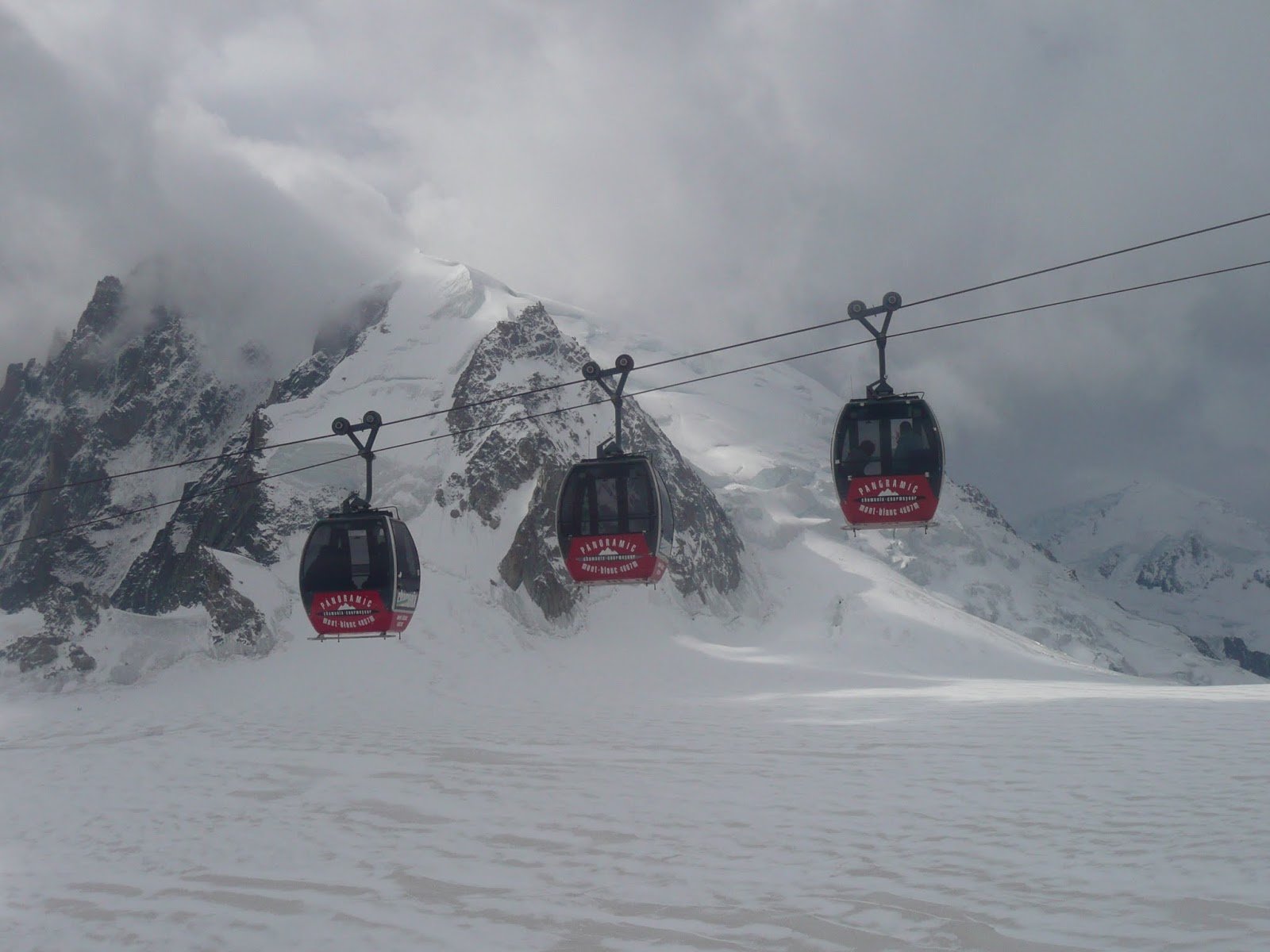
| Crossing from France to Italy on a cable car |
| 1L beer mugs always look great in photos - feels like the hobbits having a pint |
| Amy in the middle of a roundabout in Courmayeur, Italy. Odd. |
Sunday, 21 August 2011
Waldo 100k
Being back in Oregon means all the races I meant to fit in last time I was here are now back on my to-do list. That meant I was able to squeeze in Waldo 100k through the Cascades in Central Oregon and see some of the lakes from the Cascade Lakes Relay from high up. Supposedly 11,000ft of climbing in 100k, but several people claim it's more like 13,000ft and, given Miwok 100k is around 10,000ft, this one feels way steeper. Mind you, still a lot less than the UTMB races in a week - the CCC 100k there is over 20,000ft of ascent.
A lack of air-con at home has meant that getting to sleep at a reasonable hour is very difficult right now so I wasn't able to pre-adjust myself for the 5am start but drove down to Willamette Ski Pass the night before to sleep in the car then wake up in a complete daze about five hours too early for my body.
Being the first race of the 2011/12 Montrail Ultracup (which finishes with Western States), it meant runners were attracted by being part of the cup, by the decent prize money to the top finishers overall and by the lure of qualification spots for WS100 for the top two men and women (dropping down to third if any of the top two had already qualified). Given Dave Mackey was the clear favorite (CR holder at Bandera and Miwok 100ks as well as winning both of those this year) and had a WS100 entry already, plus I already had my WS100 place too, that meant it would be very likely that top three in the men would be enough to get that coveted spot. Ditto for the women since Aliza Lapierre was running as the favorite and already had her spot too.
Many of the guys I'd met at Mt Hood 50 and the run around Mt Hood shortly afterwards were there, plus a whole host of other Oregonian and Californian ultrarunners whose names many would recognize. Yassine Diboun in particular was gunning for a WS100 qualifier and looked like he had a great chance to get it...I knew I'd be looking out for him along the whole way and hoping to stay ahead.
The course went up the ski run from the lodge, climbing steeply enough to make me walk before the top of the approx 1,200ft climb. It was pitch black and my headlamp was dying so I had to focus very hard through the trees (no moonlight to help out) to not fall and to spot the lights ahead of me so I wouldn't miss a turn on the single-track.
By the first aid station at 7.4 miles, Dave had zoomed off but the next six or so guys were all together and we could finally turn off the lights. Time to make the ascent from under 5,000ft (lowest point on the course) to around 7,200ft on top of Mt Fuji. Hopefully I'll see its namesake next year in Japan for TNF Ultra-Trail Mt Fuji but this one was mainly runnable and in the last few steps we were given a sudden and spectacular view out over Waldo Lake and a large chunk of the Cascades.
![]() |
| Waldo, photo courtesy of Craig Thornley. |
![]() |
| Fuji view from a random Flickr account online. |
Unfortunately we then headed straight back the way we came so the view was only for a few seconds. I'd have loved to stay longer but the heat was on and I was only in about fifth with Dave already about 10 minutes ahead, judging by the out-and-back to the summit. I at least wanted a chance of winning.
Lots of fast downhill followed and I moved past Yassine into fourth, trying to conserve energy and reduce pounding on the thighs given I was only about 15 miles into the race. Nick put some distance on me but I felt I was going fast enough and looked at the splits I'd written on my arm for the CR and saw I ran that section below CR pace, albeit still five minutes too slow overall.
Annoyingly, I still haven't felt fresh and good in a race since about March, just before I ran way too many races and overtrained. I'd hoped to be back to normal by now but the legs still had that heavy feeling and, relatively, a distinct lack of pace compared to five months ago. I've accepted that I need to do a hell of a lot more proper hill training to improve running in races like Waldo, but Bend is the perfect place to do that. I've already started, with runs around Mt Hood and up to the top of Mt Bachelor a week ago (can hardly call it a run, but 'crawl' would be fairer). It's funny that I went an entire winter with no snow in Cali but now it's summer in Oregon I'm getting in a couple of snow runs every week by going up high.
The day heated up on the way through to the third climb up to the Twins and I kept discipline to run where possible, even if just for 50 yards, and power-walk any harder gradients. I could see how Dave was going so fast since the course was almost all runnable, but not yet for me. I went over the top of the first Twin and reached the 32 mile aid station on the way down, still in fourth and having run solo for quite a while.
I eventually caught up to third after the bottom of the descent and managed to overtake since he had stomach problems and later dropped. Then the climb up started again, but it was fairly easy at first and a slow jog was possible. It did gradually get steeper, but I jogged maybe half the time and on every section that I could.
By about 40 miles the power-hike/jog combo put me in sight of Nick Triolo in second, who was having a great race in his first 100k. I met Nick at Mt Hood 50, where he was third, then again running round that mountain where he carried one of my water bottles after my big fall left too much blood on my right hand to carry anything with it. We pushed up and up, maybe jogging half the time as we hit the snow. It's very rare for this course to have snow as it's in late August, but luckily the last few weeks of melting after a monster winter had meant we never had more than about 200 yards of snow and trail-finding was very easy with the pink surveyor's markers.
At 42 miles I felt slightly fresher after not having run much in the last few miles so I started running more than Nick and soon left him behind near the top of the climb. Just two more downhills left and one evil bitch of an ascent in-between.
I kept stuffing food and gels into me whenever possible but I was knackered and had lost my uphill legs, or whatever I had of them in the first place. Luckily I still felt fine on downhills and was cruising those through the single-track (almost the entire race is single-track and, if not tired, really enjoyable running).
The final climb started and was gentle at first so I hit the 49.9 mile aid station looking hot and bothered and really not looking forward to the steepest and greatest climb of the day up to Maiden Peak at over 7,800ft. However, I'd been told by Jeff Browning (who at that exact point was en route to a solid fifth at Leadville Trail 100 - nice work, mate!) that the gradient changes a lot so there are plenty of short runnable bits. Maybe for him, but after a third of the climb I was stuck in a power-walk. Well, not even that - more of a determined tip-toeing gradually uphill. I was working so hard, even at a very slow pace that I couldn't take on any food - I literally didn't have enough breath or saliva to swallow and didn't want to stop to eat. That's a new sensation, but reflects that I'd hammered through the day on legs that hadn't had any taper whatsoever (not smart, but I need the hill training and miles to get ready for UROC 100k and TNFEC Championship Final).
When I finally got to the top, the view was just amazing, but I was paranoid about losing my position and was sure that at least one of the guys behind me wouldn't have been so slow on that climb. I did stop for a few seconds to take it in, but then headed straight back downhill and didn't see anyone on the out-and-back final section to the peak so knew I had at least six minutes on third.
![]() |
| Maiden Peak summit view, courtesy of a random Flickr account. |
Down, down, down and very steeply at first. Now I could feel it a bit in the legs but knowing it was only 7.5 miles to go from the next and final aid station, I didn't mind. I ate, drank and was generally incoherent while the aid station volunteers were very helpful. Now I just wanted it over and it felt more like closing out a 100-miler than a 100k.
Theoretically it was great running to the end, with three miles of gentle rolling trails then a gentle downhill for the final 750ft descent. Normally this would have been the type of trail to make me smile like a lunatic, especially with the few sections along the edges of the turquoise mountain lakes. But I was running with the fear of being caught by third, who I assumed would be able to chase me down after such a slow section previously.
Eventually I saw Lake Odell and the Ski Lodge and ran in for second in 9:42:51, exactly 36 minutes behind Dave. He crushed the CR by over four minutes and was on a massage table looking much better than when I last saw him post-race at WS100 where it looked like he was on a drip. He'd led from start to finish and run a very solid race, but I still posted the sixth fastest time in the race's history and only Dave has run the final section faster (so I probably wasn't in danger of being caught, in hindsight). A tough day which didn't go to plan and felt pretty awful 90% of the time, but it should make future races feel better and this was one I'm glad I got the chance to do.
It's a fantastic race course and was a chance to catch up with many of the non-Ashland-based Oregonian speedsters who either ran, paced or just showed up to chill out with a beer. Nick held on for third in 10:08 so has his spot at WS100 booked, which is great for him, but unfortunate for Yassine who really had his heart set on it (he ended up fifth after a hard day with a very respectable 10:28). Aliza won but just missed the women's CR by 10 minutes and finished in sixth overall in 10:33. Full results here.
Going to the Bend Brewfest afterwards was also a slight endurance feat, but in a town with so many breweries, this is something I couldn't miss.
Next up is a trip to the Alps to crew for a TNF athlete at UTMB, probably Hal from how things seem to be headed. I fly in two days and once I feel less exhausted I'll have enough adrenaline to get really pumped up about this instead. But I'm very glad I didn't enter it this year since I'm clearly not ready for it yet. One year of training should be enough so I can at least get through it ok without completely breaking myself.
What a busy weekend of races it's been and congratulations to all the finishers at all of them, especially the friends I've got running these: Pike's Peak Ascent/Marathon, Leadville Trail 100, Trans Rockies.
Tuesday, 16 August 2011
Training, Waldo and a TNF Running Video
Training's been going well towards the races over the next few months and I'm looking forward to a great course and several fast guys to race against at the Waldo 100k. I've heard it's got a pretty tough set of hills but recent weeks have shown me just how weak I was (and still am to a lesser degree) on the climbs so it should be fun to do the work to improve. This type of fun: running 40 miles around Mt Hood with 12,000ft of ascent/descent with friends, as recorded by Yassine Diboun on his blog.
Also, I did a promotional shoot last month with Kami Semick around Marin County for TNF Japan and the video is now on YouTube here and on my blog here. It shows off some great trails near Pan Toll, just up from Rodeo Beach and high up above Stinson Beach which show why there are so many fantastic races based there (like Miwok 100k, TNF Endurance Challenge Final, PCTR Headlands races and several other PCTR races). Kami's running alone until about 3:25, then just me until 6:25 then both of us for the last few minutes. Was really fun to shoot and a perfect reminder of the trails there now I've moved away.
Labels:
100k,
2011,
Kami Semick,
Oregon,
San Francisco,
The North Face,
TNF,
Waldo
Monday, 8 August 2011
Cascade Lakes Relay - 216.6 miles touring Oregon
| Diamond Lake the night before the race |
| These two didn't manage any legs and looked sorry and deflated by the end. |
Since I moved to Oregon and changed my race schedule, I've been able to get some last minute entries to races. That includes the 216.6 mile relay around Central Oregon which starts at Diamond Lake (near Crater Lake), weaves round a whole lot of other lakes then ends in Bend. The Cascade Lakes Relay is only in its first few years but has a great reputation as a more scenic, fun and relaxed version of Hood 2 Coast, its more famous Oregonian cousin.
I've never run a long distance relay and was lucky to be able to get a last minute place on the Pace Invaders team due to one of them being unable to get the time off work at the last minute. All I knew in advance of the race was that some of them had run it the previous year and a spreadsheet of the predicted times on each of the 36 legs, showing roughly a 35-hour finish time and about a 9:30/mile pace. I've never been in a race for that long so I knew it'd be a totally different experience, plus the team element would make it feel more like crewing for Mike Wardian at Badwater than running a race solo.
I met the guys the Thursday evening before the race at Diamond Lake after a day of hiking and walking round Crater Lake with Amy. We were split into two vans with me in van one with Gillian, Mary Beth, Katie and Lauren then the other van had Toni, Lynn (the boss), Terri, Corban, Eric and another Lauren. The first van runs legs 1-6, 13-18 then 25-30 and van two does the other legs up to 36.
Everyone seemed ready to have a good time and there were plenty of beers around but since I'd be sleeping in the car with Amy and getting up really early for our 6:20am start I thought I'd wait til the running was over. There's always a little risk joining a new group, especially when committing to sitting in a car with them for a day and a half and working up a stink on the roads and trails. But there's a self-selection in ultra running and this counts as that type of race, which tends to mean only kick-ass people bother turning up. The rest do triathlons.
After some car decorating (in an alien-related theme for Pace Invaders) we got a relatively early night and were all bright-eyed and raring to go around dawn. Well, mainly sleepy and glad that Lauren was doing the first leg so we'd get some time to wake up and let the temperature rise from around 40F. Most legs would be supported by the van but a few trail sections were inaccessible, including the starting 8.5 miles round Diamond Lake so we had to wait and have no idea when we'd see Lauren come through the mist.
I loved the way on each leg we had the stream of teams coming through, some in costumes or at least a team theme. Unlike Badwater where I was running at some point in virtually every hour of Mike's run, here I was scheduled to run basically once every 12 hours. In the end I got more runs in than just my scheduled once per grouping of six legs, but unfortunately that was due to Kurt's knee not holding up from an injury he's been suffering from.
| Kurt while his knee still held out. |
Our first section took close to the predicted eightish hours but most of us ran a little slower than we expected due to heat, soft trails and altitude of 5,000ft. It was certainly toasty out on the soft red dust trail for my 8.7 miles and I wished I had one of the road sections since I fancied a fast run to stretch out the legs. In temperatures around 80F, I was fairly happy with keeping just under a 6:30/mile pace but it did feel hard.
Gillian finished off our sixth leg then we drove to the van switching point in a small town called Silver Lake where we'd pick it up from van two after leg 12. Teams were laid out in the shade in a field and we had several hours to chill and chat to other teams, including the favorites and winners every year, Team Rebound/Footzone. I knew about half their team given they're from Bend and they were running solidly with some wicked fast times (they won it with an average pace of 6:29/mile). I'm loving the choice of races I'm getting now I'm back in Oregon - this one is definitely a gem.
| Mary Beth and Katie relaxing at Silver Lake. |
The scenery along the first stages involved roads straight through the forest but in legs 13-18 we were more out in the open in cowboy country. It was also sunset and after the first few miles we were in the dark on dusty double-track trails which all the passing crew vans turned into a choking mess. However, the vans did entertain too with music, comments and their lit-up decorations. I remember the pirate ship on top of one van, in particular - I think their team name was Chasing Booty, which was about a typical name (many involved either the words 'ass' or 'beer'). Kurt had suggested the raunchier name for our team of 'The Third Leg Is The Hardest' which was certainly a good one given the third leg for each of us probably would be the hardest after little sleep and general fatigue.
Through the dark we had plenty of softer surfaces to run on while in the middle of nowhere due to a lack of paved roads. It was difficult to judge pace at night and all of us thought we were running faster than we were and that our sections went slowly. I had my Garmin to help me and enjoyed most of my 7.1 miles of gently uphill track (plus most of Kurt's leg an hour earlier). Then by around 2am Gillian anchored home leg 18 and we headed to LaPine to get a couple of hours rest in a cabin that had been rented. It was a reasonably high spec place but we were all ready to drop and didn't even shower first. Some of the girls did wash in the morning but I stayed asleep until the last second.
Our final legs were generally shorter and prettier back in the woods with views of the Cascade Mountains and finally seeing some of the lakes too after going within a short distance of many more in earlier stages. It was hot again by the time it got round to my final runs (a 7.5 miler from Kurt then my own final 2.1 mile sprint) but I hammered them out for a bit more speed work. It felt a lot harder than the day before, but at least I didn't have to slow down during each run.
Unfortunately Lauren joined Kurt on the injured list and Gillian picked up her leg after a couple of miles. We all gave a lot to the race and the team and were exhausted and mosquito-bitten (some times we seemed to get attacked by entire swarms) by the end of our part, leaving the final six legs to van two to finish in style.
| Van one's final leg - straight uphill for Gillian with help from Katie. |
The finish in the west side of Bend was almost an anti-climax since we stopped running at 1pm but had to wait until almost 5:30pm for the proper race finish as we finished it as a group of twelve in 35h9m. The beers tasted good in the sun after that much time on our feet. Full results available on the CLR website.
Pace Invaders were a fun bunch and I was so glad to be able to join their team - thanks guys! We came 128th out of 153 finishing teams, 12 hours after the winners. But it's not a whole lot different being on a fast or a slow team since both involve supporting the team and pushing yourself. The main difference is just the expectations of times and places are altered, but the fun is still basically the same...it just lasts longer :) I love the variety of different types of terrain, distances and event styles. But I also enjoy having some races where everything is hyper competitive while in others it's more about just taking it all in and enjoying the experience. I try to mix both together often but it's most important to get good experiences and just have fun. Otherwise I can't see the point of running or any endeavor, really.
Next up is a fun jog around Mt Hood on Tuesday for 40 miles with friends. Will be my longest run ever outside of a race and almost equivalent in terms of altitude gain per mile to UTMB.
| Lauren and Katie at Devil's Lake after our last leg. |
| Devil's Lake. |
| Mt Bachelor, the ski mountain for Bend. |
| Most of van one (L-R: me, Gillian, Katie and Mary Beth). |
Monday, 1 August 2011
Mt Hood 50 miler and a new race schedule
I've been meaning to run the Mt Hood 50 miler for the past few years since it's a great excuse to run around a striking mountain I can see every day in Bend, albeit very far away. But it's always clashed with other races. In London I always had the Davos K78 since a large chunk of my running club would race there. Then last year I was in the Bay Area and chose the local San Francisco marathon (btw, congratulations to Mike Wardian for winning that yesterday).
So it was great to run it this year, even though it involved a four-hour drive from Amy's sister's PhD graduation in Eugene (another congratulations) and very little sleep in my car. However, once the race starts it's always easy to remember why I do the early mornings and minor inconveniences.
The race started near Clackamas Lake and was mainly shaded under tree canopies, although it was surprisingly cold for the first hour anyway. I'd planned to jog it with Yassine Diboun but he zoomed off with a group of about five others while I started at a more leisurely pace with Amy Sproston. Mind you, we were still going close to a six hour pace.
The trails were gentle enough for a first run back after WS100 and the first out-and-back had some perfect views of Timothy Lake (both with and without mist) and Mt Hood. The turn around was at 14.2 miles at Frog Lake and I was about a mile behind Yassine and his friend Nick Triolo. They were laughing and chatting so I decided to maybe speed up a little or I might end up a long way behind them. I mainly wanted a training run, but I also didn't want to be slow (kind of a contradiction, but hey).
As the day heated up I arrived back at the start/finish for the 28.4 mile aid station and set off on the second, harder, out-and-back. I was in fifth and feeling fine so jogged off and saw Sean Meissner sitting and spectating (I think he ran to the race through the night, but I'm not sure where from).
It was a gentle climb up almost 1,000ft to the next aid station and just beyond and I saw Yassine and Nick there. They took a bit longer to get through the aid station and get going again so I ended up ahead then had a fairly steep and more technical downhill, although still good trail compared to high in the mountains.
It heated up and that out-and-back was steeper than the first one had been so I drank a lot more from my hydration pack and ran out just before the turn around. But after a couple of minutes of refueling I was good to go and almost immediately saw Yassine and Nick who were jogging uphill well.
It had now changed from a training jog to an attempt at the course record, which one of the other runners told me was 6:30. I would have to do the return section three minutes faster than the out section, but I felt like I'd put in enough effort to justify fighting for a win, if necessary. So I put more effort in to try to stay ahead of the other guys and left myself with 42 minutes for the last six miles, which were mainly downhill.
I felt like I was going fast, although I was barely staying on the required pace, but a little more effort for a CR compared to jogging in and just missing it seemed like a simple choice. Sean was waiting again near the end with a group of people and urged me on to break 6:30, which again suggested that was the CR. And as I sped up I realized it was going to be very close and the undulating terrain in that last mile made it hard to go all out, particularly when I got stuck behind a troupe of horse-riders on the single-track.
Finally I broke out on to the road just before the final turn to the finish and I sprinted through the line in 6:29:10, much more exhausted (and dehydrated, after running out of water five miles earlier) than I'd planned. Todd Janssen, the Race Director, then confirmed I had the CR...by 16 minutes. Hmmm...seems like I could have just jogged it in, but I feel fine two days later so no harm was done by speeding up. Yassine then finished in 6:45:00, also just under the previous CR and Nick was another four minutes back plus Amy Sproston knocked a few minutes off the ladies' CR. Full results are here.
I had a good couple of hours catching up with new and old friends at the finish and was generally satisfied in my decision to move back to Oregon. If this is the type of fun I'll get regularly then it'll keep me happy, plus my Amy knows a lot more people up here too. I'll miss a lot of Californian races, particularly the great PCTR series, but there should hopefully be one of their races in Bend next year - you heard it here first.
The move to Bend, OR, has meant shifting my race schedule around a bit, such as giving up my spot at the SF marathon for the Mt Hood 50. I also turned down my spot on the GB 100k team for the World Championship in Winschoten in the Netherlands in September. That wasn't an easy choice but was made based on costs. I'll be able to do it another year, hopefully many times but it was an honor just to be selected in the first place to run for my country.
Instead, I'll now have space to fit in cheaper, local races instead. Luckily there's plenty of good ones (thank you, Oregon) and the next one is the first race in the Montrail Ultracup, Waldo 100k in three weeks. I've heard it's a hard one and the field looks fast too, so hopefully the Mt Hood 50 signalled the end of my overtraining and fatigue from the past few months.
I've also entered the UROC 100k on the other side of the country at the end of September. It's got a load of elite men already signed up and there will undoubtedly be more given the prize money and the organizers aiming to make it as easy and convenient for fast runners to enter, with help like accommodation and ground transport covered. Any opportunity to race a large, fast field is welcomed since the competitive aspect of racing is one of my favorite things...amongst many. It's what made Rocky Raccoon additionally good this year and attracts people to Comrades and WS100. It's also partly what draws me to the Ultra Trail du Mont Blanc next year.
So I hope to see plenty of passionate runners out at the races in the next few months. And one final thought is to point out my fellow Serpentine RC friend's blog. James Adams has got through 44 days out of around 70 in the LA to NYC race, averaging around 45 miles per day. He's gone through days of diarrhea and the current heat wave through much of the US and is still his usual, chirpy self.
| Mt Hood |
| Timothy Lake |
So it was great to run it this year, even though it involved a four-hour drive from Amy's sister's PhD graduation in Eugene (another congratulations) and very little sleep in my car. However, once the race starts it's always easy to remember why I do the early mornings and minor inconveniences.
The race started near Clackamas Lake and was mainly shaded under tree canopies, although it was surprisingly cold for the first hour anyway. I'd planned to jog it with Yassine Diboun but he zoomed off with a group of about five others while I started at a more leisurely pace with Amy Sproston. Mind you, we were still going close to a six hour pace.
The trails were gentle enough for a first run back after WS100 and the first out-and-back had some perfect views of Timothy Lake (both with and without mist) and Mt Hood. The turn around was at 14.2 miles at Frog Lake and I was about a mile behind Yassine and his friend Nick Triolo. They were laughing and chatting so I decided to maybe speed up a little or I might end up a long way behind them. I mainly wanted a training run, but I also didn't want to be slow (kind of a contradiction, but hey).
| Yasine and Nick headed back while I was still headed out |
As the day heated up I arrived back at the start/finish for the 28.4 mile aid station and set off on the second, harder, out-and-back. I was in fifth and feeling fine so jogged off and saw Sean Meissner sitting and spectating (I think he ran to the race through the night, but I'm not sure where from).
It was a gentle climb up almost 1,000ft to the next aid station and just beyond and I saw Yassine and Nick there. They took a bit longer to get through the aid station and get going again so I ended up ahead then had a fairly steep and more technical downhill, although still good trail compared to high in the mountains.
It heated up and that out-and-back was steeper than the first one had been so I drank a lot more from my hydration pack and ran out just before the turn around. But after a couple of minutes of refueling I was good to go and almost immediately saw Yassine and Nick who were jogging uphill well.
It had now changed from a training jog to an attempt at the course record, which one of the other runners told me was 6:30. I would have to do the return section three minutes faster than the out section, but I felt like I'd put in enough effort to justify fighting for a win, if necessary. So I put more effort in to try to stay ahead of the other guys and left myself with 42 minutes for the last six miles, which were mainly downhill.
I felt like I was going fast, although I was barely staying on the required pace, but a little more effort for a CR compared to jogging in and just missing it seemed like a simple choice. Sean was waiting again near the end with a group of people and urged me on to break 6:30, which again suggested that was the CR. And as I sped up I realized it was going to be very close and the undulating terrain in that last mile made it hard to go all out, particularly when I got stuck behind a troupe of horse-riders on the single-track.
Finally I broke out on to the road just before the final turn to the finish and I sprinted through the line in 6:29:10, much more exhausted (and dehydrated, after running out of water five miles earlier) than I'd planned. Todd Janssen, the Race Director, then confirmed I had the CR...by 16 minutes. Hmmm...seems like I could have just jogged it in, but I feel fine two days later so no harm was done by speeding up. Yassine then finished in 6:45:00, also just under the previous CR and Nick was another four minutes back plus Amy Sproston knocked a few minutes off the ladies' CR. Full results are here.
| The podium. L-R: Nick, me and Yassine |
I had a good couple of hours catching up with new and old friends at the finish and was generally satisfied in my decision to move back to Oregon. If this is the type of fun I'll get regularly then it'll keep me happy, plus my Amy knows a lot more people up here too. I'll miss a lot of Californian races, particularly the great PCTR series, but there should hopefully be one of their races in Bend next year - you heard it here first.
The move to Bend, OR, has meant shifting my race schedule around a bit, such as giving up my spot at the SF marathon for the Mt Hood 50. I also turned down my spot on the GB 100k team for the World Championship in Winschoten in the Netherlands in September. That wasn't an easy choice but was made based on costs. I'll be able to do it another year, hopefully many times but it was an honor just to be selected in the first place to run for my country.
Instead, I'll now have space to fit in cheaper, local races instead. Luckily there's plenty of good ones (thank you, Oregon) and the next one is the first race in the Montrail Ultracup, Waldo 100k in three weeks. I've heard it's a hard one and the field looks fast too, so hopefully the Mt Hood 50 signalled the end of my overtraining and fatigue from the past few months.
I've also entered the UROC 100k on the other side of the country at the end of September. It's got a load of elite men already signed up and there will undoubtedly be more given the prize money and the organizers aiming to make it as easy and convenient for fast runners to enter, with help like accommodation and ground transport covered. Any opportunity to race a large, fast field is welcomed since the competitive aspect of racing is one of my favorite things...amongst many. It's what made Rocky Raccoon additionally good this year and attracts people to Comrades and WS100. It's also partly what draws me to the Ultra Trail du Mont Blanc next year.
So I hope to see plenty of passionate runners out at the races in the next few months. And one final thought is to point out my fellow Serpentine RC friend's blog. James Adams has got through 44 days out of around 70 in the LA to NYC race, averaging around 45 miles per day. He's gone through days of diarrhea and the current heat wave through much of the US and is still his usual, chirpy self.
Labels:
2011,
Bend,
Course Record,
Mt Hood 50,
Oregon,
Race,
Trail,
Ultra
Sunday, 17 July 2011
Crewing for Mike Wardian at Badwater 135
| Right next to the start line below sea level |
![]() |
| Mike plus crew checking out the conditions the day before the race |
| Mike's ice bath at 42 miles |
| The entrance to Death Valley |
| What sort of idiots would run here before the race...or during? |
![]() |
| Night running |
![]() |
| Dawn sprints |
| Half way up the final climb and looking back with Mt Whitney behind |
I’d heard that Mike was running Badwater earlier in the year and my first thought was ‘rather him than me.’ I’ve run two 100-milers so far this year and am not feeling the need to extend the distance just yet. I've never had any inclination to run this monster of a race, not because it's too hard, just that it doesn't look like 135 miles of pure heat would be fun.
Friends have run this before plus it’s a race with a big reputation for being brutal due to numerous factors – it’s 135 miles, it starts below sea level but finishes around 9,000ft plus it’s in Death Valley with temperatures reaching 130F (50C) in the shade, of which there’s almost none. Blogs and personal accounts of this race include horror stories of very experienced runners being reduced to crawling while unpleasant things happen in their stomachs, causing extreme issues which I don’t need to go into. This is why it calls itself ‘the world’s toughest footrace’.
And until this year it had a cut-off time of 60 hours (now it’s been reduced to 48). 60 hours of non-stop racing in the most debilitating conditions imaginable while feeling like hell. Sounds fun to you?
Even though it didn’t sound like it would be enjoyable for the runners, it’s clearly an epic challenge and I asked Mike if he’d like an extra pacer to add to his crew so I could see first-hand. Luckily he took me up on the offer and I joined a group of his friends (Vince, Andy, Rick, Jay and Mike’s brother, Matt) who he’d known for years although only Jay had serious ultra experience, having run Badwater and crewed for it numerous times. He was the man we all looked to for advice and it was invaluable to have his logistical knowledge.
I didn’t really know what I was letting myself in for since I’ve run many ultras, some with pacers, but Badwater involves so much more input from the crews and pacers. Usually pacers can’t ‘mule’ for their runners, which means carrying supplies and kit for the runner. Only the crew can do this and usually only at designated aid stations. But at Badwater, the crew drives along the route and stops every mile or so to offer food and drink refills while a pacer runs behind (not in front or side-by-side according to the rules) carrying water etc. No pacers are allowed for the first 17 miles from the start at Badwater but then the pacers can carry iced water in a spray and continuously spray their runner. That’s a lot of effort given the harsh conditions.
Anyway, the pre-race days went well with everyone getting to know each other and Mike giving off a relaxed vibe, even though he said he was nervous. Race day came along and Mike was in the third wave of runners at 10am, reserved for those expected to run the fastest times. This meant he’d spend much of the race catching people who had either a two or four hour head start.
Mike started conservatively and was a few minutes behind the leaders after two miles. This was the plan and we were glad to see he didn’t feel the need to zoom off at the start and was saving his energy. Most runners wore mainly white to reflect the heat, except last year’s winner, Zach Gingerich, who had a blue top with long, baggy orange shorts and led from the start. Mike had plenty of lycra to reduce chaffing, bandanas to give him an ‘ice turban’ plus more ice on his neck and around his chest. Everything we could do to keep him cool would help, even with the lower temperatures than usual (‘merely’ 115F).
The crew was kept busy switching his small water bottles using the multiple ice coolers and enough water in the cars to fill a swimming pool. We had a huge selection of food for both Mike and ourselves and tried to offer it as and when he requested. This became easier after Furnace Creek at 17 miles since we could then pace him and carry a walkie-talkie to relay instructions through to the main van in advance of him arriving.
I hadn’t expected to be running through Death Valley with a radio in one hand, a spray filled with iced water in another and gels, bandanas or whatever else he wanted in pockets or balanced in our hands. For some reason I thought it’d be fairly easy to pace and crew this race, but it was great from my perspective that we were all more involved. It felt more like we were in the race. Except, any time we got tired we could just sit in the air-con of the van and relax. None of us ever ran more than about 3-4 miles at a time with him and had plenty of time to recover.
The first 42 miles are basically flat to Stovepipe Wells, but were hot and hard enough to cause multiple finisher and winner, Pam Reed, to have to drop out. Mike looked strong at this point and we had an ice bath ready for him to help cool him down. Given that conditions weren’t quite as bad as they could be, we hoped he wouldn’t need too many of these but the use of the radios meant we could always have one ready for him if he needed it.
After Stovepipe Wells, which is really only a hotel, store and gas station, Mike had the first of the three serious climbs. In addition, this was the hottest part of the day and a headwind of frazzling air increased the difficulty by drying out his eyes, nose and mouth. A good way to describe this section is a 5,000ft climb over 18 miles in dry sauna conditions with a hairdryer blowing in your face. Luckily for the pacers, we had Mike to block the hot wind so we could focus on spraying water on his upper body. During this section, Mike and I also popped out Spiderman masks for a photo (which I'm trying to get hold of now), in reference to us both breaking the Guinness World Record for Fastest Superhero in a Marathon (me first then Mike smashed it the following weekend).
It got marginally cooler as we climbed and it was starting to get dark by the top. Mike was still talking and in great spirits. So much so that we let him jog the downhill on his own since he was moving reasonably fast and we wanted to save our own energy to keep as fresh as possible when the sleep deprivation set in. It’s extremely important for the crew to look after themselves as well as the runner since nobody wants to be a drag on the person who is actually in the event. We all wanted to be able to jump to help every time he needed it.
I had my first break as nightfall hit. Mike didn’t get any of these, but I fitted in a meal at Panamint Springs which is the third desert outpost along the course, at 72 miles. Mike came through around fourth place and still looked good as the second long climb started in the dark.
It was now completely dark but with almost a full moon to light the road enough to see. Everyone, including Mike, had red flashing lights on front and back for safety, but while the moon stayed visible we didn’t need a headlamp.
This climb was slower although Mike did move into third place along the way. There was more walking as the miles started to take their toll, even with the temperatures hitting as low as the 60s. From this point it was all about survival and maintaining the body through fuelling and electrolytes. This meant we constantly reminded Mike to eat, even though he had no appetite.
Mike was passed by the eventual winner, Oswaldo Lopez, along this climb. Oswaldo had looked pretty exhausted 30 miles earlier but was now fresh and moving at a great pace. We wished him well then continued the hard slog uphill. Soon after Mike felt so bad he had to walk even in the mild heat and on the flat. These are the times that really test the runners and make the difference between losing a lot of time and getting a second wind. Mike is mentally as tough as can be but couldn’t stomach food so it was difficult to turn him around and get him back to feeling more comfortable. After more walking he was able to eat a little and soon came back to us and ran again.
The hour before dawn is meant to be one of the hardest in any ultra due to the lack of sleep and time on the feet to this point. But at the first hint of light Mike perked right up. He started running fast enough to tire the other guys pacing him and I stepped in to sit behind him, offering anything he needed. Amusingly, he was listening to music and started accelerating even more as the songs got into his blood. He was in a zone and we’d covered over 100 miles, but still had plenty left so it was too early for any kind of sprint finish. But Mike was in third and wanted to go for the win so he went with it, even throwing in surges which stretched out my legs more than I wanted to at this point.
I then switched out, told the other guys to not bother pacing until he slowed (mainly because he was going so fast it’d just tire us out too much) and took a break while the others agreed to stop every half mile for him, given the lack of a pacer mule. Instead, I went ahead to see where first and second were and to time the gap to Mike.
By the time Mike got to me he was just over an hour off the lead and had around 20 miles left, but he’d slowed back down to a jog. It would all come down to the last 13 miles after Lone Pine, which is basically all uphill for a winding route up to the base of Mt Whitney and the finish line. Anything can happen in ultras this long and runners can lose hours if they have serious problems. A mile can take an hour or even more and some people have to just stop and rest for long periods to sort out the damage they’ve done to themselves.
It was bright and sunny again but not too hot, especially compared to the previous day. Sub 24 hours looked possible at a stretch, but only if Mike could feel good the whole way up. We spurred him on to catch second place, who was only a couple of miles ahead. Unfortunately Mike then had his worst patch of the race and could barely walk at a crawling pace. He also couldn’t keep any food in him, which made it hard to bring him back. We were forced to stop and let him sit down, sipping water gradually.
This was the toughest part of the race for all of us. Mike was in his own personal hell while we could only sit there and wait. There was nothing we could do since even the stomach medicine or ginger ale was too much for him. If he didn’t get better soon, we’d have to suggest a lie down in the hotel after leaving a stake by the road to show where he was when he went off course (another nuance of the race).
Mike forced himself up although he wasn’t much better and decided to push through the last four miles of switchbacks. Catching second had left our radar but keeping third was now a serious task and we constantly looked over our shoulders. Seeing Mike keep going, surviving on just iced water, was inspiring and really showed the spirit of this race. I told him that if it had been easy it wouldn’t mean as much to finish. So he kept walking and did the last 3.6 miles in just over an hour, which is generally considered to be a good pace. Not many have broken an hour for the final section of climb and nobody runs it…until they see the finish line, anyway.
As he approached the last corner, all the crew joined him to jog across the finish line. This reflects that the crew has a large part to play to get their runner through it all and is a nice touch. An hour previously I wasn’t certain Mike would finish without going to the hotel first but he looked surprisingly sprightly. I think that when he accepted he wouldn’t feel any better, he just dug in to grind out those last miles without expecting to feel fine again. 26 hours 22 minutes for third place.
I was honored to be part of Mike’s race and the whole crew loved helping him achieve a great finish. It wasn’t the win he’d wanted but it also wasn’t a DNF (did not finish). I’ve never seen anyone go through such highs and lows in an ultra, but I know it is standard for this race. It was incredible to watch first-hand and harder, yet more fun, to be crewing and pacing than I’d imagined. My opinion of the race has changed slightly and I'd love to return to crew/pace, but I'd still rather run on trails and have more fun than run this whole thing myself. Plus it's not cheap - budget for around $10,000 to cover entry, travel, car hire etc for the runner plus the crew. Never say never, but I'll stick to Western States for my long run at this time of year for now...or maybe Hardrock if I can get an entry.
Subscribe to:
Posts (Atom)